The Promise of Installation-Free Wall Lighting
The conventional wisdom about wall lighting has always been that it's a commitment. Installing a wall sconce means running cable, fitting a back box, cutting into plaster, and — unless you're comfortable with domestic electrical work — engaging an electrician. For renters, this is simply impossible. For homeowners who want flexibility, it's expensive and disruptive. USB rechargeable wall lights — fixtures powered by rechargeable internal batteries that are charged via USB rather than connected to the mains — promise to solve this problem entirely. No wiring, no back boxes, no electricians. The appeal is obvious. But do they actually deliver?
How Rechargeable Wall Lights Work
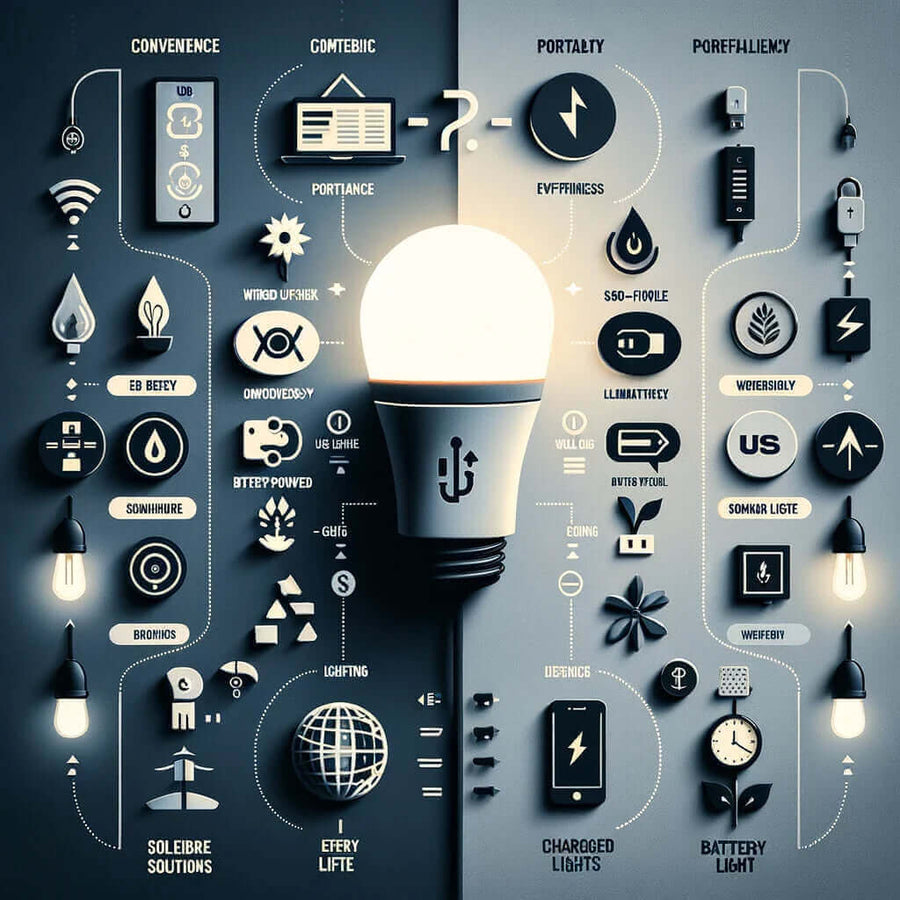
Modern rechargeable wall lights use lithium-ion battery technology to store electrical energy that powers an integrated LED light source. The battery is charged via a USB-C or micro-USB port, typically by removing the fixture from its wall mounting, charging from any USB power source, and remounting when fully charged. Most current rechargeable wall lights include a dimmer function and many include a timer or automatic off function to manage battery life. The best current fixtures offer 8–12 hours of runtime at full brightness, and considerably longer at lower output levels — meaning a fixture used for 3–4 hours each evening at moderate output requires charging approximately once a week.
Light Quality: The Critical Evaluation
For any lighting fixture, light quality is the primary criterion — and it's where rechargeable wall lights have historically struggled. Early rechargeable designs (pre-2022) typically produced modest light output (100–300 lumens), mediocre colour temperature consistency, and CRI values below 80. The technology has improved significantly. Current best-in-class rechargeable wall lights produce 400–700 lumens at full output — comparable to a 40–60W incandescent equivalent — with colour temperatures consistently in the warm-white range (2,700–3,000K) and CRI values of 80–90. At these specifications, a rechargeable wall light is genuinely useful as an atmospheric and supplementary light source.
The comparison with hardwired alternatives, however, remains relevant. A quality hardwired wall sconce fitted with a premium 2,700K, CRI 95+ LED bulb will produce light quality that no current rechargeable alternative can match. For applications where light quality is the primary consideration, hardwired remains the benchmark. Browse Nauradika's hardwired wall light options for quality benchmarks.
Where Rechargeable Wall Lights Work Well
Rented properties are perhaps the strongest use case. A renter who wants to add wall lighting faces an impossible choice with hardwired fixtures. Rechargeable fixtures require only standard wall hooks or adhesive mounts and leave no permanent trace when removed — making them genuinely practical for rental contexts. Positions difficult to wire represent another strong use case: many desirable wall lighting positions involve cable runs that are technically demanding and expensive, and where a rechargeable fixture produces adequate light quality, it may be a more practical solution. Supplementary atmospheric lighting in rooms already well-lit by hardwired fixtures is where rechargeable designs most reliably deliver — as one element of a layered scheme rather than the primary light source.
The Practical Realities
The most common complaint about rechargeable wall lights is the charging routine. However good the battery life, recharging requires removing the fixture from its mount, connecting a USB cable, waiting 2–4 hours, and remounting. This process, repeated weekly for a regularly used fixture, can feel burdensome. A practical strategy is to purchase two identical fixtures for each position, rotating them on a charge cycle — one always mounted and charged while the other charges. This eliminates the interruption to service that charging causes.
The Verdict
Rechargeable wall lights are worth it for specific situations — rented properties, difficult-to-wire positions, and as supplementary atmospheric fixtures in rooms with other light sources — and not worth it where hardwired installation is practical and light quality is a priority. The technology is now good enough that the question is worth asking for any situation where the installation constraint is real. Explore both rechargeable and hardwired options at Nauradika's wall light collection.
Nauradika Trade