Five Design Approaches That Elevate Any Interior
The right wall light does something that most other furnishing elements cannot: it simultaneously illuminates a space and shapes the atmosphere of that space in a way that is felt before it is understood. The quality of light that a great wall sconce produces — warm, directional, intimate — changes how a room feels at a level below conscious perception, creating a sense of comfort and welcome that most people experience as the room simply "working" without being able to explain precisely why. Wall lighting is not merely functional; it is a fundamental design tool that influences mood, spatial perception, and the overall success of an interior scheme.
The distinction between adequate lighting and exceptional lighting lies in understanding how different fixture types interact with architecture, materials, and human psychology. A well-chosen wall light becomes invisible in the best sense — it performs its task so elegantly that occupants experience only the result: a room that feels right, proportionate, and welcoming. This article explores five distinct design approaches to wall lighting, each with its own design heritage, functional advantages, and aesthetic character.
1. The Articulated Reading Light: Form Following Function
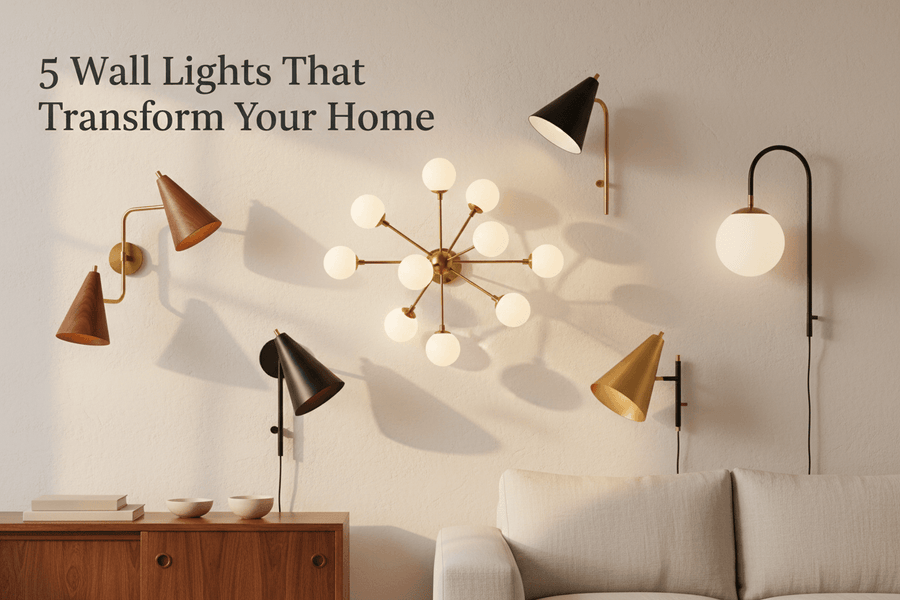
No wall light category has a stronger design pedigree than the articulated reading lamp. The adjustable-arm sconce — conceived by mid-century modernist designers as the ideal solution for directed task light from a wall fitting — remains, more than six decades after its invention, one of the most functionally excellent and aesthetically distinguished fixture types available. The appeal transcends nostalgia; it rests on the genuine quality of both the light produced and the object itself as a designed form.
The articulated reading light solves a fundamental problem with elegant restraint: how to deliver controlled, directional illumination from a wall-mounted position without sacrificing visual refinement. The mechanism — typically a jointed arm with a pivoting head — allows users to adjust both the angle and direction of light with precision. This functionality is not incidental to the design; it is the design. The beauty of the articulated sconce emerges from the elegance of its solution to a practical problem, a principle that defines the best modernist design.
Functional advantages of articulated reading lights include:
- Precise directional control, allowing users to position light exactly where needed for reading, working, or detailed tasks
- Adjustability that accommodates different activities and times of day without requiring additional fixtures
- Compact wall profile that does not project far into the room, making them ideal for bedside applications or tight spaces
- Warm, focused light quality that creates intimate, task-oriented illumination without spilling into adjacent areas
- Durability and longevity — well-made articulated sconces often outlast trends and remain functional for decades
In residential applications, a pair of articulated reading lights flanking a headboard, hung at approximately 145 centimetres from the floor, transforms a bedroom's bedside arrangement from purely functional to genuinely designed. The symmetry creates visual balance, while the adjustability ensures that each occupant can control their own light independently. This arrangement has become a design standard precisely because it solves multiple problems simultaneously: it provides task lighting, creates visual symmetry, and allows for individual control without requiring overhead fixtures or bedside tables.
The articulated reading light also performs exceptionally well in home offices, studies, and reading nooks. In these contexts, the ability to direct light precisely onto a work surface or page eliminates glare and eye strain while maintaining the ambient light levels in the rest of the room. For those interested in exploring this category, Nauradika's wall light collection includes several articulated designs that balance functional excellence with contemporary aesthetics.
2. The Organic Ceramic Sconce: Material Intelligence and Biophilic Design
The hand-thrown or slip-cast ceramic wall sconce represents one of the most significant developments in contemporary lighting design — a fusion of ancient craft traditions with the contemporary language of biophilic interiors. Ceramic wall lights bring material qualities that no other fixture type offers: the weight and permanence of fired clay, the subtle irregularities of hand production, the tactile warmth of a natural material, and the way ceramic surfaces interact with warm light to produce a glow that seems to emanate from the material itself rather than merely reflecting it.
Ceramics have been used in lighting design for centuries, but contemporary ceramic sconces represent a deliberate return to material authenticity in an era of mass production and synthetic materials. The best ceramic sconces are designed to be beautiful in two distinct states: unlit, when they function as sculptural wall objects with visual presence and textural interest, and lit, when warm 2,700K LED light transforms them into glowing elements that animate their surroundings and create a sense of warmth and comfort.
The design advantages of ceramic wall sconces include:
- Material authenticity that resonates with contemporary preferences for natural, handcrafted elements
- Unique visual character — no two hand-thrown pieces are identical, adding individuality to interior schemes
- Exceptional light diffusion — ceramic surfaces scatter light in ways that create soft, flattering illumination
- Thermal qualities — ceramic retains and radiates warmth, contributing to the perceived warmth of the light
- Durability and timelessness — ceramic fixtures improve with age and patina, becoming more beautiful over time
- Versatility across design styles — from minimalist Scandinavian interiors to maximalist eclectic spaces
Ceramic sconces work particularly well in bedrooms, bathrooms, and living spaces where a sense of calm and comfort is desired. The soft, diffused light they produce is inherently flattering to skin tones and creates an atmosphere of relaxation. In contemporary interior design, ceramic sconces often serve as focal points — their sculptural quality means they contribute to the visual composition of a wall even when unlit.
The material intelligence of ceramic design also addresses growing consumer interest in sustainable, locally-produced furnishings. Many contemporary ceramic sconce makers work at a craft scale, using traditional techniques and locally-sourced materials. This approach aligns with broader trends toward conscious consumption and support for artisanal production methods.
3. The Brass Uplighter: Architectural Drama and Spatial Perception
The wall-mounted brass uplighter is perhaps the most architecturally powerful fixture in the wall lighting repertoire. Designed to direct all its light upward — washing the wall surface above with warm, golden light — it creates an effect that is simultaneously theatrical and sophisticated. The ceiling and upper wall appear to glow, the room feels taller and more generous, and the fixtures themselves sit on the wall with quiet confidence, their presence justified by the dramatic transformation they produce.
Brass uplighters work through a principle of indirect lighting that has been understood by architects and lighting designers for decades: light that bounces off architectural surfaces before reaching the room creates a more complete, ambient illumination than direct light sources typically achieve. This indirect approach also eliminates glare and harsh shadows, creating an environment that feels more comfortable and visually sophisticated.
The architectural and perceptual benefits of brass uplighters include:
- Vertical emphasis — by illuminating the upper portions of walls and ceilings, uplighters make rooms feel taller and more spacious
- Ambient light quality — indirect light creates a more complete, enveloping illumination than direct fixtures
- Dramatic effect — the warm, golden glow of brass uplighters creates a sense of luxury and formality
- Flexibility in placement — uplighters work effectively in series along a wall, flanking architectural features, or as standalone accent lights
- Material richness — polished brass develops a patina over time, adding character and depth to the fixture
- Compatibility with other lighting — uplighters work well in layered lighting schemes, providing ambient light while other fixtures handle task and accent lighting
In residential applications, two brass uplighters flanking a fireplace, console table, or architectural feature create a formal, composed arrangement that reads as genuinely architectural. This arrangement is particularly effective in living rooms, dining rooms, and entryways where a sense of sophistication and intentional design is desired. The symmetry of paired uplighters creates visual balance, while the upward-directed light creates a sense of grandeur and spatial generosity.
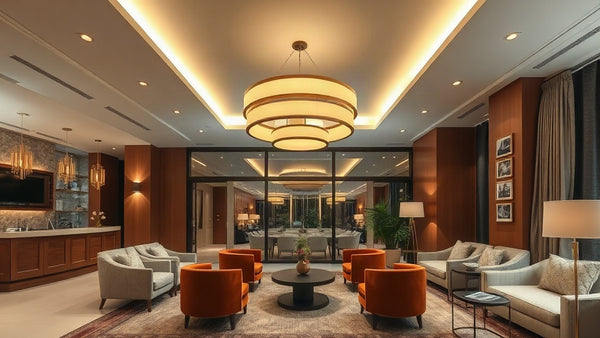
Brass uplighters also perform exceptionally well in commercial and hospitality settings, where the dramatic lighting effect contributes to a sense of luxury and refinement. Hotels, restaurants, and high-end retail spaces frequently employ uplighters as part of their ambient lighting strategy, recognizing that the quality of light significantly influences how guests perceive the space and their experience within it.
4. The Woven Rattan or Bamboo Sconce: Natural Warmth and Biophilic Interiors
The woven natural fibre wall sconce is one of the most reliably warm and welcoming fixture types available, and its sustained popularity in contemporary interiors reflects a broader cultural shift toward natural materials and biophilic design principles. Natural fibre sconces bring texture, warmth, and craft to the wall, while the woven structure produces exactly the kind of dappled, patterned light that designers associate with the most calming natural environments.
The light from a woven natural fibre sconce is unlike that from any other fixture type. The weave acts as a complex diffuser, breaking the light into dozens of small beams that project patterns onto surrounding walls and ceilings. This patterned light mimics the dappled illumination found in natural environments — beneath tree canopies, through latticed structures, or across water surfaces — creating a psychological response of calm and comfort that research in environmental psychology has documented and validated.
The design and psychological benefits of natural fibre sconces include:
- Biophilic resonance — the natural materials and patterned light create a psychological connection to natural environments
- Textural richness — woven fibres add visual and tactile interest to wall surfaces
- Soft, diffused illumination — the complex weave eliminates harsh shadows and glare
- Versatility across design contexts — equally at home in coastal, Scandinavian, eclectic, or contemporary interiors
- Sustainability credentials — natural fibres are renewable, biodegradable, and often produced through traditional craft methods
- Warmth and approachability — natural materials create a sense of comfort and welcome that synthetic materials cannot replicate
Natural fibre sconces are particularly effective in bedrooms, bathrooms, and living spaces where a sense of relaxation and comfort is desired. The soft, patterned light they produce is inherently calming, making them ideal for spaces dedicated to rest and rejuvenation. In contemporary interior design, natural fibre sconces often serve as bridges between minimalist and maximalist aesthetics — they add textural richness without visual heaviness, and they work equally well in spare, pared-down interiors and in more layered, eclectic spaces.
The sustainability aspect of natural fibre sconces has become increasingly important to contemporary consumers. As awareness of environmental impact grows, many designers and homeowners actively seek fixtures made from renewable, responsibly-sourced materials. Natural fibre sconces align with these values while delivering genuine aesthetic and functional benefits, making them a choice that satisfies both practical and ethical considerations.
5. The Art Deco Geometric Sconce: Historical Confidence and Visual Drama
The Art Deco movement of the 1920s and 1930s produced what remain some of the most formally beautiful wall light designs in the history of the form. The geometric precision of Art Deco design — its love of bold angles, symmetrical arrangements, rich materials, and the interplay of light and shadow on faceted surfaces — seems uniquely suited to the wall sconce format. Art Deco wall lights work through visual boldness: strong geometric forms, materials chosen for their optical richness (polished brass, frosted glass, mirror, lacquered metal), and an assertive visual presence that makes them genuine statement pieces.
Art Deco design emerged during a period of technological optimism and cultural dynamism, and this energy is evident in every aspect of the style. The geometric forms are not merely decorative; they reflect a modernist belief in the power of pure form and proportion to create beauty. The materials are chosen not only for their visual richness but for their ability to interact with light — frosted glass diffuses and softens light, polished brass reflects and amplifies it, mirror creates illusions of space and light, and lacquered surfaces create depth and visual complexity.
The design characteristics and applications of Art Deco sconces include:
- Geometric boldness — strong angular forms and symmetrical arrangements create visual impact and architectural presence
- Material richness — the combination of multiple materials (brass, glass, mirror, lacquer) creates visual complexity and luxury
- Light interaction — faceted surfaces and reflective materials create dynamic effects as light angles change throughout the day
- Statement-making quality — Art Deco sconces are intentionally visible and contribute significantly to the visual composition of a space
- Historical authenticity — original Art Deco designs carry the cultural weight and prestige of a significant design movement
- Versatility in scale — Art Deco sconces work effectively as individual statement pieces or in series for dramatic effect
Art Deco wall lights work best in spaces that share their appetite for formality and visual richness. These include rooms with period architectural features (crown moulding, wainscoting, coffered ceilings), interiors with a maximalist sensibility that celebrates visual abundance and material richness, and spaces designed around the drama of contrast — where bold fixtures are intentionally juxtaposed against neutral backgrounds to create focal points and visual interest.
Contemporary interior design has seen a resurgence of interest in Art Deco aesthetics, driven partly by nostalgia for the craftsmanship and material quality of the period, and partly by a reaction against minimalism and the desire for visual richness and historical reference. Art Deco sconces appeal to designers and homeowners who view their interiors as expressions of personality and taste, rather than neutral backdrops. These fixtures announce themselves; they declare that the space has been thoughtfully composed and that visual beauty is a priority.
Integrating Wall Lighting into a Comprehensive Design Strategy
The five approaches outlined above represent distinct design philosophies and aesthetic directions, but they are not mutually exclusive. The most sophisticated interior schemes often employ multiple types of wall lighting, each serving a specific functional or aesthetic purpose within a layered lighting strategy.
A well-designed lighting scheme typically incorporates three layers: ambient lighting (general illumination that fills the space), task lighting (focused light for specific activities), and accent lighting (light that highlights architectural features or creates visual drama). Wall sconces can serve all three functions depending on their design and placement. Articulated reading lights provide task lighting; brass uplighters create ambient and accent lighting; ceramic and natural fibre sconces provide ambient light with aesthetic presence; Art Deco sconces function primarily as accent and statement lighting.
When selecting wall lights for a specific space, consider the following factors:
- Functional requirements: What activities will occur in this space? Do you need task lighting, ambient illumination, or accent lighting?
- Architectural context: What are the existing architectural features? How can wall lighting enhance or complement them?
- Aesthetic direction: What is the overall design direction of the space? Which lighting approach aligns with this vision?
- Material palette: How will the fixture materials interact with existing materials in the space?
- Scale and proportion: How large is the wall? How will the fixture scale relate to the wall and room dimensions?
- Light quality: What colour temperature and intensity of light will create the desired atmosphere?
- Placement and symmetry: Will the fixture work as a single statement piece, or as part of a symmetrical arrangement?
For those seeking to explore these design approaches in depth, Nauradika's comprehensive wall light collection offers examples across all five categories, allowing you to compare approaches and discover fixtures that align with your design vision. Additionally, exploring ceiling lighting options can help you develop a complete, layered lighting strategy that works in concert with wall-mounted fixtures.
Conclusion: Wall Lighting as Design Foundation
Wall lighting represents one of the most powerful tools available to interior designers and homeowners seeking to transform a space. Unlike furniture, which can be rearranged and replaced relatively easily, lighting is often permanent or semi-permanent, making the initial selection decision consequential. The right wall light does more than illuminate; it shapes atmosphere, influences spatial perception, and contributes fundamentally to how a room feels and functions.
The five approaches outlined in this article — articulated reading lights, ceramic sconces, brass uplighters, natural fibre sconces, and Art Deco geometric fixtures — represent distinct design philosophies, each with its own heritage, functional advantages, and aesthetic character. By understanding these approaches and their applications, you can make informed decisions about wall lighting that serve both practical needs and aesthetic aspirations, creating spaces that are not only well-lit but genuinely beautiful.
Nauradika Trade