Japanese Pendant Lights: A Defining Trend for 2026 Interiors
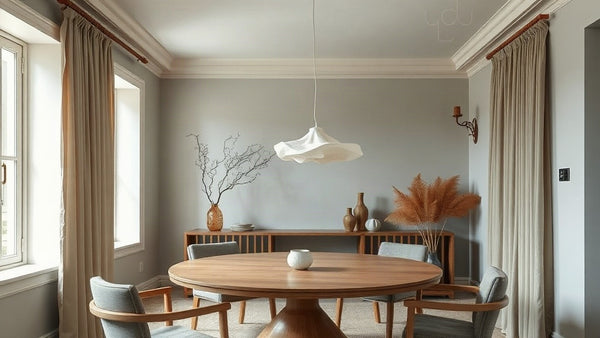
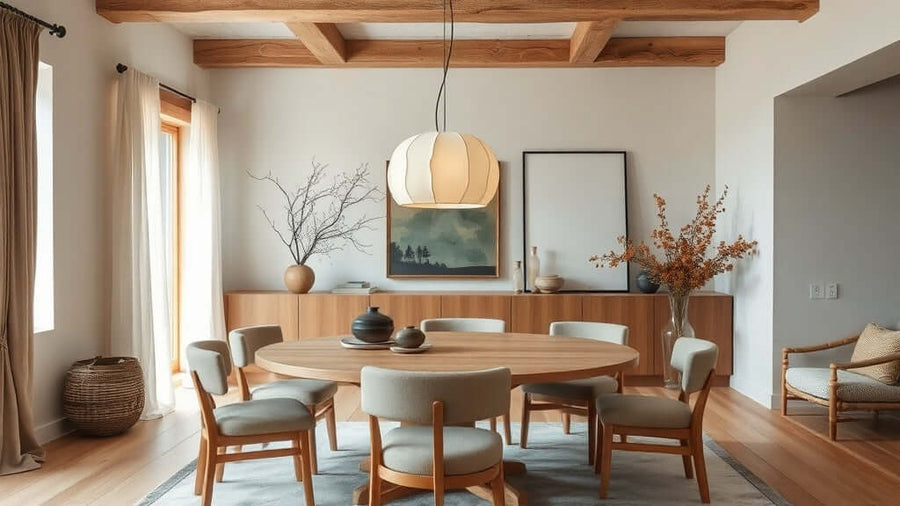
As ABI Interiors' 2026 trend report confirms, Japanese design principles are reshaping commercial and residential interiors. The Japanese pendant light—rooted in wabi-sabi philosophy and minimalist aesthetics—offers architects a specification choice that balances material authenticity with contemporary lighting performance.
These fixtures align with the broader shift toward understated elegance and sustainable material selection. Unlike maximalist trends, Japanese pendant lights emphasise imperfection, natural patina, and purposeful simplicity—qualities that age gracefully within built environments.
Wabi-Sabi Pendant Lights: Material Integrity and Specification
The wabi-sabi pendant light category encompasses fixtures celebrating impermanence and material honesty. Common specifications include:
- Rice paper construction – diffuses light with soft, even distribution; typically rated for 60W equivalent LED or lower
- Natural wood frames – ash, walnut, or birch; develops character through patina
- Ceramic or glass elements – hand-finished surfaces with intentional irregularities
- Minimal metalwork – typically matte brass, blackened steel, or untreated copper
Colour temperature ranges from 2700K to 3000K, supporting the warm, inviting ambience these designs demand. Most contemporary specifications deliver 300–500 lumens, suitable for task or ambient layering rather than primary illumination.
The Rice Paper Lamp in Residential vs. Commercial Applications
Rice paper lamps present distinct specification challenges across project types. In residential settings—particularly bedrooms and living areas—their diffuse, non-directional light supports relaxation. Specification requires consideration of moisture sensitivity; bathroom applications demand sealed frames or protective coatings.
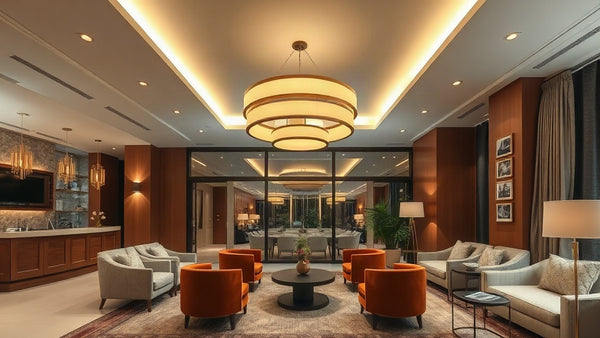
Commercial applications demand more rigorous selection. Hotels, wellness centres, and boutique retail benefit from Japanese pendant lights' sensory qualities; however, durability ratings, flame-spread compliance, and maintenance cycles must meet commercial standards. Specify fixtures certified to BS EN 60598 or equivalent.
Zen Ceiling Lamp Specifications for Layered Lighting Schemes
Contemporary practice integrates zen ceiling lamps as secondary or accent elements within broader lighting hierarchies rather than primary solutions. This approach acknowledges their aesthetic strength whilst managing functional limitations. Pair Japanese pendant lights with recessed downlights or track systems to achieve required illumination levels.
For open-plan residential or commercial spaces, specify multiple pendants at varying heights to create visual rhythm whilst distributing light effectively. Typical spacing recommends 1.2m–1.5m between pendant centres over dining or work surfaces.
Specification Considerations for 2026 Projects
Select Japanese pendant lights with integrated LED modules rated for minimum 15,000-hour lifespan. Confirm dimming compatibility if integrated into building management systems. Natural materials require disclosure of sourcing and finishing processes—increasingly important for WELL Building or Fitwel certification.
Nauradika's curated collection offers architect-specified Japanese pendant lights, wabi-sabi pendants, and rice paper lamps at accessible price points. Each fixture carries full specification sheets, certifications, and photometric data supporting procurement workflows.
As 2026 interiors favour authenticity and restraint, the Japanese pendant light represents a material and philosophical commitment—one that rewards careful specification and layered lighting design.
Explore the look through japanese pendant light options and related pieces in our Japanese Light Fixtures collection.
Why this style works
The right light does more than illuminate a room. It sets the rhythm of the space, gives furniture a visual anchor, and helps a decorative scheme feel intentional rather than assembled. For readers arriving from search, this section connects the design idea to practical product selection.
- Creates a clear focal point
- Adds warmth and texture
- Works across contemporary and vintage-inspired rooms
How to choose the right piece
Start with scale, then material, then light temperature. A pendant or wall light should feel proportionate to the room and the furniture below it. Natural materials tend to soften modern interiors, while darker finishes can make a more graphic statement.
- Check ceiling height and furniture dimensions
- Choose a finish that repeats elsewhere in the room
- Use warm bulbs for living and dining spaces
Where to use it
This look is especially effective in dining rooms, bedrooms, hallways and boutique hospitality spaces where atmosphere matters. It can also work in renovations where a single lighting change needs to make the room feel more finished.
- Dining tables and kitchen islands
- Bedrooms and reading corners
- Hallways, restaurants and boutique hotels
Shop the Look
For the most relevant products, start with the article's featured piece and the matching collection. Product price, availability and images should be pulled live from Shopify when the template renders.
View the featured japanese pendant light or browse the full related collection.
Featured in this guide
View collectionWhy this style works
Frequently asked questions
Nauradika Trade