Rattan Pendant Lights in 2026: Design Longevity Beyond Trend
The question isn't whether rattan pendant lights remain fashionable—it's whether they've transcended trend status entirely. Three years into the decade, natural materials continue to dominate commercial and residential specifications, and rattan has cemented itself as a legitimate material choice rather than a passing aesthetic.
Why Architects Are Still Specifying Rattan
Rattan pendant lights offer practical advantages that explain their sustained popularity. The material provides acoustic benefits in open-plan spaces, diffuses light softly to reduce glare, and creates visual warmth without the dated heaviness of heavier fixtures. For hospitality projects and high-end residential work, a rattan pendant light serves both functional and atmospheric purposes.
Biophilic design principles—now standard in most contemporary briefs—actively favour natural materials. Rattan aligns with both wellness-focused design mandates and sustainability criteria, particularly when sourced responsibly.
Material Quality and Specification Considerations
- Durability: High-quality rattan withstands commercial environments. Look for kiln-dried cane with reinforced joinery; cheaper variants fail within 18–24 months in high-traffic settings.
- Light Output: A rattan pendant light typically provides ambient rather than task lighting. Specify wattage accordingly; 40–60W LED equivalents work best for layered schemes.
- Finish: Natural, bleached, and stained options exist. Consider thermal movement in kitchens and bathrooms; sealed finishes prevent moisture damage.
- Scale: Rattan reads visually larger than metal equivalents. Account for this in ceiling heights under 2.7m.
The Rattan Chandelier Variant
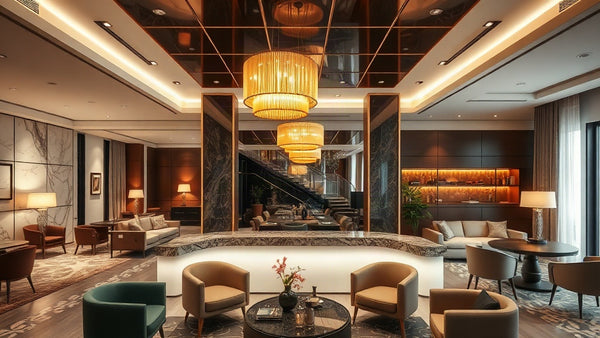
Multi-pendant rattan chandelier configurations have gained traction in commercial settings—particularly restaurants and boutique hotels. These fixtures create sculptural presence while maintaining the softness that single rattan pendant lights provide. Ensure structural support is adequate; natural materials are deceptively heavy when assembled at scale.
Current Design Direction
The styling has evolved. Minimalist interpretations now dominate—geometric rattan forms paired with brass or matte-black metalwork, rather than the organic, heavily textured designs of the early 2020s. This refinement suggests the category is maturing rather than declining.
Autumn 2026 specifications increasingly pair rattan with warm colour palettes and natural stone to create cohesive, seasonally appropriate interiors. The material works particularly well in transitional spaces—entries, corridors, feature areas—where a natural pendant light creates psychological comfort without visual conflict.
Sourcing and Lead Times
Reputable suppliers now stock rattan fixtures with 2–3 week lead times for standard configurations. Bespoke sizes require 6–8 weeks. Verify UV stability claims; some cheaper imports degrade rapidly in south-facing windows.
The Verdict
Rattan pendant lights aren't in style in 2026—they're now considered a material category with genuine longevity. They work in contemporary, Scandinavian, mid-century, and transitional schemes. For architects seeking natural materials that perform acoustically and aesthetically, a rattan pendant light remains a specification worth defending to clients and contractors alike.
Explore the look through rattan pendant light options and related pieces in our Vintage Light Fixtures collection.
Why this style works
The right light does more than illuminate a room. It sets the rhythm of the space, gives furniture a visual anchor, and helps a decorative scheme feel intentional rather than assembled. For readers arriving from search, this section connects the design idea to practical product selection.
- Creates a clear focal point
- Adds warmth and texture
- Works across contemporary and vintage-inspired rooms
How to choose the right piece
Start with scale, then material, then light temperature. A pendant or wall light should feel proportionate to the room and the furniture below it. Natural materials tend to soften modern interiors, while darker finishes can make a more graphic statement.
- Check ceiling height and furniture dimensions
- Choose a finish that repeats elsewhere in the room
- Use warm bulbs for living and dining spaces
Where to use it
This look is especially effective in dining rooms, bedrooms, hallways and boutique hospitality spaces where atmosphere matters. It can also work in renovations where a single lighting change needs to make the room feel more finished.
- Dining tables and kitchen islands
- Bedrooms and reading corners
- Hallways, restaurants and boutique hotels
Shop the Look
For the most relevant products, start with the article's featured piece and the matching collection. Product price, availability and images should be pulled live from Shopify when the template renders.
View the featured rattan pendant light or browse the full related collection.
Featured in this guide
View collectionWhy this style works
Frequently asked questions
Nauradika Trade