Statement Pendant Lights: Defining Contemporary Interiors
As we progress through 2026, statement pendant lights have become essential elements in both residential and commercial design schemes. Far from functional necessities, today's oversized pendant fixtures serve as sculptural focal points that anchor spatial hierarchies and establish design intent—particularly in open-plan environments where visual anchoring proves critical.
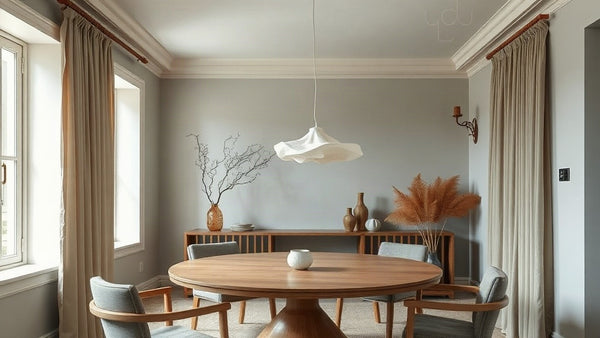
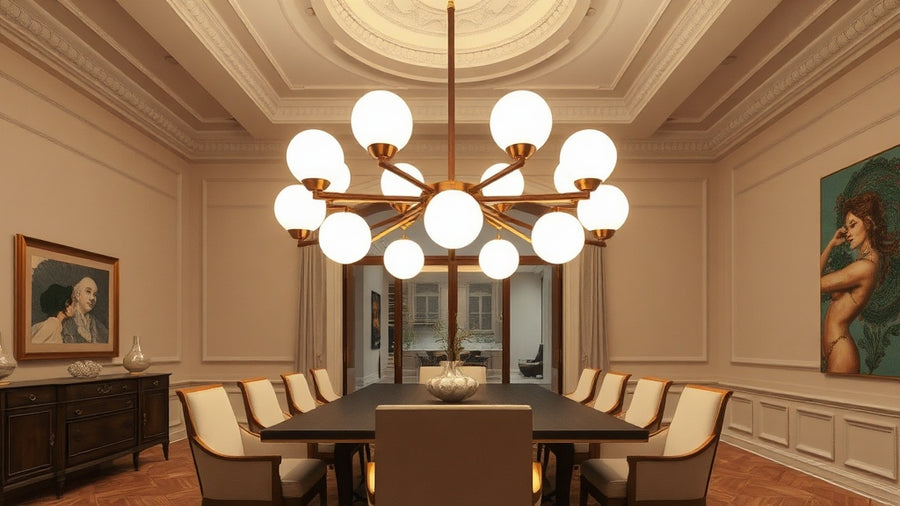
The shift towards lighter, airier interiors this season has prompted significant specification changes. Where heavy brass and dark geometries dominated previous years, contemporary statement ceiling lights now favour translucent and semi-opaque materials: frosted glass, mesh metal, and perforated ceramics that diffuse rather than absorb light.
Material and Finish Specifications for 2026
Current architectural practice shows three dominant material directions:
- Anodised Aluminium: Champagne and rose-gold finishes replace traditional matte black. These warm metallics complement both minimalist and maximalist schemes without visual heaviness.
- Natural Timber: Ash, oak, and walnut veneers provide textural warmth. Particularly effective in commercial settings where biophilic design principles are specified.
- Ceramic & Stoneware: Cream, sand, and soft grey tones align with broader materiality trends. These fixtures maintain visual lightness whilst offering substantial sculptural presence.
Scale and Proportion Considerations
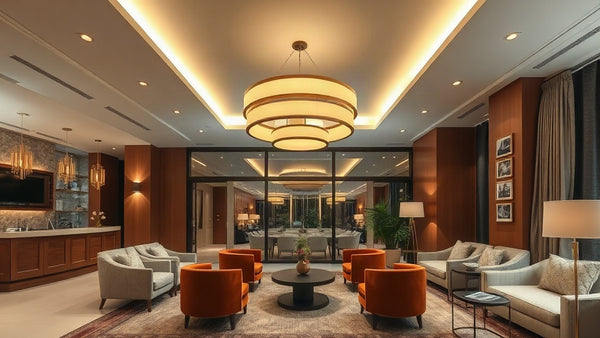
The oversized pendant category now extends beyond traditional domestic applications. Commercial projects increasingly specify statement pendant lights with 500-700mm diameters in double-height atriums, lobbies, and breakout spaces. This scale shift reflects both aesthetic confidence and acoustic benefits—larger diffuser surfaces reduce noise reflection in open-plan environments.
For residential specifications, the 400-500mm diameter sweet spot remains dominant, particularly in kitchen islands and bedroom feature positions where visual proportion to ceiling height remains critical.
Colour Palettes and Summer Specifications
Lighting colour temperature has shifted distinctly towards 2700K-3000K warm white specifications. Cool 4000K daylight, once standard in commercial projects, now registers as dated. This warmer approach creates perceived spaciousness—counter-intuitive but proven in recent installations across Scandinavian and UK projects.
Shade colours reflecting 2026 trends prioritise neutrality and light transmission: cream linen, translucent polymer, and unglazed ceramic dominate over saturated tones.
Specifying Statement Pendant Lights: Practical Considerations
When selecting a statement pendant light for projects, prioritise:
- Mounting hardware compatibility with existing ceiling installations
- Dimming capability—essential for adaptive residential and hospitality schemes
- Light distribution angle and spread calculations relative to pendant diameter
- Maintenance accessibility, particularly for larger oversized pendants in commercial spaces
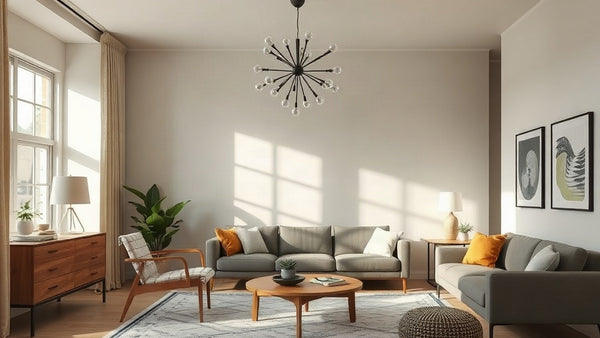
Mid-century modern design remains influential, though contemporary interpretations prioritise clean lines over ornamental detail. Eames-influenced forms persist but favour material authenticity over nostalgic reproduction.
Conclusion
Today's architectural lighting specifications demand that statement pendant lights function simultaneously as functional elements and spatial design statements. The 2026 palette—lighter finishes, larger scales, warmer colour temperatures—reflects broader design maturity and environmental consciousness. Specifying appropriately requires balancing aesthetic intention with practical acoustic, thermal, and installation considerations.
Explore the look through statement pendant light options and related pieces in our Ceiling Light Fixtures collection.
Why this style works
The right light does more than illuminate a room. It sets the rhythm of the space, gives furniture a visual anchor, and helps a decorative scheme feel intentional rather than assembled. For readers arriving from search, this section connects the design idea to practical product selection.
- Creates a clear focal point
- Adds warmth and texture
- Works across contemporary and vintage-inspired rooms
How to choose the right piece
Start with scale, then material, then light temperature. A pendant or wall light should feel proportionate to the room and the furniture below it. Natural materials tend to soften modern interiors, while darker finishes can make a more graphic statement.
- Check ceiling height and furniture dimensions
- Choose a finish that repeats elsewhere in the room
- Use warm bulbs for living and dining spaces
Where to use it
This look is especially effective in dining rooms, bedrooms, hallways and boutique hospitality spaces where atmosphere matters. It can also work in renovations where a single lighting change needs to make the room feel more finished.
- Dining tables and kitchen islands
- Bedrooms and reading corners
- Hallways, restaurants and boutique hotels
Shop the Look
For the most relevant products, start with the article's featured piece and the matching collection. Product price, availability and images should be pulled live from Shopify when the template renders.
View the featured statement pendant light or browse the full related collection.
Featured in this guide
View collectionWhy this style works
Frequently asked questions
Nauradika Trade