Using Ancient Principles for Modern Lighting Design
Feng shui — the ancient Chinese practice of arranging living environments to optimise the flow of energy, or qi — has been applied to interior design for thousands of years. While its metaphysical claims are debated, the practical principles it generates for light placement and spatial organisation are often remarkably aligned with what contemporary environmental psychology tells us about how spaces affect human wellbeing.
The feng shui approach to floor lamp placement offers a coherent and actionable framework that produces genuinely better-lit and more harmonious living rooms. Whether you're drawn to feng shui philosophy or simply seeking a design methodology that works, this ancient system provides timeless guidance for creating spaces that feel balanced, welcoming, and energetically alive.
Understanding Qi and Light
In feng shui, qi (pronounced "chee") is the vital life force that flows through all environments. Light is considered one of the most powerful tools for activating and directing qi — a dark corner is a stagnant corner, and stagnant qi is associated with lethargy and blocked fortune. Floor lamps serve a dual purpose: they provide functional illumination, and they activate the qi of the areas they light. Placing a floor lamp in a dark corner — one of the most common feng shui recommendations — both brightens a space and activates the energy of an area that would otherwise be stagnant. The contemporary psychological interpretation is straightforward: dark corners create a sense of unease and visual incompleteness, and lighting them reduces this discomfort.
This principle extends beyond mere aesthetics. When we enter a room with shadowy, unlit areas, our brains register incompleteness and potential threat. Lighting these spaces with a well-placed floor lamp creates a sense of safety and visual coherence. The feng shui concept of qi flow aligns perfectly with how interior designers today think about visual rhythm and spatial harmony. A strategically positioned floor lamp doesn't just illuminate — it transforms how we perceive and move through a room.
The Bagua Map and Living Room Lighting
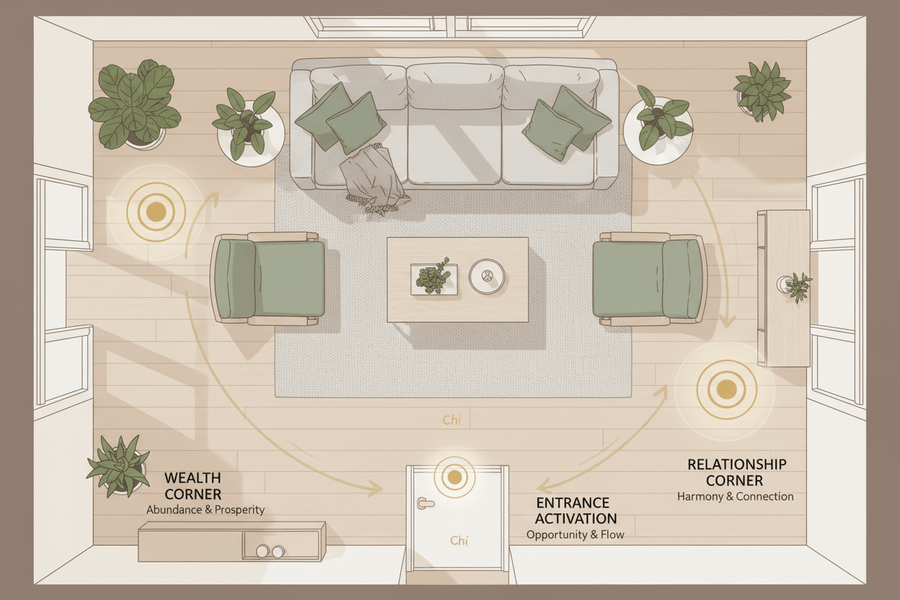
The bagua is a feng shui octagonal grid mapping different areas of a room to different life aspects. Understanding how to apply this map to your lighting strategy can help you create a space that feels intentional and balanced. The most relevant areas for floor lamp placement are:
- The Wealth Corner (far left from the entrance) — a tall, upward-pointing floor lamp here activates prosperity energy and also creates a sense of height that expands the room. This placement draws the eye upward, making the space feel more generous and open.
- The Fame Area (far centre) — a warm, bright uplighting floor lamp creates the fire energy associated with reputation and visibility. This central position ensures the lamp becomes a focal point that anchors the room's energy.
- The Relationship Corner (far right) — a pair of matching lamps or a floor lamp balanced by a table lamp creates the symmetry that feng shui associates with relationship harmony. Symmetry in lighting creates a sense of equilibrium and calm.
- The Health Centre (middle of the room) — soft, diffused lighting here supports overall wellbeing and creates a grounded, nurturing atmosphere.
- The Knowledge Corner (far left, lower position) — a floor lamp positioned here supports focus and contemplation, making this an ideal spot for reading nooks or study areas.
When applying the bagua map, remember that the entrance to your room is the reference point. Stand at the doorway and imagine the octagon overlaid on your space — this helps you identify which corners correspond to which life areas. Once you've mapped your room, you can strategically place floor lamps to activate the energies most important to you.
Practical Placement Principles
Beyond the bagua map, feng shui offers several practical principles that translate well into contemporary design and genuinely improve how a room functions. These aren't mystical rules — they're observations about light, comfort, and spatial psychology that have been refined over centuries.
Avoid positioning floor lamps directly behind seating. This creates harsh backlight that is both visually uncomfortable and energetically unfavourable. When light comes from behind you while seated, it creates glare on screens, makes reading difficult, and produces an unsettling sense of exposure. Instead, position floor lamps to the side of seating arrangements, where they cast light across the sitting area without creating shadows on your face or lap.
Never position a floor lamp so that it shines directly into the face of someone seated. Direct light into the face creates glare and discomfort, and it's one of the quickest ways to make a space feel harsh rather than welcoming. Angle your lamps so they illuminate the area around seating rather than the person occupying it. This is especially important for reading lamps — the light should fall on your book or work, not your eyes.
Use floor lamps to balance asymmetrical room arrangements. A tall floor lamp in an empty corner balances the visual weight of a heavily furnished opposite corner. This principle of visual balance is fundamental to feng shui and to good design generally. If one side of your room feels heavy with furniture and the other feels sparse, a tall, sculptural floor lamp can anchor the empty space and create equilibrium.
Consider the height and scale of your lamps in relation to your furniture. A floor lamp should be proportional to the pieces around it. A delicate, slender lamp will look lost next to a substantial sofa, while an oversized lamp will dwarf a small reading chair. The right scale creates visual harmony and makes the lamp feel intentional rather than accidental.
Create layered lighting for flexibility. Feng shui emphasizes the importance of being able to adjust the energy of a space. Floor lamps work best when combined with other light sources — ceiling fixtures, table lamps, wall sconces. This layering allows you to brighten the room for activity or dim it for relaxation, adapting the space to different moods and needs.
Explore Nauradika's floor lamp collection for well-proportioned designs across a range of scales and styles, all suitable for feng shui-informed placement. Each piece is selected for its ability to function as both a practical light source and a design element that enhances spatial harmony.
The Five Elements and Floor Lamp Design
Feng shui's five element theory — wood, fire, earth, metal, and water — offers a sophisticated framework for choosing designs that balance a room's existing energy. Rather than thinking of these as literal materials, consider them as design languages that evoke different qualities and energies.
Wood energy (growth, creativity, renewal) is expressed in tall, columnar bases and natural materials like bamboo, rattan, or solid wood. Wood lamps feel organic and alive, making them ideal for creative spaces or rooms that need an infusion of vitality. If your living room feels stagnant or uninspired, a wood-based floor lamp can help activate growth energy.
Fire energy (passion, fame, warmth, transformation) is expressed in warm, upward-directed light and warm-toned shades in reds, oranges, or deep yellows. Fire lamps create drama and presence — they're ideal for spaces where you want to feel energized and inspired. The warmth of the light itself matters here; choose bulbs with warm colour temperatures (2700K or lower) to truly embody fire energy.
Earth energy (stability, grounding, relationships, nourishment) is found in wide-based, solid-feeling lamps with cream, terracotta, or warm brown shades. Earth lamps feel substantial and comforting, making them perfect for family rooms or bedrooms where you want to cultivate a sense of safety and belonging. These lamps often have a reassuring, almost maternal quality.
Metal energy (clarity, precision, efficiency, focus) is expressed in round shapes and metallic finishes like brass, chrome, or stainless steel. Metal lamps feel clean and contemporary, ideal for home offices or modern living spaces where you want to support mental clarity and productivity. The reflective quality of metal also helps distribute light more evenly throughout a space.
Water energy (wisdom, flow, intuition, mystery) is expressed in sinuous, organic forms and glass materials. Water lamps feel fluid and contemplative, making them excellent for bedrooms, meditation spaces, or anywhere you want to encourage introspection and calm. The transparency of glass allows light to flow through the material itself, creating a sense of luminous ease.
Most rooms benefit from a balance of these elements. If your space feels too heavy in one element — say, all metal and glass — introducing a wood or earth lamp can create equilibrium. Think of the five elements as a palette you're working with, and use your floor lamp choice to address any imbalances you sense in the room's energy.
Room-by-Room Feng Shui Lighting Strategy
Living Rooms: This is where you gather, entertain, and relax, so lighting should support both social connection and ease. Position floor lamps in the relationship and wealth corners to activate harmony and abundance. Use warm-toned light to create intimacy, and ensure no one is backlit when seated. A tall floor lamp in an empty corner prevents stagnation and creates visual interest.
Bedrooms: Bedrooms require softer, more nurturing energy. Floor lamps here should emit warm, diffused light that supports rest and intimacy. Avoid harsh, direct light. Position lamps to the sides of the bed rather than directly facing it, and choose designs with earth or water energy to promote calm and connection.
Home Offices: Productivity and focus are key. Use metal or wood energy lamps positioned to the side of your desk to provide task lighting without glare. Ensure the lamp doesn't cast shadows on your work surface. A lamp in the knowledge corner of your office supports concentration and learning.
Entryways: Your entryway is where qi enters your home, so lighting here should be welcoming and bright. A floor lamp in the entryway activates the energy of arrival and sets the tone for the entire home. Choose a design that reflects the aesthetic you want to project.
Browse Nauradika's ceiling lights and wall lamps to complement your floor lamp strategy and create a comprehensive, balanced lighting scheme throughout your home.
Common Mistakes to Avoid
Exposed bare bulbs pointing downward direct sharp energy towards the floor and create harsh, unflattering light. Choose shades that diffuse light upward and outward, softening the beam and creating a more welcoming atmosphere. The shade itself becomes part of the design, so select one that complements your décor while serving the practical function of light diffusion.
Floor lamps in the main path of movement interrupt qi flow and create physical obstacles that make navigation awkward. Keep lamps to the sides and corners of main circulation routes. This isn't just feng shui wisdom — it's practical safety. A lamp in a walkway is a tripping hazard and creates visual clutter.
Broken or non-functioning lamps represent blocked energy and should be repaired or replaced immediately. A lamp with a burnt-out bulb, a flickering switch, or a damaged shade is worse than no lamp at all. It signals neglect and creates a sense of incompleteness in the space.
Dusty, poorly maintained lamps accumulate stagnant energy and simply look shabby. Dust on a shade reduces light output and creates a dingy appearance. Make lamp maintenance part of your regular cleaning routine — wipe shades monthly and replace bulbs promptly when they dim or fail.
Mismatched scales and styles create visual discord. If you're using multiple floor lamps in one room, ensure they're proportional to each other and to the space. They don't need to be identical, but they should feel intentional together, as if they belong in the same room.
Insufficient lighting overall is perhaps the most common mistake. A single floor lamp in a large living room won't adequately light the space or activate its energy. Layer your lighting with multiple sources — ceiling fixtures, table lamps, wall sconces, and floor lamps working together — to create depth and flexibility.
Choosing the Right Floor Lamp for Your Space
When selecting a floor lamp, consider both its practical function and its energetic contribution to your space. Ask yourself: What energy does this room need? What element is missing from my current décor? What height and scale will balance my furniture? What colour temperature will support the room's purpose?
A floor lamp is more than a light source — it's a design statement and an energetic anchor. The best lamps are those that feel right in your space, that you enjoy looking at, and that provide the quality of light you need. When a lamp checks all these boxes, it naturally finds its place in your home and enhances both the practical function and the felt experience of the room.
Discover floor lamps that combine thoughtful design with functional excellence at Nauradika's floor and table lamp collection. Each piece is selected for its ability to serve as both a practical lighting solution and a design element that elevates your space. Whether you're drawn to the organic warmth of wood, the contemporary clarity of metal, or the fluid elegance of glass, you'll find options that align with your feng shui intentions and your personal aesthetic.
Creating Your Feng Shui Lighting Plan
Start by mapping your room using the bagua grid. Identify which life areas matter most to you right now — perhaps you're focused on prosperity, relationships, or creative growth. Next, assess your current lighting. Are there dark corners? Harsh shadows? Areas that feel neglected? These are opportunities for strategic lamp placement.
Consider the five elements present in your room. What's already there in terms of materials, colours, and forms? Where are the imbalances? A floor lamp can address these imbalances and create a more harmonious whole.
Finally, think practically. Where do you actually need light? Where do you sit, read, or work? A feng shui lamp that doesn't provide functional illumination where you need it won't serve you well. The best design solutions are those that work on multiple levels — they're beautiful, they're energetically aligned, and they're genuinely useful.
With intention, awareness, and the right floor lamp, you can transform your living space into an environment that supports your wellbeing, activates your aspirations, and simply feels better to inhabit. That's the real power of feng shui — not mysticism, but the practical wisdom of creating spaces that work for how we actually live.
Nauradika Trade