Hung at precisely the right height, suspended on a properly tidy cable, with exactly the right bulb and colour temperature, looks far more expensive than an identical pendant installed carelessly. Installation quality is often the determining factor between a fixture that reads as thoughtful and one that appears haphazard.
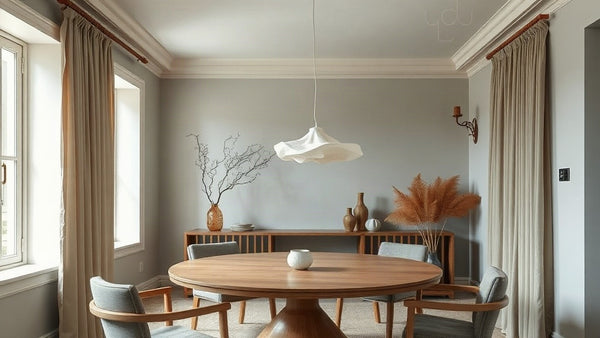
For dining applications, the shade should be positioned approximately 75–85cm above the table surface — low enough to create an intimate focal point without obstructing sightlines across the table. This precise positioning is a hallmark of professional installation and immediately signals intentional design.
Key considerations for budget pendant selection include:
- Material authenticity: Natural rattan and woven materials age beautifully and develop character over time
- Bulb visibility: Pendants where the bulb is visible benefit enormously from LED filament alternatives at 2,200–2,400K
- Scale appropriateness: Pendant diameter should relate proportionally to the space — typically 25–35cm for standard dining tables
- Cable presentation: Neat, tidy cable routing and appropriate length create a finished appearance
- Clustering strategy: Multiple smaller pendants often create more visual interest than a single large fixture
Nauradika's pendant collection features affordable options with high visual impact, including rattan, ceramic, and metal designs that work across contemporary and traditional interiors. When evaluating budget pendants, prioritise shade design and material quality over base construction — the shade is what creates the visual impression and controls light quality.
Wall Sconces: Creating Layered Ambient Light
Wall sconces represent an underutilised opportunity in budget lighting schemes. A pair of simple wall sconces flanking a mirror, headboard, or artwork creates sophisticated ambient lighting and visual balance at a fraction of the cost of ceiling fixtures.
Budget-friendly sconce options include:
- Minimalist metal designs: Simple brass, black, or chrome fixtures with clean lines work across styles
- Fabric shade sconces: Linen or cotton shades diffuse light beautifully and feel more residential than bare bulbs
- Swing-arm sconces: Provide flexibility for task lighting while maintaining aesthetic appeal
- Ceramic or glass options: Mid-range materials that feel more substantial than plastic alternatives
The installation of sconces should follow professional standards: they should be positioned at approximately 150–180cm from the floor (roughly eye level when standing), spaced symmetrically, and wired to a dimmer switch when possible. This attention to detail transforms budget sconces into elements that feel intentional and designed.
String Lights and Accent Lighting: Affordable Atmosphere Creation
For those seeking dramatic visual impact at minimal cost, string lights and accent lighting offer exceptional value. Warm-white LED string lights, available for £10–25, can transform outdoor spaces, alcoves, or feature walls into atmospherically sophisticated environments.
Effective applications include:
- Shelving accent: String lights behind open shelving create depth and visual interest
- Headboard backdrop: Lights positioned behind a bed create a focal point and intimate ambiance
- Outdoor entertaining: Overhead string lights define spaces and create welcoming outdoor rooms
- Alcove illumination: Highlighting architectural features with accent lighting adds dimension
The key to making string lights feel sophisticated rather than casual is ensuring they are installed with intention — neatly arranged, properly secured, and integrated into the overall lighting scheme rather than appearing as an afterthought.
Editing and Curation: The Free Improvement Strategy
One of the most overlooked and genuinely free strategies for improving a space's lighting quality is editing — removing light sources that are detracting from the room rather than contributing to it. Many homes are cluttered with ill-matched, inappropriate fixtures inherited with the property or accumulated over time without consideration for overall design coherence.
Removing these problematic fixtures — even without immediate replacement — often improves the overall quality of a space by reducing visual noise and lighting inconsistency. A room with three thoughtfully chosen light sources almost always looks better than the same room with six poorly chosen ones. This principle of curation over accumulation is fundamental to professional interior design.
The editing process should involve:
- Assessment: Evaluate each fixture's contribution to the overall scheme
- Removal of redundancy: Eliminate duplicate or conflicting light sources
- Colour temperature alignment: Ensure all remaining fixtures use consistent warm-white bulbs
- Functional evaluation: Retain only fixtures that serve a clear purpose — ambient, task, or accent
- Visual coherence: Ensure remaining fixtures relate aesthetically to one another
Strategic Fixture Selection: Quality Over Quantity
When budget constraints require choices, prioritise quality in the fixtures that will be most visible and frequently used. A well-designed floor lamp or pair of table lamps will have greater impact than multiple mediocre ceiling fixtures.
Selection criteria for budget fixtures should include:
- Proportional accuracy: Fixture size should relate logically to room dimensions and furniture scale
- Material authenticity: Natural materials age better and feel more substantial than cheap synthetics
- Shade quality: Invest in good shades — they control light quality and define visual impact
- Finish durability: Powder-coated metal and solid wood outlast cheaper alternatives
- Design timelessness: Avoid trendy designs that will feel dated quickly
Layering Strategy: Creating Depth Without Expense
Professional lighting design relies on layering — combining ambient, task, and accent lighting to create depth, flexibility, and visual sophistication. This principle is entirely independent of budget and can be achieved through strategic use of affordable fixtures.
Ambient lighting provides overall illumination and can be achieved through ceiling fixtures, wall sconces, or uplighting. Task lighting supports specific activities — reading, cooking, working — and is typically provided by table lamps, pendant lights, or under-cabinet fixtures. Accent lighting highlights architectural features, artwork, or decorative elements and creates visual interest.
A budget-conscious layering scheme might include:
- Warm-white ceiling fixture or recessed lights for ambient illumination
- Pair of table lamps for task and accent lighting in living areas
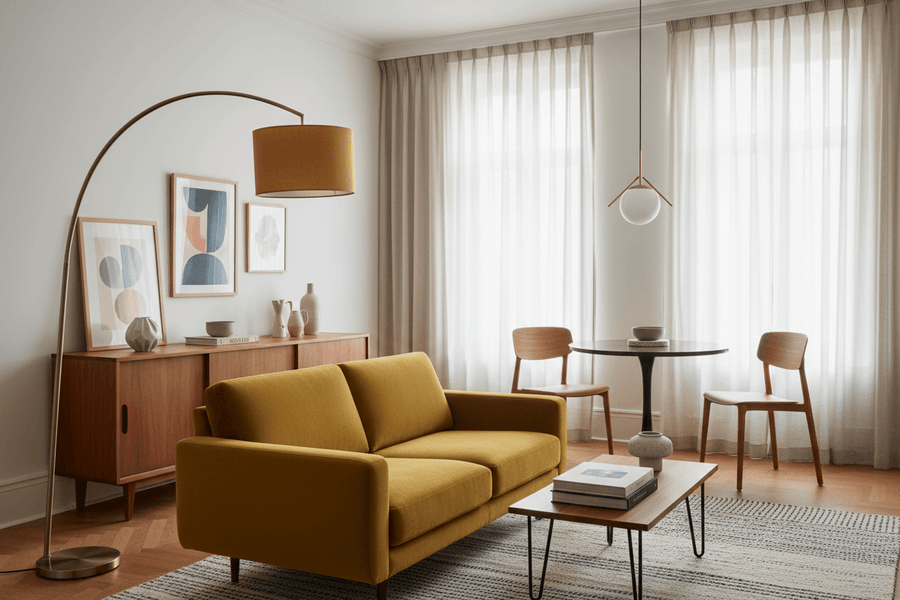
- Floor lamp in a dark corner for additional ambient light and visual balance
- Wall sconces or string lights for accent and atmospheric effect
This combination, achievable for £150–300, creates a sophisticated, flexible lighting environment that rivals schemes costing significantly more.
Practical Implementation: Room-by-Room Guidance
Living Rooms: Combine a central ceiling fixture with dimmer control, flanking table lamps on console tables or side tables, and a floor lamp in a dark corner. This creates layered ambient light with flexibility for different moods and activities.
Bedrooms: Prioritise bedside table lamps for reading and intimate lighting. Add a ceiling fixture with dimmer for ambient light, and consider wall sconces flanking the headboard for additional visual interest and task lighting.
Dining Areas: A single pendant or cluster of pendants hung at the correct height creates a focal point. Supplement with wall sconces or a dimmer-controlled ceiling fixture for flexibility.
Kitchens: Task lighting under cabinets and above work surfaces is essential. Combine with ambient ceiling fixtures and consider pendant lights over islands or breakfast bars for visual interest.
Bathrooms: Sconces flanking mirrors provide flattering task lighting. Add a ceiling fixture for ambient light and consider a dimmer for evening use.
Maintenance and Longevity: Maximising Value
To ensure budget fixtures deliver lasting value, proper maintenance is essential. LED bulbs, while more expensive initially, consume 80% less energy than incandescent alternatives and last 25,000+ hours — representing significant long-term savings.
Maintenance practices include:
- Regular cleaning: Dust accumulation reduces light output and makes fixtures appear neglected
- Bulb replacement: Replace bulbs proactively before failure to maintain consistent light quality
- Dimmer calibration: Ensure dimmers are properly installed and functioning smoothly
- Cable management: Keep cables tidy and secure for a finished appearance
Conclusion: Design Principles Over Budget
The fundamental truth underlying budget lighting design is that the principles that make spaces feel professionally lit — layering, colour temperature, proportion, placement, and intentional curation — are entirely independent of fixture cost. A £30 floor lamp installed thoughtfully with the correct warm-white bulb will transform a space more effectively than a £300 fixture installed carelessly with the wrong colour temperature.
Success in budget lighting requires prioritising design principles over price points, investing strategically in visible elements like shades, and editing ruthlessly to eliminate visual noise. When these strategies are applied consistently, the result is a lighting environment that feels intentional, sophisticated, and professionally designed — regardless of actual expenditure.
For comprehensive options across all fixture types and budgets, explore Nauradika's complete lighting collection, which features carefully curated pieces designed to deliver maximum visual impact at accessible price points.
Nauradika Trade