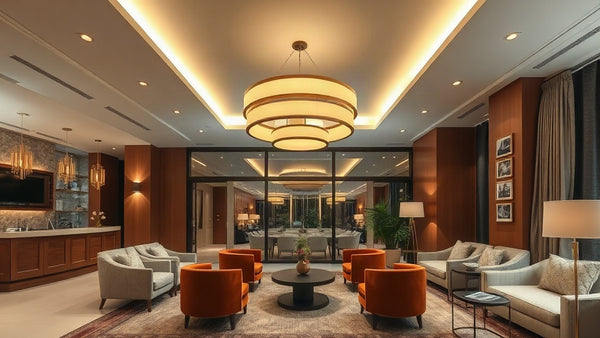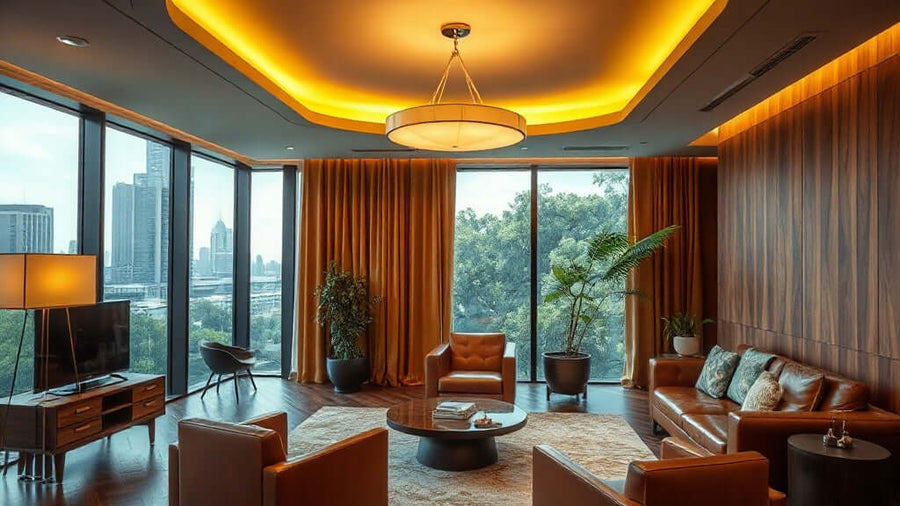
If you're specifying lighting for a hospitality project—whether a boutique hotel, restaurant, or commercial mixed-use space—the stakes are higher than residential work. Hotel lighting must perform triple duty: create atmosphere, support operational function, and survive wear. This year's luxury lighting trends confirm what we're seeing in practice: restraint, warmth, and materials that age well matter more than novelty.
1. Layered Dimming as a Non-Negotiable Specification
Hotel lighting design demands graduated dimming from full operational brightness down to 10% or below. This isn't decorative. Guests expect to set mood without switching fittings on and off. Architects should specify 0–100% dimming capability across all guest-facing ambient and accent layers, with smooth curves and no flicker below 20%. LED technology now supports this reliably; specify drivers and control systems that guarantee performance, and budget accordingly. Cheap dimming creates a 2015-era flicker that will undermine an otherwise refined space.
2. Colour Temperature Flexibility in Restaurant Lighting
Restaurant lighting and hospitality lighting design increasingly embraces tunable white systems (typically 2700K–5000K), allowing operators to shift warmth through service periods. Breakfast demands brighter, cooler light; dinner service benefits from deeper, warmer tones. Rather than over-specifying warm-only fittings, consider a mixed approach: warm LED sources as baseline, with accent circuits that can shift cooler if needed. This gives clients flexibility without visible colour shifts between fittings—a critical detail when you're working with natural materials like brass, oak, or stone.
3. Material Selection That Withstands High Traffic
Luxury lighting trends for 2026 emphasise authenticity of materials, and that philosophy applies equally to hospitality contexts. Specify solid metals—brass, copper, powder-coated steel—over painted finishes where possible. Avoid thin veneers or delicate details in high-wear zones. A substantial golden tubular chandelier that can be cleaned and maintained will outlast a more intricate design that collects dust and fades unevenly. Hotel lighting must look intentional at year three, not compromised.
4. Standardise Fittings Across Zones for Maintenance Efficiency
Resist the temptation to specify one-off designer pieces in every room. Hotel lighting schemes benefit from a core palette of 3–5 fixture types deployed consistently across corridors, rooms, and common areas. This approach—which we've seen in well-executed properties from Copenhagen to London—reduces maintenance burden, simplifies stock, and paradoxically looks more curated than scattered variety. Your modern lighting collection should reflect this discipline: mid-century Scandinavian designs, for instance, work beautifully when repeated in different scales and materials.
Core Fixture Types Worth Standardising
- Pendant or semi-flush for ambient guest room lighting
- Bedside table lamp or wall-mounted reading light
- Linear downlight or recessed option for corridors and bathrooms
- Feature fitting for lobbies, restaurants, and key focal points
- Outdoor or transition-zone lighting (same material language as interior)
5. Warm LED Sources as Standard, Not Luxury Add-On
Hospitality lighting in 2026 has largely moved past cool-toned, clinical LED. Architects should specify 2700K or warmer as the default across all ambient circuits. This is no longer an upgrade cost—it's baseline expectation. Warmer colour temperature also masks dust and imperfections better than cool white, making maintenance cycles longer and hotel lighting appear consistently refined. Pair this with diffusers or frosted glass that soften the source, and you eliminate the flat, sourceless glow that cheap hotel rooms are known for.
6. Control Systems That Hotel Staff Can Actually Use
A beautifully specified restaurant lighting or hotel lighting scheme fails if housekeeping, front-of-house, and maintenance teams can't operate it intuitively. Avoid overly complex scenes, excessive manual override options, or control systems that require training. Specify centralised, simple presets: "Day," "Service," "Evening," "Night." Networked systems are useful for operators, but only if they include straightforward physical override buttons at key points. This balances design intent with operational reality.
7. Summer Light Intensity and Glare Control for Contemporary Spaces
As interiors trend lighter this season—pale timber, cream plaster, minimal colour—hotel lighting specification must address glare and intensity more carefully. Surfaces that reflect 60–80% of light (compared to darker historical finishes at 40–50%) demand softer source positioning, diffusion, or lower lumen outputs in ambient circuits. For guest rooms with large windows, specify blackout or controlled-dimming options, and ensure accent lighting doesn't create harsh pooling or shadows when guests are seated. This is where specification rigour separates good hospitality lighting from great.
Why Architects Should Consider Trade Options
If you're working on multiple projects or bidding specifications for several clients, partnering with a retailer who understands hospitality requirements makes sense. Nauradika's Nauradika trade discount programme offers professional pricing on curated mid-century and Scandinavian modern fittings—exactly the aesthetic language that performs well in contemporary hotel and restaurant contexts. Bulk specification discounts, reliable lead times, and consistent stock availability mean you can specify with confidence.
Final Thoughts: Specification as Design
Hotel lighting specification is architecture. It's not decoration. Every decision—from colour temperature to material durability to control simplicity—shapes how guests experience a space across dozens of hours. The luxury lighting trends confirmed in 2026 reflect this maturity: warmth, authenticity, restraint, and performance matter more than visual complexity. Specify accordingly, and your hospitality projects will age with grace.
Nauradika Trade