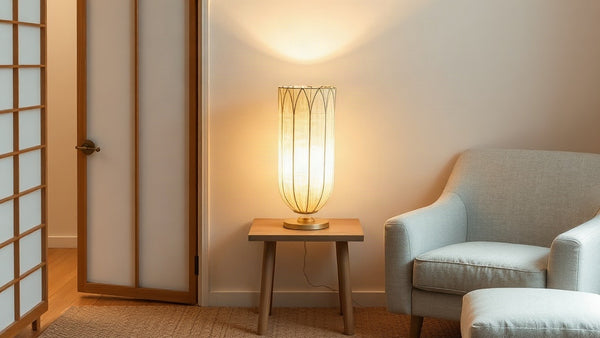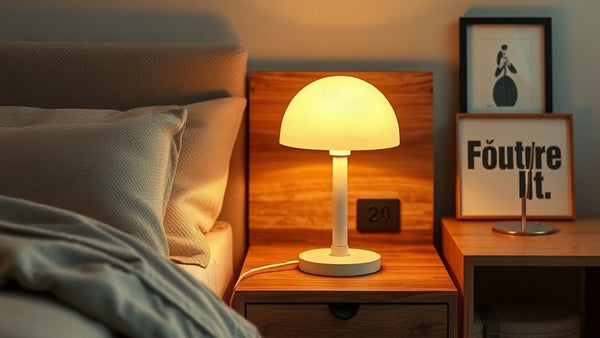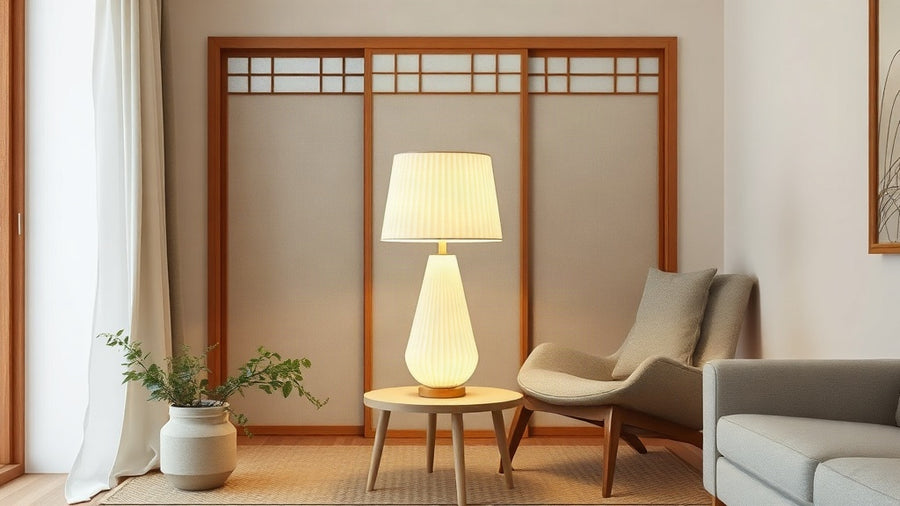
Japanese Rice Paper Lamps in Contemporary Design
As autumn approaches and design briefs shift toward warm, layered lighting schemes, the Japanese rice paper lamp merits serious consideration in both residential and commercial projects. These fixtures represent a refined intersection of material authenticity and functional illumination—qualities increasingly valued in contemporary interiors seeking alternative to mass-produced alternatives.
The Japanese rice paper lamp derives its character from washi, a traditionally handmade paper that diffuses light uniformly whilst maintaining visual transparency. This material property makes it particularly effective for creating ambient lighting that avoids the clinical harshness of exposed sources.
Technical Specification Considerations
Material Performance
- Rice paper (washi) offers consistent light transmission at 70–85%, depending on thickness and fibre composition
- Material is fire-rated to BS 5867 when treated appropriately
- Density typically ranges from 35–60 gsm, providing structural integrity without excessive weight
- Longevity: paper elements require replacement every 5–7 years under standard use conditions
Dimensional Range
Japanese rice paper table lamps are available in modular heights (typically 300–600mm) and diameters (200–450mm), allowing specification flexibility across residential and contract applications. Pendant versions scale to 800mm+ in hospitality and retail settings.
Light Output & Compatibility
- Optimal with warm white LED sources (2700K–3000K) to complement paper's natural warmth
- Power consumption: 8–15W per fixture (LED standard)
- Colour rendering index (CRI) minimum 90 recommended for residential; 95+ for retail applications
- Dimmable variants available—specify 0–10V or DALI-compatible ballasts for integrated schemes
Specification for Different Contexts
In residential schemes, a rice paper table lamp functions effectively as secondary task or accent lighting in bedrooms, living areas, and studies. The diffused glow suits autumn-focused interiors where ambient warmth is prioritised. Specify alongside contemporary timber or metal bases to anchor the piece within broader material palettes.
For commercial projects—boutique hotels, high-end offices, wellness spaces—Japanese rice paper lamps provide sophisticated alternatives to standard recessed or pendant systems. Their handcrafted aesthetic conveys intentionality and quality without compromising on photometric data or compliance requirements.
Durability & Maintenance
Paper elements are inherently hygroscopic. In humidity-prone environments (bathrooms, kitchens), specify sealed or treated variants. Standard maintenance involves occasional dusting; paper does not respond well to water-based cleaning agents.
The Japanese rice paper lamp's appeal lies not in novelty but in its honest material expression and measured light quality. For architects prioritising authentic materiality and warm ambient schemes—particularly as interiors transition into the cooler months—these fixtures offer specification credibility supported by accessible pricing and reliable performance.
Sourcing Considerations
Quality rice paper table lamp variants now exist at multiple price points. Nauradika stocks mid-century modern and contemporary interpretations, enabling specification across budget parameters without compromising on authentic washi construction or photometric performance.
Explore the look through japanese rice paper lamp options and related pieces in our Floor And Table Lamps collection.
Why this style works
The right light does more than illuminate a room. It sets the rhythm of the space, gives furniture a visual anchor, and helps a decorative scheme feel intentional rather than assembled. For readers arriving from search, this section connects the design idea to practical product selection.
- Creates a clear focal point
- Adds warmth and texture
- Works across contemporary and vintage-inspired rooms
How to choose the right piece
Start with scale, then material, then light temperature. A pendant or wall light should feel proportionate to the room and the furniture below it. Natural materials tend to soften modern interiors, while darker finishes can make a more graphic statement.
- Check ceiling height and furniture dimensions
- Choose a finish that repeats elsewhere in the room
- Use warm bulbs for living and dining spaces
Where to use it
This look is especially effective in dining rooms, bedrooms, hallways and boutique hospitality spaces where atmosphere matters. It can also work in renovations where a single lighting change needs to make the room feel more finished.
- Dining tables and kitchen islands
- Bedrooms and reading corners
- Hallways, restaurants and boutique hotels
Shop the Look
For the most relevant products, start with the article's featured piece and the matching collection. Product price, availability and images should be pulled live from Shopify when the template renders.
View the featured japanese rice paper lamp or browse the full related collection.
Featured in this guide
View collectionWhy this style works
Frequently asked questions
Nauradika Trade