The Underestimated Power of a Single Light Tone
Most discussions of interior lighting focus on variety — layering different sources, mixing warm and cool tones, creating contrast through the interplay of light and shadow. This is sound advice. But there is a compelling counterargument: the monochromatic lighting scheme, where a single, consistent colour temperature is maintained throughout a space, can produce effects of remarkable coherence and emotional power that layered approaches sometimes miss.
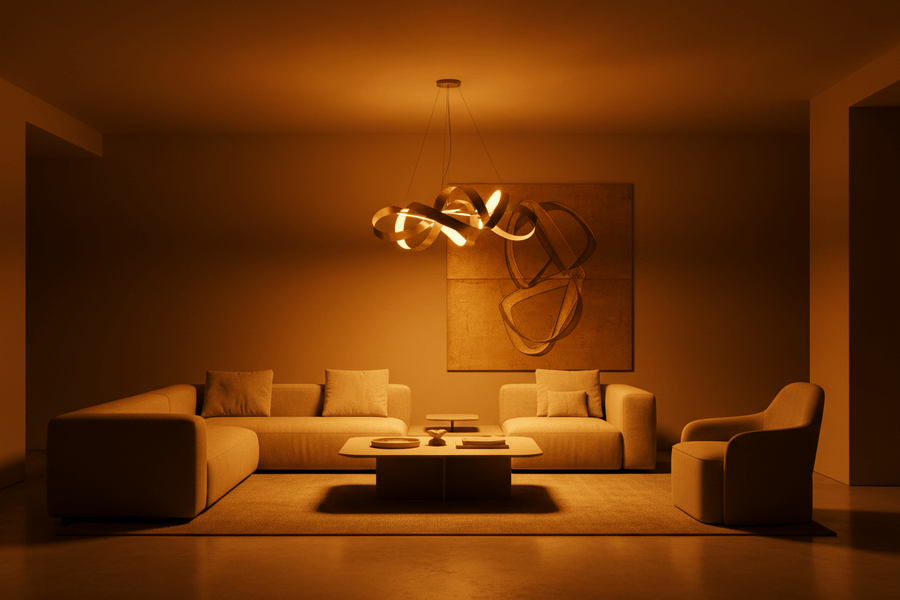
Monochromatic doesn't mean monotonous. It means intentional. A room lit entirely in deep, warm amber creates a specific and unmistakeable atmosphere — intimate, sensuous, timeless. A space lit throughout in cool, diffuse white creates an entirely different effect — crisp, focused, modern. The consistency itself becomes the design statement. There is no visual noise, no conflicting colour temperatures competing for dominance. The light is unified, and that unity gives the space a quality of deliberateness that registers as design rather than accident.
What Colour Temperature Actually Means
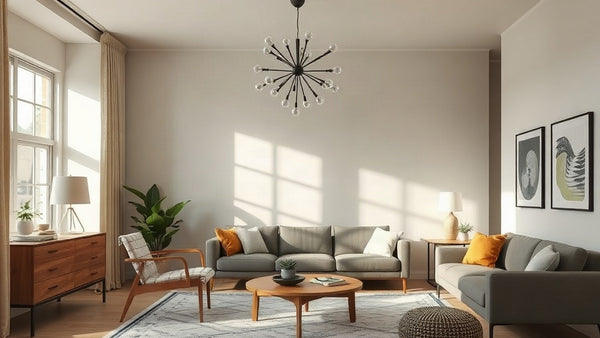
Colour temperature is measured in Kelvin. Warm white sits between 2,700K and 3,000K — the golden-amber range of incandescent bulbs and late afternoon sun. Neutral white runs from 3,500K to 4,000K. Cool white or daylight starts at 5,000K and above. Most domestic interiors default unintentionally to a mixture of temperatures — some warm bulbs here, a cool ceiling fitting there. The result is a visual incoherence that most people can't quite identify but that persistently prevents rooms from feeling designed.
The Warm Monochromatic Scheme
The warm monochromatic scheme is the more naturally appealing of the two for most domestic spaces. When every source in a room produces light at 2,700K — from the pendant over the dining table to the sconces on the bedroom walls to the table lamp in the corner — the cumulative effect is a warmth and coherence that feels almost architectural. Warm monochromatic schemes work best in living rooms, dining rooms, and bedrooms. The challenge is maintaining temperature consistency when mixing fixture types. Specifying bulbs carefully and replacing factory-fitted LEDs where necessary is often required.
Browse Nauradika's pendant collection for warm-toned designs that work together in cohesive schemes, and our wall sconce range for mid-height warm-light sources.
The Cool Monochromatic Scheme
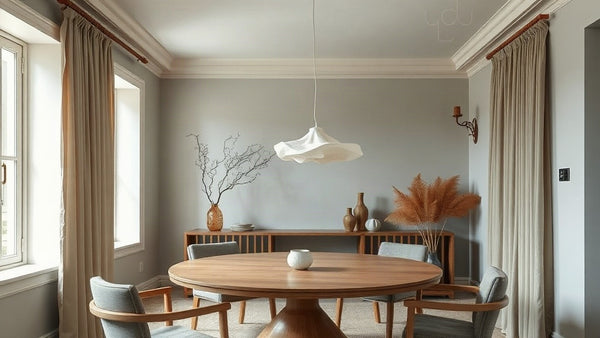
The cool monochromatic scheme is less common in domestic interiors but creates a distinctive and powerful atmosphere. A room lit entirely in cool, diffuse white has a quality that is simultaneously clinical and dramatic. Think of the light in a museum gallery, a high-end fashion boutique, or a minimalist Scandinavian home. Cool monochromatic approaches strip away visual warmth and foreground form, texture, and colour. They work best in spaces where visual clarity is a priority — home offices, studios, kitchens, and bathrooms.
Mixing Intensities Within a Monochromatic Scheme
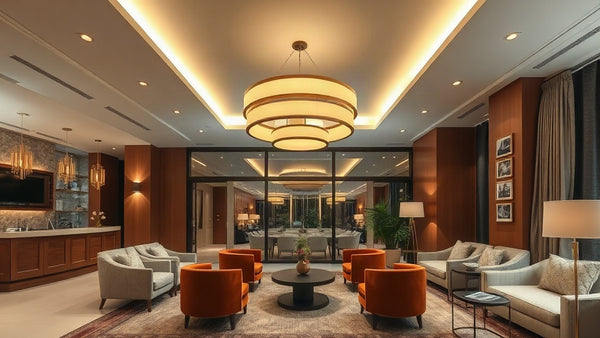
The most sophisticated monochromatic schemes achieve their drama not through colour variation but through intensity variation — creating pools of brightness and areas of shadow, all in the same colour temperature. This is the technique used in high-end restaurant and hospitality lighting, where the same warm amber tone might be used for everything from a bright bar display to a barely-glowing candle. The result is a space that reads as deeply, richly lit — full of visual interest — despite using only a single colour of light. Dimmers are essential to this approach. Every circuit in a well-executed monochromatic scheme should be independently dimmable, allowing fine-grained control over the balance of intensities.
Practical Implementation
Converting a room to a monochromatic scheme is simpler than it sounds. First, audit the colour temperatures of every existing light source and identify the outliers. Second, decide which temperature to standardise on — for most living spaces, warm white at 2,700K is the natural choice. Third, replace all bulbs and LEDs to match the chosen temperature, and add dimmers to any circuits that don't currently have them. The investment is modest, but the impact on the quality of a space is often transformative. Find all the fixtures you need at Nauradika.
Nauradika Trade