Hotel Lighting Design in the Age of Intentional Interiors
The conversation around hotel lighting has fundamentally shifted. Where once hospitality lighting meant bright, uniform illumination and decorative excess, contemporary architects and designers now approach the brief with the rigour of residential practice—only with higher stakes and more complex technical demands. According to Lumenture's 2026 Lighting Trends report, the industry is moving decisively towards human-centric design, circadian-responsive systems, and layered lighting hierarchies that prioritise guest wellbeing alongside aesthetic coherence.
If you're specifying hotel lighting for a new-build or renovation, this guide cuts through the noise and addresses what actually matters: how to create spaces that feel intentional, perform reliably, and justify their specification to clients and end-users alike.
Understanding the Three-Layer Framework for Hospitality Lighting
Every successful hotel lighting scheme operates on three distinct layers: ambient, task, and accent. This isn't new thinking, but it's rarely executed with precision. The distinction becomes critical when you're working across public circulation, guest rooms, and service areas.
Ambient Lighting: The Foundational Layer
Ambient lighting sets the atmospheric baseline. In hotel contexts, this is where most projects falter—designers either over-illuminate (creating institutional brightness) or under-deliver (leaving spaces feeling tentative). The target should be a warm, evenly distributed foundation that reads as comfortable without flattening the space.
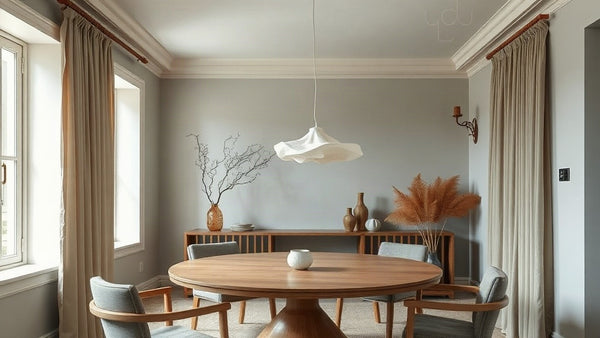
For summer interiors and lighter colour palettes, consider colour temperature carefully. A 2700K warm white remains the hospitality standard for public spaces, but the 2026 trend toward cooler ambient (3000K) paired with warm accent creates visual depth. This layering approach is what separates competent hotel lighting from memorable design.
Recessed downlighting remains essential, but specify dimmable LED units with high CRI (95+) to maintain colour accuracy as levels adjust. Expect to budget approximately 150-200 lux for lobby ambient, 100-150 lux for corridors, and 80-120 lux for guest room ambient.
Task Lighting: Function and Refinement
Task lighting requires specification discipline. Desk lamps in guest rooms, reading lights in seating areas, and ambient lighting in restaurant zones all fall under this category. The mistake is specifying decorative fittings that fail functionally—a beautiful table lamp that casts insufficient light on a work surface is a failure, regardless of its aesthetic merit.
For restaurant lighting and dining areas specifically, task illumination should sit between 300-500 lux, with directional control to prevent glare on plated food and create intimate visual separation between tables. This is where pendant fixtures and adjustable spotlights earn their place in the specification.
Consider colour temperature stratification: warmer (2700K) task lights in dining and guest areas, slightly cooler (3000K) in work surfaces and corridors. This subtle distinction supports circadian rhythm awareness—increasingly expected in hospitality lighting design.
Accent Lighting: The Signature Layer
Accent lighting is where hotel lighting becomes memorable. This is architectural lighting—highlighting textures, creating focal points, and establishing visual hierarchy. In contemporary practice, accent lighting should comprise 10-15% of total light output but 40% of the design budget.
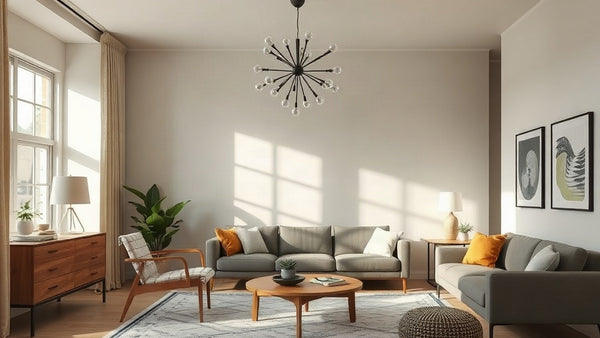
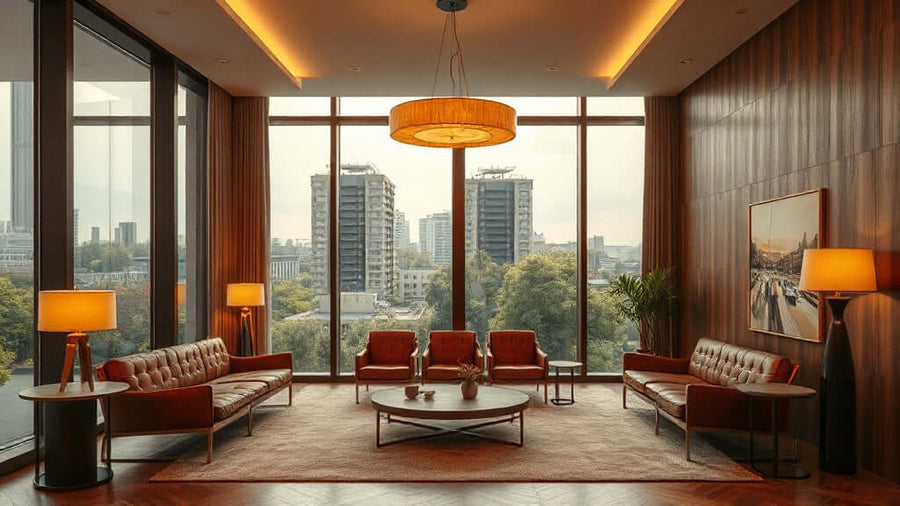
Wall-wash lighting for texture, uplighting for architectural features, and carefully positioned spotlighting for artworks create the layers that transform a well-lit space into a considered interior. This is also where mid-century modern and Scandinavian design principles translate most directly—restrained, purposeful, and visually intelligent.
Colour Temperature and Guest Perception
The Lumenture 2026 report emphasises that guests now expect perceptually intelligent lighting. This means colour temperature should shift subtly throughout the day—cooler in morning/afternoon public spaces (supporting alertness), warmer in evening and service areas (supporting relaxation and appetite).
Tunable white systems (2700K-4000K) are increasingly viable budget-wise, but aren't essential for every application. Where budget constrains, specify 2700K ambient throughout—it remains the safest, most universally flattering choice for hospitality lighting.
For summer projects and lighter interiors with pale, neutral furnishings, be cautious with warm light levels below 2700K. What reads as cosy in winter feels anaemic against cream fabrics and pale timber. Maintain colour consistency and let the materiality of the space dictate warmth, not over-compensation through light.
Material Selection and Fixture Specification
Hotel lighting fixtures endure scrutiny—visual, physical, and durability-wise. Specify accordingly.
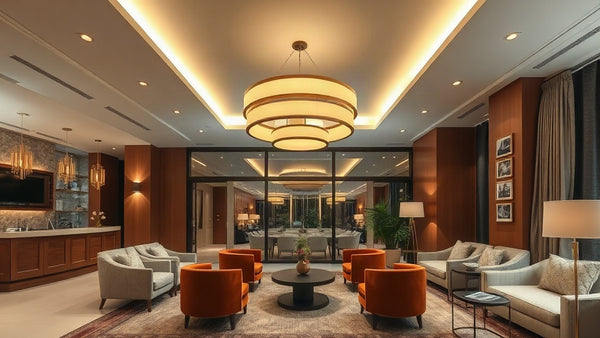
For public areas and accent lighting, consider mid-century modern or Scandinavian-influenced design that reads as timeless rather than trendy. A luxury hotel tubular golden LED chandelier brings warmth and visual interest without datedness—the brass or brass-look finishes reference proven design language rather than chasing momentary trends.
Material palette matters: brass, brushed nickel, matte black, and natural timber remain specification-safe in hospitality. Coloured finishes (particularly in guest rooms) should be reserved for accent elements, not ambient fixtures. You'll regret specifying rose gold downlights in every guest room within 18 months.
Durability trumps novelty. Specify fixtures with proven track records, replaceable components, and manufacturer support. In hotel contexts, a pendant that requires ordering a bespoke part from Europe in 3 months isn't acceptable.
Guest Room Lighting: Layering Comfort and Function
Guest rooms deserve particular attention—they're where guests spend most time, and lighting failures are immediately visible as complaints.
Layer guest room lighting deliberately: ambient ceiling fixture (dimmable, 2700K), bedside reading lights (adjustable, 300+ lux delivery), desk/work surface task lighting (if space permits), and accent uplighting (optional but valuable). In a 30m² room, this typically requires 4-6 distinct circuits and control points.
Ensure bedside lighting can be controlled from bed—a wall-mounted reading light with integrated dimming beats furniture-mounted lamps for guest satisfaction. Specify shades that diffuse light evenly without harsh shadow lines on pillows.
Bathrooms require 300-400 lux around mirrors (high CRI, cool white around 3000K) and additional ambient ceiling illumination. Over-bright bathroom lighting is a common complaint; mirror-mounted strips paired with dimmed ambient typically outperforms single bright fixtures.
Control Systems and Flexibility
Hospitality lighting without intelligent control is like specifying the right furniture then bolting it down—you've missed the point. Dimmers should be standard throughout. Scene setting (activating preset combinations of fixtures) is increasingly expected by guests and reduces staff training requirements.
Consider future flexibility: what feels like the right lighting today may require adjustment as operations evolve. Modular, upgradeable control systems outperform fixed installations. LED compatibility across all dimmable circuits prevents compatibility headaches later.
Restaurant Lighting: Creating Appetite and Ambiance
Restaurant lighting and hospitality lighting converge in food service spaces. This is where the complexity escalates—you're balancing presentation of food, guest comfort, staff functionality, and atmosphere simultaneously.
Pendant fixtures over tables create visual separation and psychological intimacy. Specify dimmable versions (allowing day/night operation variations) with warm colour temperature (2700K) and shielding that prevents direct view of bright elements from seated height. Pendants should deliver 200-300 lux on the table surface while appearing warm and welcoming.
Accent lighting on architectural features or artwork creates focal points and visual depth. Wall-wash lighting on light-coloured surfaces can brighten perceptually without adding overhead glare.
Critical error: over-lighting restaurant spaces in pursuit of "making the space feel open." Modern restaurant design thrives on intimate, layered lighting that creates visual privacy despite proximity. Dimmer levels around 60-70% of full output typically feel correct once guests are seated and eating.
Budget Allocation and Value Engineering
Hotel lighting budgets rarely align with design ambitions. Understand where to invest and where to simplify.
Invest in: Dimming/control infrastructure, colour-accurate LEDs (CRI 95+), durable finish fittings in public areas, bedside reading light functionality, bathroom mirror lighting.
Simplify in: Corridor decorative fixtures (clean, modest, durable beats ornate), guest room ambient fixtures (standard ceiling mount typically adequate), service area aesthetics.
For projects requiring extensive specification, Nauradika's trade discount programme provides meaningful cost reduction across lighting elements while maintaining design integrity. Mid-century and Scandinavian-influenced fixtures deliver timeless value without requiring premium-tier budgets.
Selecting Modern Lighting Collections
When evaluating lighting suppliers for hotel projects, look beyond single products to coherent collections. Modern lighting collections that span ambient, task, and accent categories allow consistent design language across multiple spaces while simplifying procurement and replacement logistics.
Scandinavian and mid-century modern design principles—simplicity, functionality, restrained material expression—translate directly into hospitality contexts. These aren't aesthetic choices; they're practical frameworks for creating spaces that function beautifully across multiple uses and temporal shifts.
Lighting Specification Checklist for Architects
- Confirm colour temperature consistency across ambient, task, and accent layers
- Specify CRI 95+ for all guest-facing areas
- Ensure all ambient and task fixtures are dimmable (0-100% dimming range)
- Document lux levels for each space type and verify against standards
- Confirm LED compatibility and colour consistency across suppliers
- Specify control zones that allow independent dimming of layers
- Include emergency lighting and backup systems in electrical drawings
- Confirm fixture finishes are durable and appropriate to space function
- Verify bedside reading light delivery and control accessibility
- Test bathroom mirror lighting at scale before finalising specification
The Future of Hotel Lighting
As the Lumenture 2026 report highlights, hospitality lighting increasingly reflects broader wellness and sustainability expectations. Guests expect human-centric design, circadian-responsive systems, and energy-efficient operation. Architects specifying hotel lighting today should design for these expectations—not as trend-chasing, but as baseline functionality.
The work is precise, layered, and distinctly non-generic. When executed well, hotel lighting becomes transparent to guests—they experience comfort, visual interest, and appropriate functionality without consciously considering the specification. That invisibility is the goal.
Nauradika Trade