Hotel Lighting Design: The Architect's Essential Guide
When you're specifying lighting for a hospitality project, the stakes are considerably higher than residential work. A hotel lighting scheme must perform multiple functions simultaneously: it establishes brand identity, guides guest experience, supports operational efficiency, and meets increasingly stringent energy regulations. The difference between mediocre and exceptional hotel lighting often determines whether guests book again.
This year's Lumenture Lighting Trends report has highlighted a significant shift in how architects approach hospitality spaces. The emphasis has moved decisively away from over-bright, standardised solutions toward layered, contextual lighting that responds to time of day, guest activity, and emotional response. For architects working on hotel or restaurant lighting projects, understanding these principles is now table stakes.
The Fundamentals of Hotel Lighting Design
Hotel lighting differs fundamentally from residential work because it operates within a commercial framework where every fixture must justify its presence operationally and aesthetically. You're designing for performance: guest satisfaction, staff efficiency, energy compliance, and maintenance protocols.
Understanding Hotel Lighting Layers
Professional hospitality lighting requires a minimum of three distinct layers, each serving different functions:
- Ambient layer: The base illumination that fills the space. In hotel lighting, this is typically dimmer and warmer than traditional commercial specs (2700K–3000K preferred). This layer should never be harsh or uniform—variation creates sophistication.
- Task layer: Functional lighting for specific activities: reading at desks, dining, grooming. These require higher lux levels and precise beam angles.
- Accent layer: Architectural lighting that highlights design features, artwork, or establishes mood. This is where hotel lighting becomes memorable.
The most successful hotel lighting designs use all three layers working in concert, typically controlled on separate dimmer circuits. A guest should never be aware of the infrastructure—they should simply feel that the space is appropriate for their current activity.
Colour Temperature Strategy
The hospitality industry has largely settled on 2700K as the standard for public areas and guest rooms. This warm, incandescent-like quality creates psychological comfort and reduces visual fatigue over extended periods. However, restaurant lighting and retail areas within hotels often benefit from slightly cooler tones (3000K) to enhance product visibility without becoming clinical.
For hotel lobbies and corridors, consider transitional zones where colour temperature shifts subtly. A 2700K ambient with accent lighting at 3000K creates visual interest without jarring the guest. Avoid mixing colour temperatures randomly—consistency within zones is crucial.
Lighting Solutions for Contemporary Hotel Projects
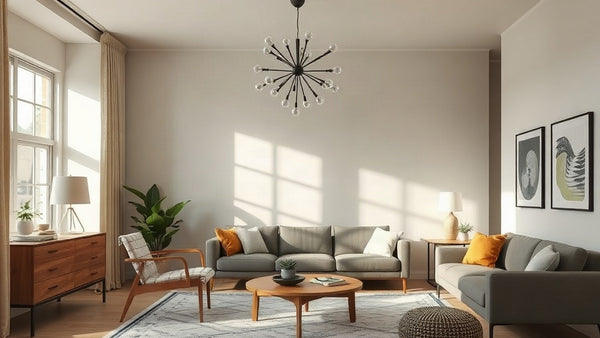
Current hotel lighting trends emphasise simplicity paired with precise specification. Generic commercial fixtures no longer meet design standards. Architects are increasingly specifying mid-century modern and Scandinavian-influenced pieces that provide character without nostalgia.
Pendant and Suspension Lighting
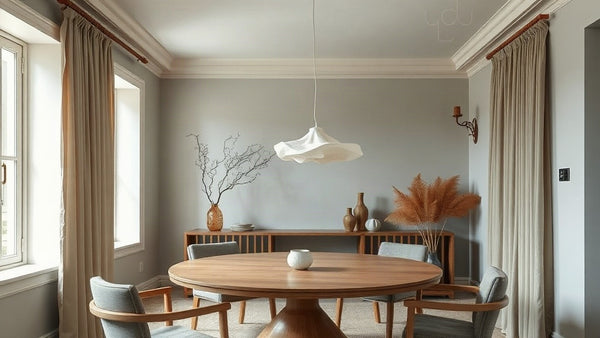
Pendant fixtures have become standard for restaurant lighting and casual dining areas within hotels. Look for designs with proper glare management—sharp downlight without diffusion creates an uncomfortable environment. The best contemporary options feature either fabric shades, frosted glass, or carefully designed baffles that control the light beam while maintaining fixture visibility.
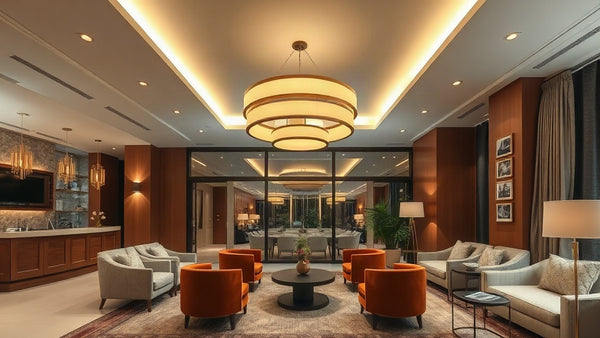
When specifying pendants for hotel corridors, circulation spaces, and bedside reading, opt for fixtures with integrated LED and appropriate dimming capacity (0–10V or DALI preferred for larger installations). The luxury hotel tubular golden LED chandelier represents the current standard for sophisticated hospitality applications—it delivers the visual warmth of traditional brass and glass while meeting modern efficiency requirements and dimming compatibility.
Wall Sconces and Directional Fixtures
For hotel bedrooms, bathrooms, and dining spaces, wall-mounted fixtures provide targeted illumination without ceiling clutter. Sconces flanking mirrors in ensuite bathrooms require sufficient brightness (typically 400–600 lux at face height) without creating unflattering shadows or glare on reflective surfaces.
Restaurant lighting particularly benefits from directional wall sconces. These allow you to create visual hierarchy—illuminating artwork, architectural features, or the dining table itself while keeping the perimeter softer. This technique makes spaces feel larger and more intimate simultaneously.
Architectural Integration
The most sophisticated hotel lighting schemes embed fixtures into the architecture rather than applying them as afterthoughts. Recessed downlights in coffers, linear strips concealed in cornices, and cove lighting integrated into architectural soffits all provide ambient illumination without visible fixtures competing for attention.
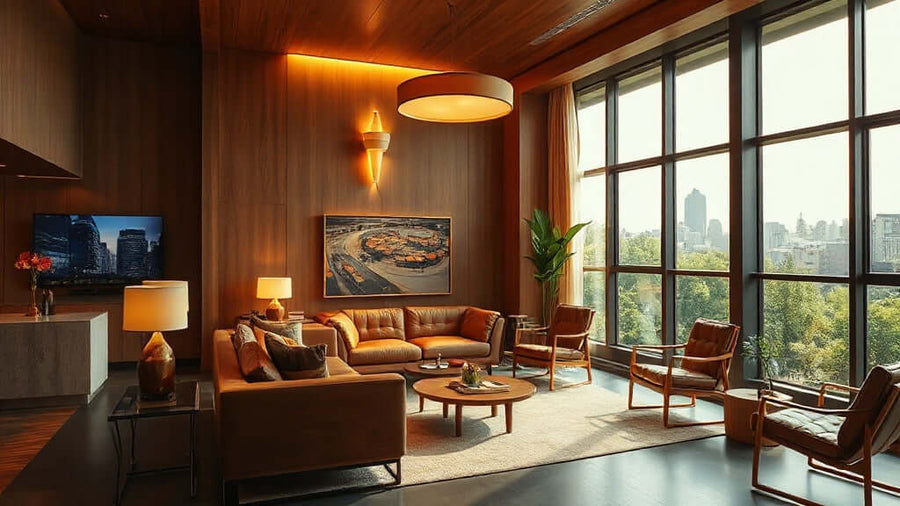
For 2026 projects, consider architectural lighting that responds to the building's materiality. Illuminating natural stone, timber, or plasterwork directly becomes a design strategy rather than functional necessity. This approach—where the architecture itself becomes the light source—defines current hospitality lighting practice.
Practical Specification for Hotel Lighting Projects
Energy and Controls
LED is now mandatory for all commercial hospitality applications on sustainability grounds. However, not all LEDs perform equally. Specify fixtures with high colour rendering index (CRI 90+) to maintain skin tones and material appearance. Lower-quality LEDs create the "cold, tired" atmosphere that damages hospitality projects.
For hotel lighting across larger installations, DALI (Digital Addressable Lighting Interface) provides superior control flexibility compared to traditional dimming. Individual fixtures or zones can be controlled without excessive wiring, and scenes can be programmed for different times of day. This becomes invaluable in lobbies, restaurant spaces, and corridor systems where ambiance changes throughout the day.
Emergency egress lighting and safety features must be integrated seamlessly rather than appearing as afterthoughts. Specification-grade fixtures with integrated emergency battery backup maintain aesthetic integrity while meeting Building Regulations.
Glare Management
Glare is the primary source of guest dissatisfaction in hotel and restaurant lighting. Any fixture visible from typical viewing angles should employ diffusion or shielding. For ceiling-mounted fixtures, the brightness should not exceed 500 cd/m² at viewing angles below 45 degrees from vertical.
This explains why generic downlights often fail in hospitality applications: they lack proper diffusion, creating bright spots that reduce visual comfort. Investing in fixtures with integrated diffusers or baffles—though initially more expensive—prevents costly retrofitting later.
Maintenance and Durability
Hotel lighting operates continuously. Specify fixtures designed for intensive use with accessible components. Sealed optics reduce dust accumulation in public spaces. Modular designs allow field replacement of LEDs or diffusers without removing entire fixtures.
For larger projects, establish relationships with suppliers who understand hospitality requirements. Nauradika's Nauradika trade discount programme recognises architectural and hospitality professionals with volume pricing and dedicated support.
Design Inspiration: Current Hotel Lighting Standards
The shift in hotel lighting philosophy over the past two years has moved decidedly toward understatement. Maximalist crystal chandeliers have given way to sculptural simplicity. Current hospitality projects favour fixtures that read as objects rather than mere utilities—pieces that guests notice and appreciate rather than consciously perceive as "lighting."
Scandinavian and mid-century modern aesthetics dominate high-end hotel specifications because these design languages prioritise restraint, materiality, and functional elegance. A brass dome, a sculpted glass shade, or a simple timber frame reads as craft rather than commercial installation. Browse contemporary lighting collections that meet these standards while remaining within realistic budgets for hospitality projects.
Common Hotel Lighting Mistakes to Avoid
- Over-specification of brightness: Most architects light hospitality spaces too brightly. Start 20% dimmer than your initial instinct and adjust upward during mock-ups.
- Ignoring colour consistency: Mixing LED brands or colour temperatures throughout a space creates jarring transitions. Specify consistent solutions.
- Inadequate dimming: Budget for proper dimmer infrastructure rather than treating it as an afterthought. Control quality directly impacts guest experience.
- Visible glare sources: Every fixture visible from typical seating or standing positions must be properly diffused.
- Neglecting vertical illumination: Horizontal surfaces receive light; vertical surfaces (walls, artwork, faces) require specific consideration in hospitality design.
Moving Forward: Hotel Lighting in 2026
As we progress through 2026, the emphasis on sustainable, efficient hospitality lighting continues strengthening. The Lumenture report confirmed what leading architects already understand: guests no longer accept basic lighting. They expect environments that feel considered, composed, and appropriate to their needs in each moment.
Your role as architect is to embed this sophistication into every specification. Hotel lighting, restaurant lighting, and hospitality lighting generally work best when they're invisible—guests should feel the effect rather than notice the equipment. Achieve this through layered design, proper controls, quality fixtures, and rigorous glare management.
The financial investment in proper specification pays measurable returns: guest satisfaction, staff efficiency, operational cost reduction, and maintenance simplicity. Cutting corners on hospitality lighting systems creates persistent problems that damage client relationships and project reputation.
Nauradika Trade