There is a category of lighting that sits at the intersection of fine craft, design history, and contemporary relevance — and Italian glass pendant lights occupy it almost exclusively. No other lighting tradition combines the material intelligence of centuries-old glassmaking with the formal boldness of twentieth-century design in quite the same way. And in 2026, after years of being overshadowed by Scandinavian minimalism and industrial metal aesthetics, Italian glass lighting is experiencing precisely the reassessment it deserves.
This guide is written for architects, interior designers, and serious homeowners who want to understand the tradition they are buying into, how to evaluate quality in contemporary pieces, and how to use italian glass pendant lights in ways that feel considered rather than merely decorative. We will pay particular attention to the 1970s production that is driving the current revival — the bold forms, the warm colour palette, and the material qualities that made 70s italian glass lighting among the most collectible design objects of the era.
The Italian glass lighting tradition
Italian glassmaking is among the oldest continuous craft traditions in Europe. The Venetian island of Murano has been producing fine glass since the thirteenth century, and the techniques developed there — mouth blowing, cane work, millefiori, murrine — remain the foundation of Italian art glass production today. What changed in the twentieth century was the application of these ancient techniques to industrial design.
The great Italian design studios of the postwar period — Venini, Barovier and Toso, Vistosi, Artemide — understood that glass was not merely a material for making lamp shades. It was a medium for shaping light itself. A blown glass pendant does not simply cover a bulb; it transforms the character of the light that passes through it. The colour, thickness, texture, and form of the glass all act on the light source, producing a quality of illumination that no other material can replicate.
This understanding drove the design ambition of Italian glass lighting through the 1950s, 60s, and into the 1970s. Each decade produced its own formal language, but the commitment to glass as a primary design material remained constant. It is this body of work — particularly the bold, colourful, organically formed pieces of the 1970s — that is generating the most interest among contemporary designers and their clients.
The 1970s: when Italian glass found its boldest voice
If the 1950s were about elegance and the 1960s about geometry, the 1970s were about colour and organic form. Italian glass design in this decade moved away from the precise, architectural forms of the previous generation and toward shapes derived from natural objects — petals, bubbles, droplets, pods. The palette shifted from cool, clear glass and pale opalines toward deep amber, burnt orange, forest green, and smoked brown.
The vintage murano glass pendant of this era is distinguished by several characteristics that are worth knowing for both evaluation and specification purposes. The glass is typically thicker than earlier production, which means it handles light differently — absorbing more, transmitting less, creating a deeper, richer glow rather than the sharp brilliance of thin-walled glass. The forms are asymmetric or deliberately imperfect in ways that reflect the handmade process. The colours are saturated and warm, chosen for their behaviour under incandescent light rather than in daylight.
Original pieces from this period are increasingly scarce and increasingly valuable. A genuine Vistosi or Venini pendant from the 1970s will command significant prices at specialist dealers and auction houses. What Nauradika offers is something different but equally valuable: contemporary pieces that capture the formal language, the material warmth, and the colour intelligence of the originals, made to a quality standard that makes them viable for both residential and contract specification.
How Italian glass behaves as a lighting material
For any specifier working seriously with glass lighting, understanding how different glass types behave under illumination is essential. The variables are colour, thickness, surface treatment, and form — and each interacts with the others in ways that can be counterintuitive.
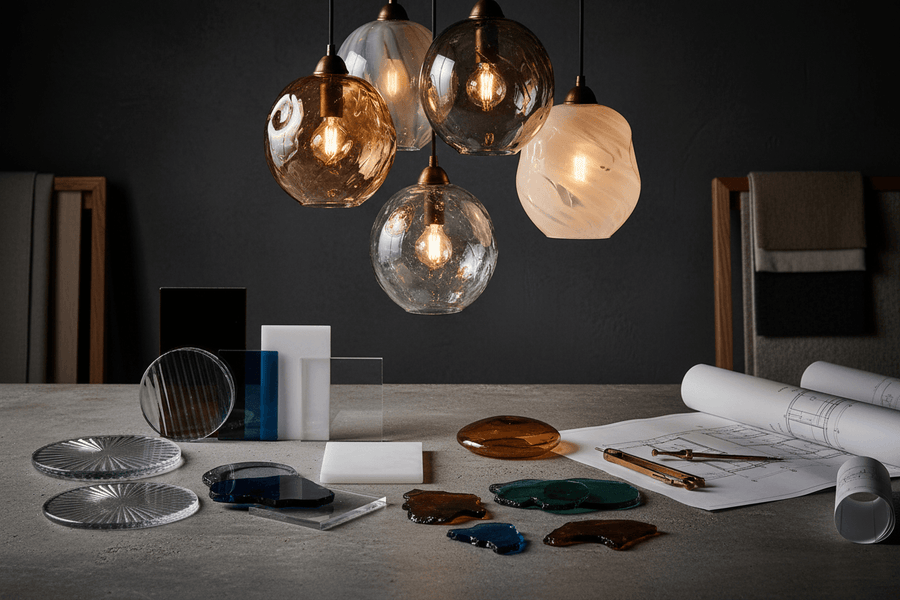
Clear glass: transmits light almost completely, making the bulb itself the primary visual element. Best with high-quality filament-style LED bulbs that are attractive as objects. The pendant form reads most strongly in the unlit state — at night, the glass almost disappears and the bulb floats.
Coloured glass: absorbs part of the spectrum and transmits the rest, which means the colour of the glass shifts depending on the bulb temperature. A warm 2200K source through amber glass creates a deep, honeyed glow — one of the most flattering light qualities in residential use. The same amber glass with a cooler 3000K source produces a sharper, more yellow result that loses much of the warmth. Always specify bulb temperature when working with coloured glass pieces.
Opaline and frosted glass: diffuses light completely, eliminating any visibility of the source. The pendant becomes a luminous object — the entire surface glows evenly. This produces the softest, most flattering light quality, but loses the drama of coloured glass and the precision of clear glass. Best in bedrooms and dining rooms where softness is the priority.
Textured glass: the ribbed, dimpled, and patterned surfaces characteristic of 1970s Italian production create a moving light quality — as the viewing angle changes, different parts of the glass catch and refract differently. This is what gives vintage Murano pieces their quality of aliveness, the sense that the light is doing something rather than simply being on.
Specifying Italian glass pendants by room
The material qualities of Italian glass pendants make them well suited to specific room types and less suited to others. A brief room-by-room guide:
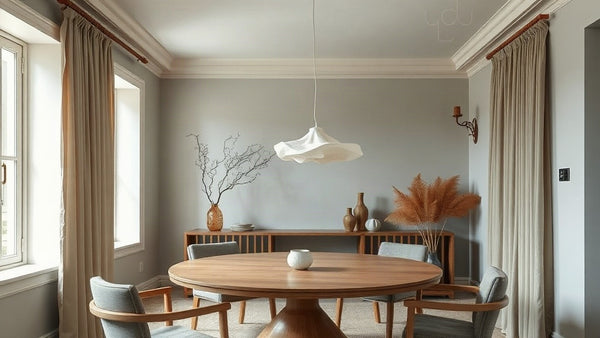
Dining rooms: the natural home of the Italian glass pendant. The warm, diffused light from a coloured or opaline glass shade is the most flattering possible illumination for a dining table — it makes food look better, skin tones warmer, and the overall atmosphere more convivial. Hang a single pendant of 35–50cm diameter 65–70cm above the table surface. For longer tables, a cluster of three smaller pendants spaced evenly creates equivalent visual impact with a more considered, less heavy result.
Kitchens: the retro saucer pendant in Italian-influenced glass works beautifully above a kitchen island, particularly in schemes with warm material palettes — oak cabinetry, stone worktops, brass hardware. The coloured glass adds warmth and character without the visual weight of a metal pendant. Avoid very dark glass in kitchen applications where light output is a practical concern.
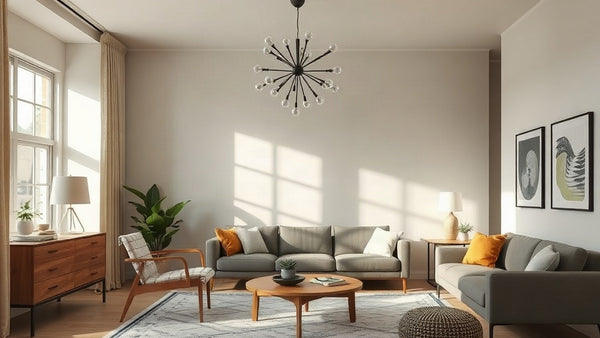
Living rooms: a large Italian glass pendant — 40–60cm diameter — as the primary ceiling fixture in a living room creates a room-defining quality that no recessed downlight arrangement can match. The key is to keep everything else in the room relatively restrained; the pendant earns its position by being the most visually complex element in the space.
Bedrooms: opaline and frosted glass pieces work particularly well in bedrooms, where the quality of light matters more than its directionality. A frosted glass pendant on a dimmer circuit, producing a warm glow at 30–40% in the evening, creates exactly the right atmosphere for winding down.
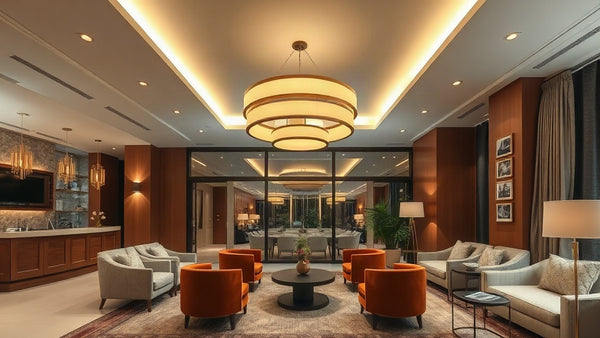
Hospitality: Italian glass pendants are among the most reliable specification choices for boutique hotel rooms, restaurant dining areas, and bar spaces. They read as luxurious without being aggressive, they age beautifully, and their material quality is immediately apparent to guests in a way that reinforces the quality positioning of the property.
The Nauradika Italian glass range
Our current range captures the most relevant moments in Italian glass lighting history for contemporary specification. The Italian Glass 70s Pendant Lights are the most direct expression of the 1970s tradition — warm amber glass in an organic form that references the Vistosi and Guzzini production of the era without reproducing it literally. For something closer to the earlier, more architectural Italian glass tradition, the Luxurious Glass Disc Chandelier brings mid-century geometry and material warmth together in a form that works across a wide range of interior directions.
For those drawn to the organic, petal-like forms that characterised the most experimental Italian glass production of the 1970s, the Colourful Glass Pendant in our range offers an entry point at a scale and price that works for both single-room residential projects and multi-room contract specifications. Used in clusters of three or five at varying heights, it creates the kind of composed, layered ceiling installation that photographs as well as it lives.
The Italian-Inspired LED Suspension Lamp completes the picture for those who want the material warmth of Italian glass with the energy efficiency and longevity of contemporary LED technology — the integrated LED source is matched in colour temperature to the glass colour, producing the warm glow of the originals with a fraction of the running cost.
Practical specification notes
A few points that come up consistently when specifying glass pendants on real projects:
Weight: hand-blown glass pendants are heavier than they appear. Always confirm ceiling fixing capacity before specifying, particularly in older properties. For plasterboard ceilings, a direct joist fixing or a spreader plate is essential.
Cleaning: glass accumulates dust and fingerprints more visibly than metal or fabric shades. In hospitality and high-traffic residential environments, consider how accessible the pendant is for regular cleaning. A piece that requires a ladder to clean every two weeks may create maintenance difficulties that affect the client relationship.
Bulb access: some glass pendant forms make bulb replacement difficult without removing the pendant from the ceiling. Check access arrangements before specifying, particularly for pieces where the glass form encloses the fitting completely. LED sources with a rated life of 25,000 hours or more significantly reduce the frequency of this issue.
Browse the full vintage and Italian-inspired lighting collection at Nauradika. Trade accounts with project pricing are available for architects, interior designers, and hospitality specifiers — register here to access trade pricing on your next project.
Nauradika Trade