Midcentury modern design, which flourished between the 1930s and 1960s, is celebrated for its clean lines, organic forms, and emphasis on functionality. While furniture like the Eames Lounge Chair or the Tulip Table often steals the spotlight, lighting design was equally revolutionary during this period. Midcentury modern lighting fixtures were not just sources of illumination—they were sculptural statements, blending artistry with utility. These designs, born from the post-war optimism and technological advancements of the era, continue to inspire contemporary brands like Nauradika, where you can find pendant lights and wall lamps that pay homage to this golden age.
At the heart of midcentury modern lighting was a bold use of color, material, and form. Designers like Poul Henningsen, Arne Jacobsen, and George Nelson pushed the boundaries of what lighting could be, transforming humble lamps into iconic works of art. Their creations were not merely functional; they were conversations between light and shadow, between tradition and innovation.
---
The Role of Color in Midcentury Modern Lighting
Color was a defining element of midcentury modern design, and lighting fixtures were no exception. Unlike the muted palettes of earlier eras, midcentury designers embraced vibrant hues—primary colors, earthy tones, and even metallic finishes—to create visual impact. This approach was heavily influenced by the Bauhaus movement, which championed the use of bold, primary colors to achieve harmony and balance. In lighting, this translated to lampshades in fiery reds, sunny yellows, and deep teals, often paired with neutral bases like black, white, or natural wood.
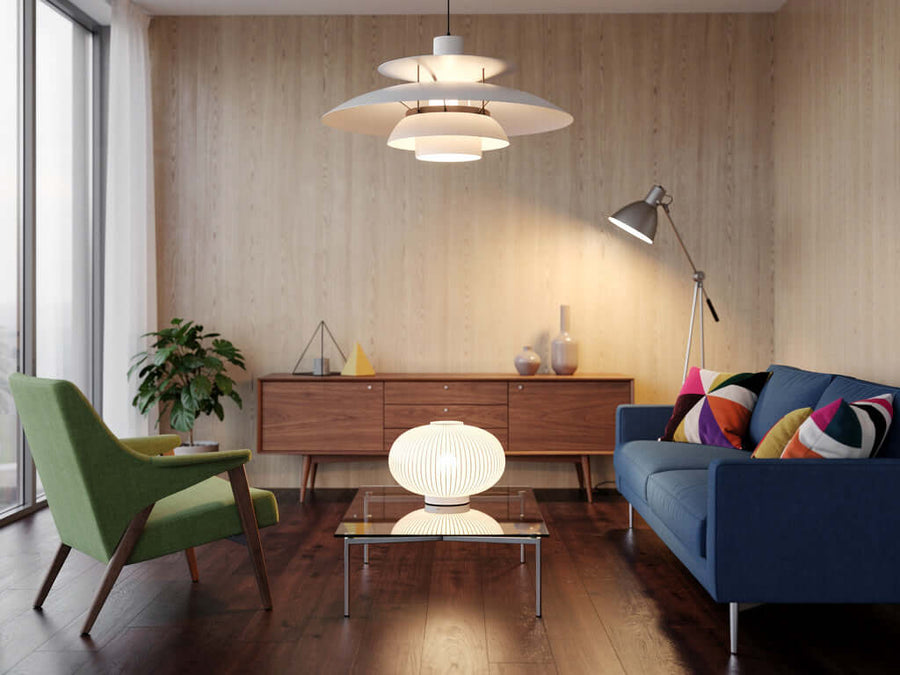
One of the most iconic examples of color in midcentury lighting is the PH5 Pendant Lamp by Poul Henningsen. Designed in 1958, the PH5 features a series of layered, colored shades that diffuse light while eliminating glare. The use of red, blue, and white in the inner shades was not arbitrary; it was a calculated effort to create a warm, inviting glow. Henningsen’s design was rooted in his belief that lighting should be gentle on the eyes, a principle that continues to influence modern fixtures like Nauradika’s Classic Nordic Designer Pendant Lights, which echo the PH5’s clean lines and functional elegance.
Complementary color schemes were also a hallmark of midcentury lighting. Designers often paired warm and cool tones to create dynamic contrasts. For instance, a lamp with a teal base and an orange shade—a combination frequently seen in the work of George Nelson—could energize a space while maintaining a sense of balance. This interplay of colors was not just aesthetic; it reflected the era’s optimism and its embrace of bold, experimental ideas.
“Light is a kind of magic. It can transform a space, evoke emotions, and even tell a story. Midcentury designers understood this better than anyone.” — Architectural Digest
Natural, earthy tones also played a significant role in midcentury lighting. Materials like wood, brass, and ceramic were often left in their natural states or finished with subtle stains to highlight their organic beauty. These materials were frequently combined with bold pops of color to create a harmonious yet striking aesthetic. For example, a wooden floor lamp with a bright red shade could anchor a room while adding a touch of warmth and vibrancy.
---
Pioneering Designers and Their Iconic Lighting Fixtures
The midcentury modern era was defined by a roster of visionary designers who reimagined lighting as both an art form and a functional necessity. Their creations were often the result of collaborations with forward-thinking manufacturers, leading to pieces that were as accessible as they were innovative.
Poul Henningsen: The Master of Light Diffusion
Danish designer Poul Henningsen is perhaps the most influential figure in midcentury modern lighting. His PH Artichoke Lamp (1958) is a masterpiece of engineering and design. With its 72 layered leaves, the Artichoke Lamp creates a soft, diffused light that is both functional and sculptural. Henningsen’s work was driven by a scientific approach to lighting, ensuring that his fixtures provided optimal illumination without glare. His designs, including the PH5 and PH Snowball, remain timeless classics, inspiring contemporary designs like Nauradika’s Scandi 70s Danish Pendant Lamp, which captures the same spirit of innovation and elegance.
Arne Jacobsen: The Architect of Light
Arne Jacobsen, a giant of Danish modernism, approached lighting with the same rigor he applied to architecture. His AJ Lamp (1960), designed for the SAS Royal Hotel in Copenhagen, is a study in simplicity and functionality. The lamp’s asymmetrical shade directs light downward, making it ideal for task lighting. Jacobsen’s designs were often characterized by their sleek, geometric forms, which can be seen in Nauradika’s Ultra Chic Fabric Pendant Light, a modern interpretation of his minimalist aesthetic.
George Nelson: The Playful Innovator
American designer George Nelson brought a playful, experimental approach to lighting. His Bubble Lamps (1952), created in collaboration with Herman Miller, were among the first to use a spray-coated plastic material, resulting in a soft, diffused glow. The lamps’ organic, irregular shapes were a departure from the rigid geometries of the time, reflecting Nelson’s belief that design should be both functional and whimsical. This spirit of innovation lives on in Nauradika’s Retro 70s Neon Kitchen Island Pendant, which combines retro charm with modern materials.
Vico Magistretti: The Sculptor of Light
Italian designer Vico Magistretti was known for his ability to infuse lighting with a sculptural quality. His Eclisse Table Lamp (1965) for Artemide is a prime example. The lamp’s adjustable inner cone allows users to control the direction and intensity of light, making it as interactive as it is beautiful. Magistretti’s work often explored the tension between simplicity and surprise, a philosophy that resonates with Nauradika’s commitment to functional yet stylish lighting solutions.
Ingo Maurer: The Poet of Light
German designer Ingo Maurer approached lighting with a poetic, almost narrative-driven sensibility. His Bulb (1966), a low-voltage bulb encased in a hand-blown glass sphere, redefined the humble light bulb as a decorative object. Maurer’s designs often incorporated humor and storytelling, making his fixtures as much about emotion as they were about illumination. This approach is echoed in Nauradika’s collection, where each lamp tells its own story through design, material, and craftsmanship.
---
Materials and Forms: The Hallmarks of Midcentury Modern Lighting
Midcentury modern lighting was not just about color; it was also about materials and forms. Designers of the era embraced new technologies and materials, from molded plastics to anodized aluminum, to create fixtures that were both durable and visually striking.
Metal was a favorite material, often used in its natural state or with a polished finish. Brass, steel, and aluminum were commonly employed to create sleek, geometric forms. For example, the Arco Floor Lamp by Achille and Pier Giacomo Castiglioni features a stainless steel arch that allows the lamp to hover over a table or sofa, providing both task and ambient lighting. This use of metal as both a structural and aesthetic element is reflected in Nauradika’s Scandi 70s Danish Pendant Lamp, which combines minimalist metalwork with a timeless design.
Glass was another material that played a central role in midcentury lighting. Whether hand-blown or molded, glass shades were used to diffuse light and create intricate patterns. The Akari Light Sculptures by Isamu Noguchi, for instance, are made from washi paper and bamboo, but their delicate, translucent quality is reminiscent of glass. Nauradika’s Classic Nordic Designer Pendant Lights feature opal glass shades that soften and diffuse light, creating a warm, inviting ambiance.
Fabric was also a popular choice for lampshades, adding texture and warmth to a space. Designers like Arne Jacobsen and Poul Henningsen often used fabric to create a soft, diffused light that was easy on the eyes. This approach is evident in Nauradika’s Ultra Chic Fabric Pendant Light, which combines a woven fabric shade with a sleek metal frame to create a fixture that is both stylish and functional.
The forms of midcentury modern lighting were as diverse as the materials used to create them. From the organic, irregular shapes of George Nelson’s Bubble Lamps to the geometric precision of Poul Henningsen’s PH series, midcentury designers were not afraid to experiment. This spirit of innovation is alive and well at Nauradika, where you can find fixtures that range from the bold and retro to the sleek and minimalist.
---
Midcentury Modern Lighting in Contemporary Spaces
While midcentury modern lighting was born in the mid-20th century, its influence is still strongly felt today. Contemporary designers and brands continue to draw inspiration from the era’s iconic fixtures, reinterpreting them for modern spaces. At Nauradika, we celebrate this legacy by offering a curated collection of lighting that captures the spirit of midcentury modernism while meeting the needs of today’s homes.
Our pendant lights, for example, are designed to evoke the clean lines and bold forms of the midcentury era. Whether you’re looking for a statement piece like the Retro 70s Neon Kitchen Island Pendant or a more understated option like the Classic Nordic Designer Pendant Lights, you’ll find fixtures that honor the past while fitting seamlessly into contemporary interiors.
Midcentury modern lighting is more than just a trend—it’s a testament to the enduring power of good design. By blending form and function, color and material, the designers of this era created fixtures that continue to captivate and inspire. Whether you’re a collector of vintage pieces or a fan of modern interpretations, there’s no denying the impact of midcentury modern lighting on the world of design.
Explore Nauradika’s Midcentury-Inspired Collection
Ready to bring the timeless elegance of midcentury modern lighting into your home? Browse Nauradika’s collection of pendant lights, wall lamps, and table lamps to find the perfect fixture for your space. Each piece is designed with the same attention to detail and craftsmanship that defined the midcentury era, ensuring that your lighting is as much a work of art as it is a source of illumination.
Nauradika Trade