Why Natural Light Is the Foundation of Great Interior Design
There is a reason why natural light tops every survey of what homebuyers and renters most desire in a property. Beyond its practical value, natural light changes throughout the day, shifting in colour, direction, and intensity in ways that animate spaces and create connection to the external world. It renders colours accurately and flatteringly. And it affects our physiology directly, regulating the circadian rhythms that govern sleep, mood, energy, and long-term health. Yet many homes — particularly older terraced houses, basement flats, and north-facing rooms — fail to make the most of what they have.
Understanding Your Light Conditions
The orientation of your windows is the single most important factor. South-facing rooms receive the most direct sunlight in the northern hemisphere — warm, bright, shifting light that moves around the room as the sun tracks across the sky. East-facing rooms receive cool, fresh morning sun. West-facing rooms catch afternoon and evening sun — warmer and more golden, perfect for living rooms where you want atmospheric evening light. North-facing rooms receive no direct sun at all — only diffuse, reflected light from the sky, which is very consistent and flattering for certain activities, but which can feel cold and dark.
Removing Obstacles to Natural Light
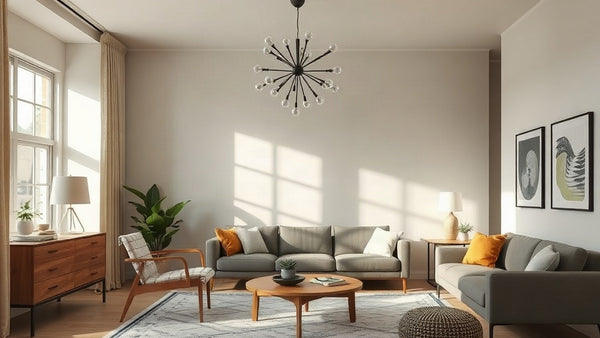
The most impactful first step in most homes is simply removing things that are blocking natural light. Heavy curtains, net curtains, and venetian blinds all reduce the light entering a room even when nominally open. Net curtains in particular can reduce available light by 30–50% while providing only modest privacy benefits. Furniture placement is the second major obstacle — large pieces positioned close to windows physically block light. And window cleaning, though it sounds trivial, makes a measurable difference: dirty glass can reduce light transmission by 20–30% in urban environments.
Amplifying Natural Light with Reflective Surfaces
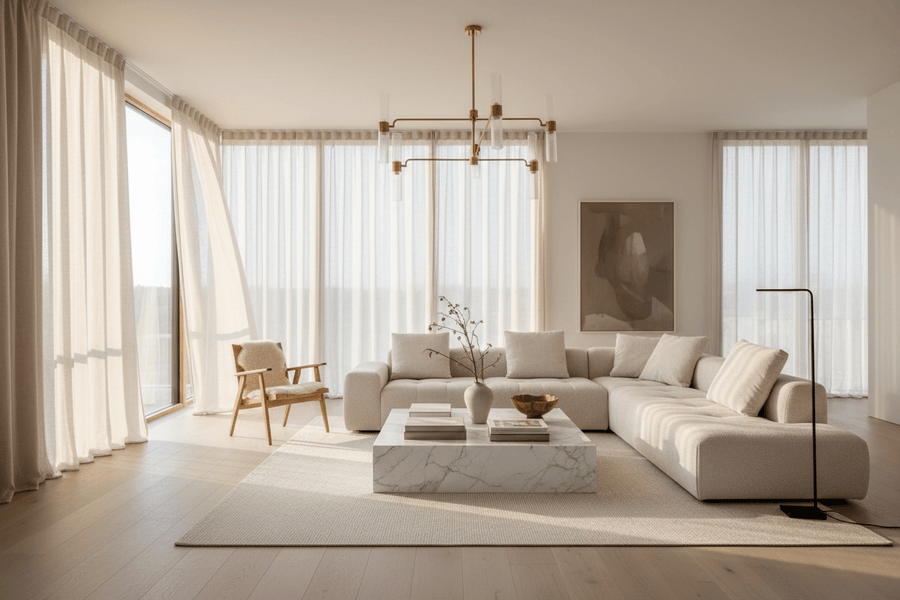
Once obstacles are removed, amplify available natural light using reflective surfaces. A large mirror placed on the wall opposite a window can effectively double the perceived brightness of a space. In Victorian terraced houses, where long narrow rooms have windows only at the front and back, a strategically placed mirror at the midpoint can transform an otherwise dark middle section. Light-coloured wall finishes amplify natural light by reflecting rather than absorbing it — a matt white reflects approximately 80% of incident light, while dark colours absorb up to 95%.
Supplementing Natural Light with Artificial Sources
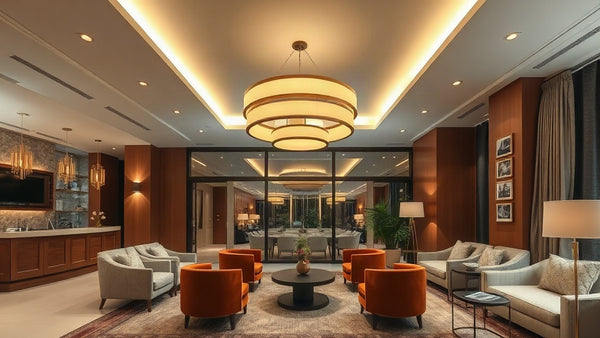
Even the best-lit homes need artificial lighting in the evening and on overcast days. The key to successful integration is choosing artificial sources that complement rather than fight against the quality of your natural light. The colour temperature of artificial sources should ideally match the quality of natural light at different times of day. In the morning, artificial supplements in the 3,500–4,500K range feel natural. In the evening, supplementing with warm 2,700K sources creates a seamless transition. The jarring quality that some artificial lighting creates in daylit spaces often comes from a mismatch between the colour temperature of the artificial source and the ambient natural light.
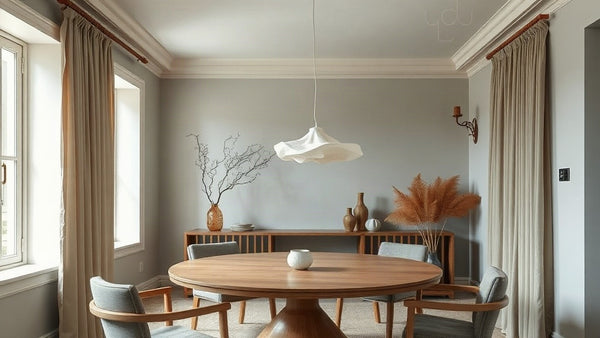
Nauradika's pendant light collection includes high-CRI options designed for spaces where accurate colour rendering matters, and our floor and table lamp range provides warm-toned evening supplements that transition seamlessly from daylight.
The Psychological Dimension
Natural light doesn't just illuminate — it shapes our psychological experience of space. Well-lit rooms feel larger, more welcoming, more energetic. Dark rooms feel smaller, more intimate, more subdued. Neither quality is inherently better — both have their place — but understanding this allows you to make more intentional choices about which rooms benefit from maximum light and which benefit from deliberate shade. The ambition should not be to create a space that is uniform and unchanging regardless of external conditions, but one that is beautifully responsive to them. Complement your natural light strategy with Nauradika's artificial lighting — designed to work harmoniously with daylight and create beautiful atmospheres when natural light fades.
Nauradika Trade