Appliques Murales de Chevet : Conception Axée sur les Spécifications pour les Intérieurs Modernes
Alors que nous abordons le dernier trimestre de 2026, la conception d'éclairage continue de mettre l'accent sur la fonctionnalité alliée à une esthétique sobre. L'applique murale de chevet est passée d'un luminaire purement utilitaire à un élément architectural déterminant, particulièrement pertinent pour les architectes spécifiant des projets hôteliers, résidentiels et commerciaux de boutique, qui recherchent cet équilibre insaisissable entre le minimalisme scandinave et la chaleur du milieu du siècle.
L'analyse récente de l'industrie confirme ce que nous constatons sur les fiches techniques : les températures de couleur chaudes (2700K), la gradation intégrée et la forme architecturale dominent les exigences des cahiers des charges. Une applique murale de chevet de qualité exige désormais de prendre en compte trois facteurs cruciaux : la géométrie de placement, la distribution de la lumière et la longévité des matériaux.
Considérations Clés de Spécification pour les Appliques Murales de Chevet
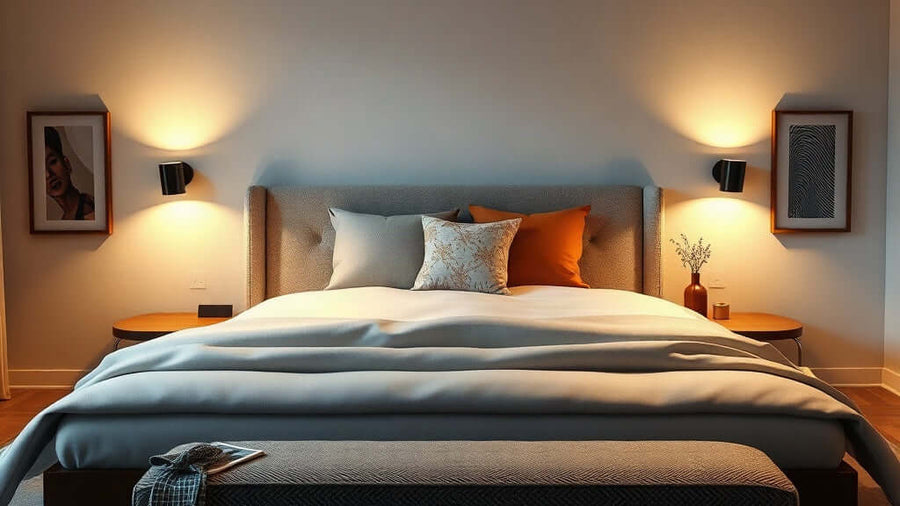
Lors de la sélection d'une applique murale de lecture pour des projets résidentiels, les contraintes dimensionnelles dictent généralement les résultats. Les hauteurs de montage standard varient de 60 à 75 cm au-dessus du niveau du matelas ; des profondeurs de projection de 15 à 25 cm maintiennent un dégagement ergonomique. Pour les applications commerciales (hôtels-boutiques, appartements de luxe avec services), ces paramètres se resserrent considérablement. Les architectes spécifient fréquemment des mécanismes de bras réglables pour s'adapter aux profondeurs de tête de lit variables et aux préférences des occupants.
L'indice de rendu des couleurs (IRC) est très important. Un IRC minimum de 90 est non négociable pour les applications de lecture ; cela garantit la lisibilité des manuscrits et réduit la fatigue oculaire lors de l'utilisation en soirée. Couplé à une capacité de gradation (0 à 100 %), les résidents bénéficient d'un véritable contrôle sur un éclairage réactif aux cycles circadiens, de plus en plus attendu dans les spécifications résidentielles de 2026.
Exigences en matière de Matériaux et de Durabilité
- Laiton et acier thermolaqué—finitions résistantes à la corrosion adaptées aux environnements hôteliers à fort contact
- Diffuseurs en verre opale ou dépoli—minimisent l'éblouissement sans sacrifier la clarté visuelle
- Solutions intégrées ou câblées—réduisent le câblage visible et maintiennent la finesse intérieure
- Têtes pivotantes ou articulées—essentielles pour les espaces commerciaux multi-utilisateurs
Esthétique des Lampes de Chevet Scandinaves dans un Contexte Commercial
L'archétype de la lampe de chevet scandinave, caractérisé par la simplicité géométrique, le minimalisme fonctionnel et les palettes de matériaux sobres, reste la norme de spécification pour les cahiers des charges exigeants. Il ne s'agit pas d'un style nostalgique, mais d'une approche éprouvée de la longévité. Contrairement aux luminaires décoratifs axés sur les tendances, le langage du design nordique discret vieillit gracieusement sur des cycles de vie de projet de 10 à 15 ans.
Pour les architectes travaillant sur des projets de style moderne du milieu du siècle, une applique murale de lecture devient une continuité narrative. Associées à des menuiseries et des matériaux appropriés à l'époque, les interprétations scandinaves contemporaines authentifient le langage intérieur global sans introduire d'éléments anachroniques.
Stratégie d'Installation et d'Intégration
Spécifiez les appliques murales pendant les phases de conception schématique, et non lors du développement des détails. Une coordination précoce avec les ingénieurs MEP évite les déplacements de circuits de dernière minute et garantit que le positionnement des prises s'aligne sur les éléments structurels. Pour les projets de rénovation, les solutions en surface offrent une flexibilité ; les nouvelles constructions permettent une intégration architecturale via un câblage encastré et des boîtes d'encastrement dissimulées.
Le circuit de gradation doit s'intégrer à l'infrastructure domotique plus large, particulièrement pertinent pour les projets résidentiels et hôteliers où le contrôle des occupants améliore la valeur perçue. Spécifiez la compatibilité analogique 0-10V ou DALI pour assurer la pérennité.
Exemple de Spécification de Matériaux
Une spécification robuste pour les contextes hôteliers pourrait être : Applique murale de chevet, bras articulé, construction en laiton ou en acier thermolaqué, LED 15W (2700K, IRC 90+), gradation réglable 0-100%, indice de protection IP44, installation câblée 240V. Ce langage assure la clarté des achats et la cohérence des performances sur les projets multi-unités.
Les appliques murales de chevet de qualité se situent à l'intersection de l'architecture et de l'artisanat, où la forme, la fonction et l'intégrité des matériaux s'alignent. Une spécification précise assure la longévité et la satisfaction de l'utilisateur dans les portefeuilles résidentiels et commerciaux.
Explorez le style à travers les options d'appliques murales de chevet et les pièces associées dans notre collection Appliques Murales.
Pourquoi ce style fonctionne
Le bon éclairage ne fait pas qu'illuminer une pièce. Il définit le rythme de l'espace, donne aux meubles un point d'ancrage visuel et aide un schéma décoratif à paraître intentionnel plutôt qu'assemblé. Pour les lecteurs arrivant par la recherche, cette section relie l'idée de design à la sélection pratique de produits.
- Crée un point focal clair
- Ajoute chaleur et texture
- Fonctionne dans les pièces contemporaines et d'inspiration vintage
Comment choisir la bonne pièce
Commencez par l'échelle, puis le matériau, puis la température de la lumière. Une suspension ou une applique murale doit paraître proportionnelle à la pièce et aux meubles en dessous. Les matériaux naturels ont tendance à adoucir les intérieurs modernes, tandis que les finitions plus sombres peuvent faire une déclaration plus graphique.
- Vérifier la hauteur sous plafond et les dimensions des meubles
- Choisissez une finition qui se répète ailleurs dans la pièce
- Utilisez des ampoules chaudes pour les salons et les salles à manger
Où l'utiliser
Ce look est particulièrement efficace dans les salles à manger, les chambres, les couloirs et les espaces hôteliers de caractère où l'ambiance est essentielle. Il peut également fonctionner dans les rénovations où un seul changement d'éclairage doit rendre la pièce plus aboutie.
- Tables à manger et îlots de cuisine
- Chambres et coins lecture
- Couloirs, restaurants et hôtels-boutiques
Achetez le Look
Pour les produits les plus pertinents, commencez par l'article vedette de l'article et la collection correspondante. Le prix du produit, sa disponibilité et ses images devraient être extraits en direct de Shopify lors du rendu du modèle.
Voir l'applique murale de chevet présentée ou parcourir la collection complète associée.
Présenté dans ce guide
Voir la collectionWhy this style works
Frequently asked questions
Nauradika Trade