Suspensions Danoises : Un Design Axé sur les Spécifications pour les Intérieurs Contemporains
L'attrait durable du design des suspensions danoises réside dans son approche disciplinée de la forme et de la fonction. Pour les architectes qui spécifient l'éclairage dans les projets résidentiels ou commerciaux, les suspensions d'inspiration danoise offrent une esthétique éprouvée qui est techniquement performante tout en conservant une sobriété visuelle. Les palettes intérieures plus claires de cette saison appellent des luminaires suspendus qui fournissent un éclairage fonctionnel sans lourdeur visuelle — un principe fondamental de la philosophie du design scandinave.
Principes de Conception Essentiels pour l'Intégration du Projet
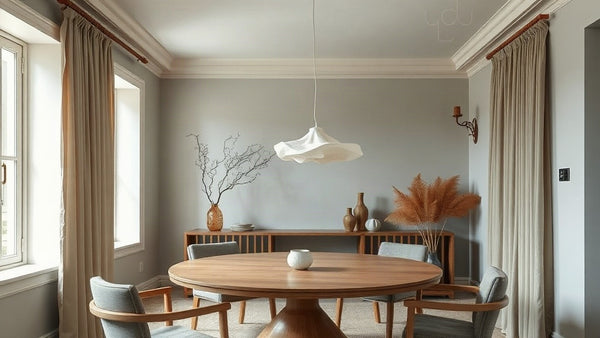
Une suspension danoise présente généralement des formes géométriques épurées, des matériaux naturels et une efficacité lumineuse intégrée. La catégorie comprend :
- Construction minimale en métal ou en bois avec des diffuseurs en verre soufflé ou dépoli
- Sobriété des couleurs : blancs, noirs, neutres chauds et finitions bois naturel
- Systèmes de suspension compacts adaptés aux configurations de plafond standard
- Compatibilité LED dimmable pour les applications de rénovation et de nouvelle construction
Ces spécifications rendent les suspensions de style danois particulièrement efficaces dans les cuisines ouvertes, les zones de réception commerciales et les salles à manger résidentielles où un éclairage en couches est essentiel.
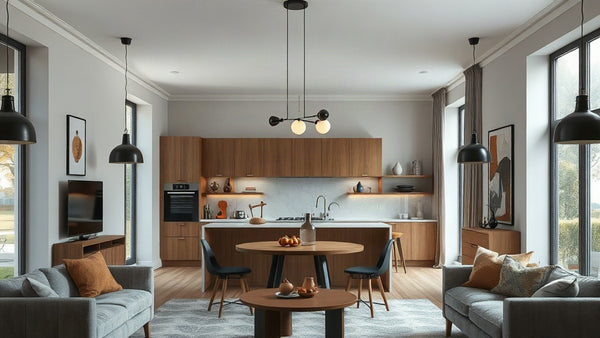
Applications des Suspensions de Cuisine Danoises
La suspension de cuisine danoise représente une évolution pratique de la forme scandinave du milieu du siècle. Contrairement aux catégories de luminaires décoratifs, les variantes spécifiques à la cuisine répondent aux exigences fonctionnelles : un éclairage adéquat sur les surfaces de travail, une gestion thermique à proximité des appareils de cuisson et une cohérence esthétique avec les armoires.
Les considérations de spécification comprennent :
- Longueur de suspension calibrée pour un dégagement de 800 à 900 mm au-dessus des îlots de cuisine
- Matériaux de diffuseur choisis pour la dissipation de la chaleur et la facilité d'entretien
- Compatibilité des finitions avec les éléments de cuisine en acier inoxydable et en bois
- Arrangements modulaires permettant un espacement de 600 à 800 mm centre à centre
Cette approche assure une continuité visuelle tout en répondant aux normes de rendement lumineux des réglementations du bâtiment (généralement 300 à 500 lux pour les zones de travail).
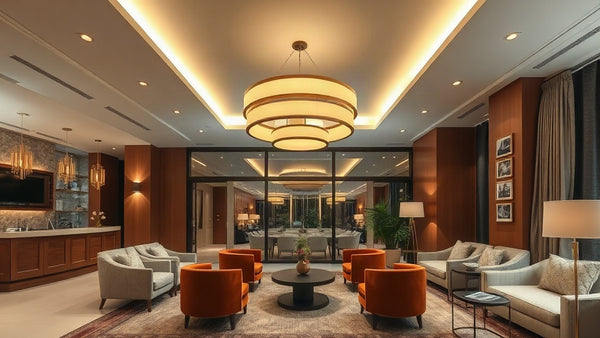
Considérations sur les Lustres de Style Danois
La catégorie des lustres de style danois — configurations à plusieurs suspensions ou ramifiées — convient aux grands espaces commerciaux et aux halls d'entrée résidentiels. Ces luminaires combinent la logique des suspensions individuelles avec une géométrie regroupée, créant un intérêt visuel sans excès ornemental.
Pour les projets plus importants, considérez l'évolutivité : systèmes de suspension modulaires, circuits contrôlés individuellement et cohérence des finitions sur plusieurs unités. Les schémas d'éclairage estivaux bénéficient de diffuseurs clairs ou pâles qui maintiennent la perception de la luminosité tout en réduisant l'éblouissement.
Spécification des Matériaux et des Finitions
Le design authentique des suspensions danoises met l'accent sur l'authenticité des matériaux. Spécifiez :
- Verre : Finitions opales ou dépolies pour une diffusion uniforme ; options fumées ou teintées pour les applications d'accentuation
- Métal : Acier thermolaqué ou laiton brossé — des finitions qui vieillissent bien et masquent les empreintes digitales dans les zones très fréquentées
- Bois : Bois certifiés FSC avec des finitions à l'huile naturelle pour les projets domestiques
Intégration Technique
Les luminaires suspendus danois contemporains s'intègrent parfaitement aux systèmes de gestion des bâtiments. Spécifiez des variantes LED avec des protocoles de gradation 0-10V, ou une compatibilité DALI pour les grandes installations commerciales. Cela garantit la performance énergétique tout en maintenant l'intention de conception à travers des schémas d'occupation variables.
La sélection de la température de couleur — 2700K pour le résidentiel, 3000K–4000K pour le commercial — préserve la chaleur discrète caractéristique du design scandinave tout en répondant aux exigences spécifiques de la tâche.
Spécifier les Suspensions Danoises : Prochaines Étapes
Lors de la sélection d'une suspension danoise pour votre projet, demandez les fiches techniques couvrant la distribution photométrique, la gestion thermique et la durabilité de la finition. La gamme de Nauradika offre un support complet pour la spécification des suspensions individuelles et des installations multi-unitaires, avec une disponibilité britannique et des délais de livraison rapides adaptés aux calendriers de projets contemporains.
Explorez le look à travers les options de suspension danoise et les pièces connexes de notre collection de luminaires scandinaves.
Pourquoi ce style fonctionne
La bonne lumière fait plus qu'illuminer une pièce. Elle donne le rythme de l'espace, offre un point d'ancrage visuel au mobilier et contribue à ce qu'un schéma décoratif paraisse intentionnel plutôt qu'assemblé. Pour les lecteurs venant de la recherche, cette section relie l'idée de design à la sélection pratique de produits.
- Crée un point focal clair
- Ajoute chaleur et texture
- Convient aux pièces contemporaines et d'inspiration vintage
Comment choisir la bonne pièce
Commencez par l'échelle, puis le matériau, puis la température de la lumière. Une suspension ou une applique murale doit être proportionnée à la pièce et au mobilier en dessous. Les matériaux naturels ont tendance à adoucir les intérieurs modernes, tandis que les finitions plus foncées peuvent faire une déclaration plus graphique.
- Vérifiez la hauteur du plafond et les dimensions du mobilier
- Choisissez une finition qui se répète ailleurs dans la pièce
- Utilisez des ampoules chaudes pour les espaces de vie et de salle à manger
Où l'utiliser
Ce look est particulièrement efficace dans les salles à manger, les chambres, les couloirs et les espaces d'accueil de boutique où l'ambiance compte. Il peut également fonctionner dans les rénovations où un simple changement d'éclairage doit donner à la pièce une impression plus achevée.
- Tables de salle à manger et îlots de cuisine
- Chambres et coins lecture
- Couloirs, restaurants et hôtels-boutiques
Achetez le Look
Pour les produits les plus pertinents, commencez par la pièce phare de l'article et la collection correspondante. Le prix, la disponibilité et les images des produits doivent être extraits en direct de Shopify lors du rendu du modèle.
Voir la suspension danoise présentée ou parcourir la collection complète associée.
Présenté dans ce guide
Voir la collectionWhy this style works
Frequently asked questions
Nauradika Trade