Spécification de l'éclairage hôtelier pour une conception d'hospitalité contemporaine
Le paysage de l'éclairage hôtelier a considérablement évolué. Une évaluation récente des meilleures idées d'éclairage hôtelier pour 2026 confirme ce que les architectes ont observé sur place : les clients – et les investisseurs – s'attendent désormais à un éclairage nuancé et stratifié qui semble intentionnel plutôt que par défaut. Il ne s'agit pas de maximalisme ou de course aux tendances. Il s'agit de spécifier des luminaires qui fonctionnent efficacement tout en offrant la qualité atmosphérique qui justifie un positionnement premium.
Que vous conceviez un hôtel-boutique, un restaurant avec des finitions de qualité hôtelière ou un espace commercial lié à l'hôtellerie, le processus de spécification exige de la précision. Ce guide aborde les paramètres techniques et esthétiques qui distinguent un éclairage hôtelier compétent d'un aménagement spatial mémorable.
Comprendre la hiérarchie de l'éclairage hôtelier
L'éclairage hôtelier fonctionne sur trois couches distinctes : ambiante, fonctionnelle et d'accentuation. Contrairement aux travaux résidentiels, l'éclairage hôtelier doit tenir compte des exigences opérationnelles en plus de l'expérience client. Un couloir d'hôtel a besoin d'un éclairage suffisant pour que le personnel d'entretien puisse travailler efficacement tout en maintenant la pénombre sophistiquée qui donne aux clients l'impression d'entrer dans un environnement soigné. L'éclairage de restaurant doit permettre aux convives de lire les menus sans éblouissement tout en créant une intimité qui encourage à s'attarder à table.
Stratégie d'éclairage ambiant
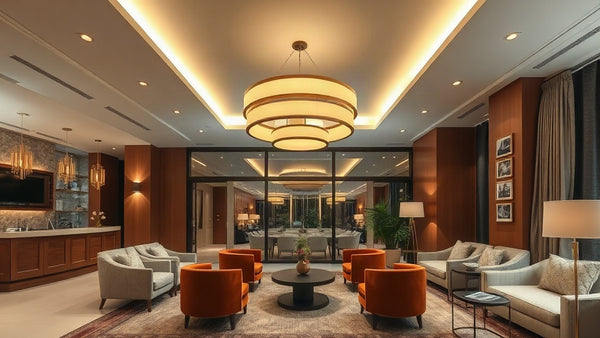
La couche de base définit la luminosité et l'ambiance générales. Dans les halls d'hôtel, cela provenait traditionnellement de plusieurs luminaires encastrés au plafond – fonctionnels mais sans caractère. La conception contemporaine de l'éclairage hôtelier s'oriente vers des pièces plus grandes et plus sculpturales qui deviennent des éléments de design. Les grappes de suspensions, les lustres spectaculaires ou les éléments linéaires architecturaux assurent désormais la charge ambiante tout en ajoutant un intérêt visuel.
Pour les projets d'hôtellerie axés sur l'été – hôtels-boutiques dans les régions côtières, restaurants en terrasse, atriums lumineux – spécifiez des luminaires ambiants dans des matériaux qui semblent ouverts plutôt que lourds. Les cadres en fil de laiton, le verre tubulaire ou le travail du métal ajouré permettent de dégager les lignes de vue et réduisent le poids visuel qui semble oppressant en plein jour.
Éclairage fonctionnel dans les chambres d'hôtes et les zones de travail
Cette couche exige de la spécificité. La lecture au chevet des clients nécessite 300 à 500 lux au plan de travail sans créer de zones de forte luminosité qui perturbent l'atmosphère générale de la pièce. Spécifiez des appliques ou des suspensions avec une capacité directionnelle, positionnées pour éviter l'éblouissement sur les écrans de télévision.
L'éclairage de la salle de bain présente des défis particuliers. Les tâches de maquillage ou de soin nécessitent un rendu des couleurs précis (IRC minimum 90) et une intensité suffisante. Les luminaires de coiffeuse flanquant les miroirs fonctionnent mieux que les sources uniques au plafond. Évitez les températures de couleur froides supérieures à 4000K, sauf si le cahier des charges exige spécifiquement une clarté clinique.
Éclairage d'accentuation et hiérarchie visuelle
C'est là que l'éclairage de l'hôtel devient distinctif. Les luminaires d'accentuation mettent en valeur les caractéristiques architecturales, les œuvres d'art ou les éléments de design qui justifient la prémisse esthétique du projet. Une cheminée bien éclairée, des étagères illuminées ou un mur d'accentuation deviennent un point focal que les clients retiennent – et photographient.
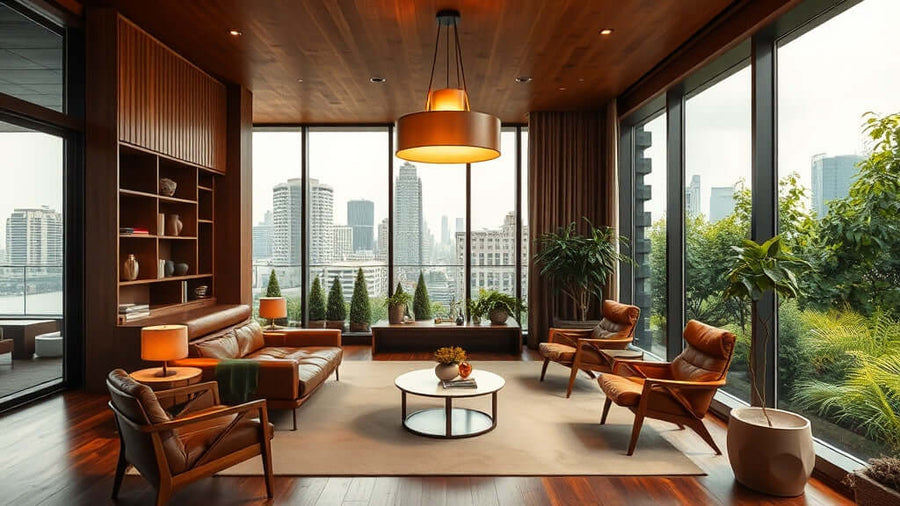
La température de couleur joue un rôle crucial. Le blanc chaud (2700K) sur les éléments en bois et les surfaces décoratives crée de la profondeur et de l'intimité. Le blanc neutre (3000K) sur les surfaces architecturales maintient la clarté. Évitez de mélanger les températures de couleur sur une même ligne de mire, sauf si la transition est intentionnelle et contrôlée.
Spécification des matériaux pour les luminaires d'hôtel
Les espaces d'accueil exigent de la durabilité sans sacrifier l'esthétique. Les luminaires subissent plus de manipulations, de fluctuations de température et de stress environnemental que l'éclairage résidentiel. Votre spécification doit refléter cette réalité.
Finitions métalliques dans l'éclairage hôtelier contemporain
Le laiton et l'or brossé dominent l'éclairage hôtelier depuis trois ans, mais la spécification exige de la prudence. Évitez les finitions plaquées sur les surfaces à fort contact. Le laiton massif ou l'acier plaqué laiton est plus performant. Les finitions brossées cachent les empreintes digitales ; les finitions polies nécessitent plus d'entretien mais sont plus luxueuses sur les photos et les premières impressions.
Le noir mat reste fonctionnellement invisible dans les espaces plus sombres et fonctionne parfaitement pour l'éclairage de restaurant où l'on souhaite que les luminaires se fondent. Le chrome est considéré comme daté dans la plupart des schémas d'éclairage hôtelier contemporains, sauf s'il est associé à des cahiers des charges de design rétro spécifiques.
Verre et matériaux translucides
Les diffuseurs en verre opale ou dépoli masquent la visibilité de l'ampoule tout en conservant la luminosité. Le verre transparent crée une esthétique plus moderne mais nécessite une attention particulière à la qualité de l'ampoule – un filament visible ou des sources LED bon marché sapent l'intention de la spécification. Le verre fumé ou teinté ajoute de la sophistication mais réduit le flux lumineux de 15 à 20 %, ce qui nécessite une compensation de la luminosité du luminaire dans les spécifications.
Pour les projets d'hôtellerie d'été bénéficiant de la lumière naturelle, spécifiez des luminaires avec des matériaux dépolis plutôt que transparents afin de réduire le contraste d'éblouissement pendant les heures diurnes.
Contrôle de l'éclairage et expérience client
La capacité de gradation est non négociable dans l'éclairage hôtelier contemporain. Les clients s'attendent à pouvoir ajuster la luminosité ambiante ; beaucoup s'attendent maintenant à des scènes préprogrammées. Spécifiez des gradateurs adaptés au type de luminaire (la gradation LED nécessite des drivers compatibles). Dans l'éclairage de restaurant, la gradation permet d'ajuster l'ambiance tout au long des heures de service – lumineux pour le déjeuner, intime pour le dîner.
Envisagez l'intégration d'un contrôle intelligent, mais évitez de spécifier des systèmes trop complexes. Les clients utilisent généralement des contrôles de gradation et d'allumage/extinction de base. Les systèmes surdimensionnés créent de la frustration et des frais de maintenance.
Paramètres de spécification pratiques
Température de couleur et IRC
- Chambres d'hôtel : 2700K, IRC 90+
- Couloirs et espaces communs d'hôtel : 3000K, IRC 85+
- Repas au restaurant : 2700K, IRC 95+ (pour l'apparence des aliments)
- Réception et zones de travail : 3000-4000K, IRC 90+
- Éclairage extérieur/terrasse : 2700K pour les zones de détente, 3000K pour les espaces de restauration actifs
Niveaux d'éclairement (Lux au plan de travail)
- Lecture au chevet de l'hôtel : 300-500 lux
- Coiffeuse de salle de bain d'hôtel : 400-600 lux
- Table de restaurant : 150-200 lux (intime), 300-400 lux (décontracté)
- Couloir d'hôtel : 100-150 lux
- Hall d'hôtel : 200-300 lux ambiants, plus élevés dans les zones caractéristiques
Contrôle de l'éblouissement
Spécifiez un blindage de luminaire pour garder les lampes invisibles depuis les angles de vision typiques. Pour les luminaires de plafond, visez un angle de luminosité maximale de 65° par rapport à la verticale. Ce n'est pas négociable dans les établissements hôteliers – l'éblouissement crée des plaintes et nuit à la qualité perçue.
Sélection de luminaires de designer pour les projets hôteliers
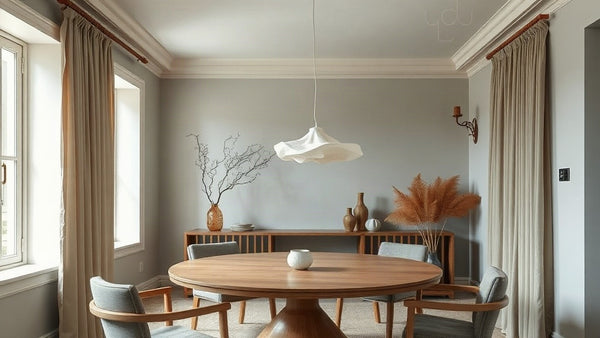
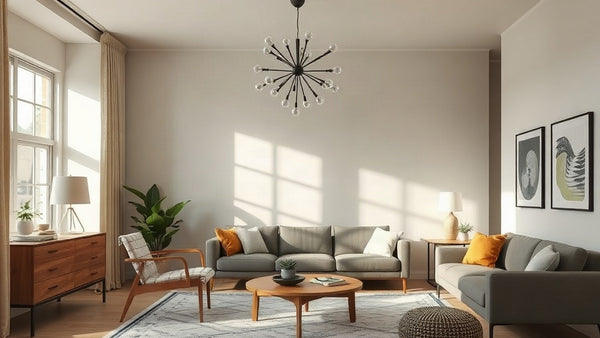
Les styles de design moderne du milieu du siècle et scandinave continuent de dominer les schémas d'éclairage hôtelier réussis. Ces esthétiques apportent de la sophistication sans être à la mode, et elles vieillissent bien – important pour les projets avec une durée de vie de 10 à 15 ans.
Lors de l'évaluation des luminaires pour les spécifications d'éclairage hôtelier, tenez compte des éléments suivants :
- Poids visuel et impact spatial : Un seul grand luminaire surpasse souvent plusieurs plus petits pour créer une expérience d'arrivée mémorable
- Authenticité des matériaux : Le laiton massif surpasse le placage ; le bois véritable bat les placages
- Accessibilité de la lampe : Évitez les luminaires nécessitant un entretien spécialisé dans les espaces d'accueil partagés
- Évolutivité : Spécifiez des suspensions disponibles en plusieurs diamètres pour différentes échelles d'espace
- Qualité photographique : Les hôtels modernes comprennent que la visibilité sur les médias sociaux génère des réservations ; les luminaires doivent bien se photographier
Un lustre tubulaire LED doré d'hôtel de luxe illustre les priorités de spécification contemporaines : présence architecturale, finition de matériau chaleureuse, fonctionnement LED efficace et échelle suffisante pour ancrer les espaces d'accueil. Ce type de luminaire fonctionne dans plusieurs contextes – halls d'hôtel, salles à manger privées de restaurant, résidences de luxe – sans paraître déplacé.
Lorsque vous recherchez des luminaires, notre collection d'éclairage moderne comprend plusieurs options conçues spécifiquement pour les applications hôtelières. Chaque spécification de luminaire comprend des données photométriques détaillées, la compatibilité de gradation et les évaluations de durabilité des finitions.
Considérations sur l'éclairage hôtelier estival
Les projets avec de fortes composantes de lumière naturelle exigent des approches de spécification différentes. Pendant les mois d'été, les clients bénéficient d'une lumière du jour significative à l'intérieur pendant les heures de pointe. Spécifiez des luminaires et des finitions qui complètent plutôt que de concurrencer la lumière naturelle.
Les finitions mates et les tons laiton chaud se lisent mieux sous une lumière du jour vive que les surfaces brillantes ou le chrome. Les diffuseurs translucides adoucissent le contraste du soleil intense. Envisagez un ombrage supplémentaire (stores motorisés, auvents architecturaux) dans les spécifications où la lumière naturelle entre en conflit avec l'intention de la conception d'éclairage artificiel.
Documentation de spécification et approvisionnement commercial
Les projets hôteliers impliquent généralement plusieurs parties prenantes : promoteurs, sociétés de gestion immobilière et entrepreneurs. Votre spécification doit être sans ambiguïté concernant les performances, la disponibilité et les exigences d'installation du luminaire.
Inclure dans les spécifications :
- Données photométriques complètes (distribution de lux, angles de faisceau)
- Compatibilité de gradation et protocoles de contrôle
- Évaluations de durabilité des finitions et exigences d'entretien
- Délais de livraison et disponibilité des stocks
- Complexité de l'installation et exigences de la structure du plafond/mur
- Disponibilité des pièces de rechange pour un fonctionnement de 5 ans et plus
Si vous spécifiez des luminaires à grande échelle ou sur plusieurs projets, explorez notre programme de réduction commerciale Nauradika. Nous proposons des prix de gros, une gestion des délais prolongée et un support technique direct pour les projets dirigés par des architectes.
Éclairage de restaurant et ambiance hôtelière
L'éclairage de restaurant opère sous des contraintes distinctes par rapport à l'éclairage hôtelier plus large. Les convives s'attendent à lire les menus – l'éclairage fonctionnel est non négociable – tout en bénéficiant d'une ambiance intime. Cela nécessite une spécification stratifiée : suffisamment lumineux pour la fonction, suffisamment tamisé pour le romantisme.
L'éclairage au niveau des tables (suspension ou lustre au-dessus des tables à manger) doit fournir 150-200 lux sans éblouissement. Spécifiez des luminaires directionnels ou des diffuseurs qui protègent la source lumineuse. Évitez l'éclairage vers le haut qui illumine les plans de plafond, ce qui a tendance à paraître bon marché ou criard dans les restaurants haut de gamme.
L'éclairage d'accentuation sur les murs caractéristiques, les œuvres d'art ou le bar crée une hiérarchie visuelle et empêche le restaurant de ressembler à une cafétéria avec un éclairage d'ambiance. Des circuits d'accentuation dédiés (gradables séparément) permettent aux opérateurs d'ajuster l'atmosphère du restaurant tout au long des heures de service.
Conclusion : la spécification comme intention de conception
La spécification de l'éclairage hôtelier contemporain transcende l'éclairage de base. C'est une expression de la philosophie de conception, de la compétence opérationnelle et de la stratégie d'expérience client. Le meilleur éclairage hôtelier semble inévitable – vous ne pouvez pas imaginer l'espace sans lui – plutôt que remarqué.
Votre spécification porte une responsabilité. Elle traduit la vision architecturale en réalité fonctionnelle, détermine la satisfaction des clients et influence la valorisation de la propriété. La précision dans la sélection des luminaires, les données photométriques et la stratégie de contrôle sépare les projets compétents des projets mémorables.
La conversation actuelle autour de la conception de l'éclairage hôtelier – axée sur les matériaux authentiques, les températures de couleur chaudes et le contrôle stratifié – représente une maturation vers des approches durables et intemporelles. Spécifiez en conséquence, et vos projets resteront pertinents bien au-delà des tendances saisonnières.
Nauradika Trade