Les lampes japonaises en papier de riz dans le design contemporain
À l'approche de l'automne et alors que les projets de design s'orientent vers des schémas d'éclairage chaleureux et superposés, la lampe japonaise en papier de riz mérite une attention particulière dans les projets résidentiels comme commerciaux. Ces luminaires représentent une intersection raffinée entre l'authenticité des matériaux et l'éclairage fonctionnel — des qualités de plus en plus appréciées dans les intérieurs contemporains en quête d'alternatives aux produits fabriqués en série.
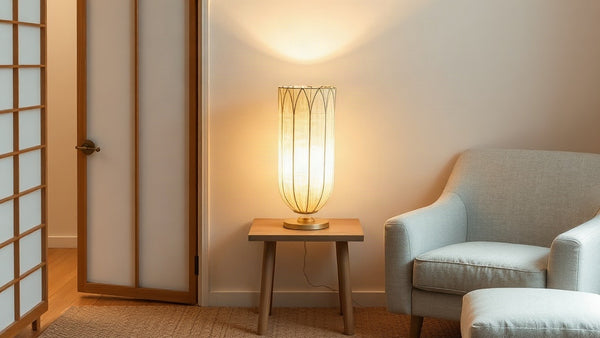
La lampe japonaise en papier de riz tire son caractère du washi, un papier traditionnellement fabriqué à la main qui diffuse la lumière de manière uniforme tout en conservant une transparence visuelle. Cette propriété matérielle la rend particulièrement efficace pour créer un éclairage d'ambiance qui évite la dureté clinique des sources exposées.
Considérations sur les spécifications techniques
Performance du matériau
- Le papier de riz (washi) offre une transmission lumineuse constante de 70 à 85 %, selon l'épaisseur et la composition des fibres
- Le matériau est classé non inflammable selon la norme BS 5867 lorsqu'il est traité de manière appropriée
- La densité varie généralement de 35 à 60 g/m², offrant une intégrité structurelle sans poids excessif
- Longévité : les éléments en papier nécessitent un remplacement tous les 5 à 7 ans dans des conditions d'utilisation standard
Gamme dimensionnelle
Les lampes de table japonaises en papier de riz sont disponibles dans des hauteurs modulaires (généralement 300 à 600 mm) et des diamètres variés (200 à 450 mm), offrant une flexibilité de spécification pour les applications résidentielles et contractuelles. Les versions suspendues peuvent atteindre 800 mm ou plus dans les secteurs de l'hôtellerie et du commerce.
Rendu lumineux et compatibilité
- Optimal avec des sources LED blanc chaud (2700K–3000K) pour compléter la chaleur naturelle du papier
- Consommation d'énergie : 8–15W par luminaire (standard LED)
- Indice de rendu des couleurs (IRC) de 90 minimum recommandé pour le résidentiel ; 95+ pour les applications commerciales
- Variantes à intensité variable disponibles — spécifiez des ballasts compatibles 0–10V ou DALI pour les systèmes intégrés
Spécification pour différents contextes
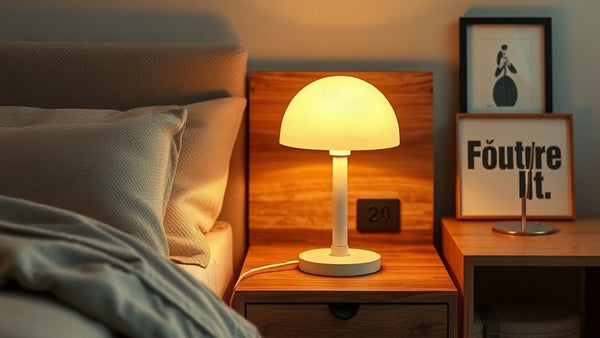
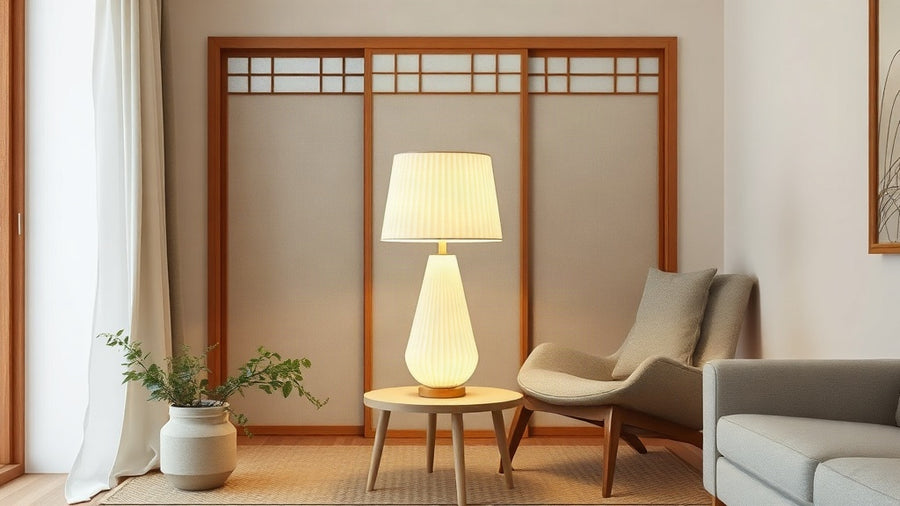
Dans les projets résidentiels, une lampe de table en papier de riz fonctionne efficacement comme éclairage d'appoint ou décoratif dans les chambres, les salons et les bureaux. Sa lueur diffuse convient aux intérieurs axés sur l'automne où la chaleur ambiante est privilégiée. À associer avec des bases contemporaines en bois ou en métal pour ancrer la pièce dans des palettes de matériaux plus larges.
Pour les projets commerciaux — hôtels de charme, bureaux haut de gamme, espaces de bien-être — les lampes japonaises en papier de riz offrent des alternatives sophistiquées aux systèmes encastrés ou suspendus standards. Leur esthétique artisanale témoigne d'une volonté de design et d'une qualité certaine, sans compromis sur les données photométriques ou les exigences de conformité.
Durabilité et entretien
Les éléments en papier sont intrinsèquement hygroscopiques. Dans les environnements sujets à l'humidité (salles de bains, cuisines), spécifiez des variantes scellées ou traitées. L'entretien standard implique un dépoussiérage occasionnel ; le papier ne réagit pas bien aux agents nettoyants à base d'eau.
L'attrait de la lampe japonaise en papier de riz ne réside pas dans la nouveauté, mais dans l'honnêteté de l'expression de ses matériaux et la qualité mesurée de sa lumière. Pour les architectes privilégiant la matérialité authentique et les ambiances chaleureuses — surtout à mesure que les intérieurs basculent vers les mois plus froids — ces luminaires offrent une crédibilité de spécification soutenue par des prix accessibles et des performances fiables.
Considérations sur l'approvisionnement
Il existe aujourd'hui des lampes de table en papier de riz de qualité à différents niveaux de prix. Nauradika propose des interprétations modernes du milieu du siècle ainsi que contemporaines, permettant une spécification adaptée aux différents budgets sans compromis sur la construction authentique en washi ou la performance photométrique.
Découvrez ce style grâce aux options de lampe japonaise en papier de riz et aux pièces associées dans notre collection de lampes de sol et de table.
Pourquoi ce style fonctionne
Le bon éclairage fait bien plus qu'illuminer une pièce. Il définit le rythme de l'espace, donne une assise visuelle au mobilier et permet à une décoration de paraître intentionnelle plutôt que fortuite. Pour les lecteurs arrivant via une recherche, cette section relie l'idée de design à la sélection pratique de produits.
- Crée un point focal clair
- Ajoute de la chaleur et de la texture
- S'adapte aux pièces contemporaines comme aux intérieurs d'inspiration vintage
Comment choisir la bonne pièce
Commencez par l'échelle, puis le matériau, et enfin la température de la lumière. Une suspension ou une applique doit être proportionnelle à la pièce et au mobilier situé en dessous. Les matériaux naturels ont tendance à adoucir les intérieurs modernes, tandis que des finitions plus sombres peuvent affirmer une signature plus graphique.
- Vérifiez la hauteur sous plafond et les dimensions des meubles
- Choisissez une finition qui se retrouve ailleurs dans la pièce
- Utilisez des ampoules chaudes pour les espaces de vie et la salle à manger
Où l'utiliser
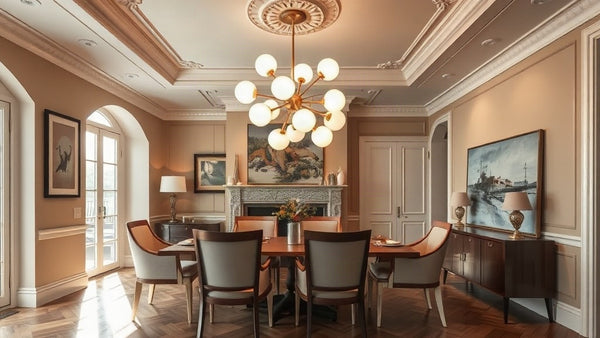
Ce look est particulièrement efficace dans les salles à manger, les chambres, les couloirs et les espaces d'accueil de type boutique où l'atmosphère est primordiale. Il peut également fonctionner dans les rénovations où un simple changement d'éclairage suffit à parfaire la pièce.
- Tables de salle à manger et îlots de cuisine
- Chambres et coins lecture
- Couloirs, restaurants et hôtels de charme
Achetez le style
Pour les produits les plus pertinents, commencez par la pièce mise en avant dans l'article et la collection correspondante. Le prix du produit, la disponibilité et les images doivent être mis à jour en direct depuis Shopify lors du rendu du modèle.
Voir la lampe japonaise en papier de riz mise en vedette ou parcourez la collection complète associée.
Nauradika Trade