Une révolution silencieuse est en cours dans le design d'intérieur. Après des années de maximalisme et de pièces fortes, nous assistons à une expiration collective – un retour à l'imperfection, à l'impermanence et à la beauté des choses inachevées. La suspension wabi-sabi est devenue l'incarnation parfaite de ce changement, et si vous rénovez ou redécorez, c'est le moment de comprendre pourquoi.
La communauté mondiale du design d'éclairage a remarqué que le rapport sur les tendances du design d'éclairage de Zhongshan pour 2026 mettait en lumière le wabi-sabi comme direction esthétique dominante, aux côtés du travertin et d'autres matériaux naturels et tactiles. Ce qui était autrefois une philosophie de niche est maintenant courant – et c'est vraiment excitant pour quiconque cherche à créer une maison qui se sente à la fois intemporelle et profondément personnelle.
Qu'est-ce qu'une suspension wabi-sabi exactement ?
Avant de nous plonger dans le comment et le où, établissons de quoi nous parlons réellement. Le wabi-sabi est une esthétique japonaise qui célèbre l'impermanence, l'incomplétude et la beauté inhérente au vieillissement et à l'usure. C'est l'opposé de la perfection polie. Une suspension wabi-sabi se caractérise généralement par :
- Des formes organiques et asymétriques qui donnent l'impression d'être faites à la main plutôt que parfaites industriellement.
- Des matériaux naturels : céramique non émaillée, soie brute, bois vieilli ou métaux non traités.
- Un sentiment de quiétude ; ces lumières n'exigent pas l'attention, elles invitent à la contemplation.
- Des variations subtiles de surface et une patine qui racontent une histoire de vieillissement naturel.
- Un ornement minimal ; la beauté par la retenue plutôt que par l'embellissement.
Contrairement à une suspension typique qui vise la perfection, une suspension japonaise enracinée dans la philosophie wabi-sabi embrasse la marque faite à la main, l'émail irrégulier, le bord légèrement irrégulier. Ces "imperfections" perçues sont précisément ce qui rend la pièce authentique et belle.
Pourquoi maintenant ? L'été des intérieurs simplifiés
Nous abordons l'été 2026 avec un désir collectif d'intérieurs plus légers et moins compliqués. Alors que la lumière naturelle inonde nos fenêtres, nous repensons ce dont nous avons réellement besoin – et ce qui ajoute une réelle valeur à nos espaces. Un plafonnier zen ou une suspension wabi-sabi s'inscrit parfaitement dans ce moment car il :
- Fonctionne avec la lumière naturelle plutôt que de la concurrencer.
- Crée un point focal sans encombrement visuel.
- Est contemporain mais intemporel, donc il ne se démodera pas.
- Complète aussi bien les styles minimalistes que maximalistes.
- Invite à ralentir et à apprécier l'artisanat.
Le génie d'intégrer une suspension wabi-sabi dans une rénovation estivale est qu'elle fonctionne à travers les saisons. Oui, elle est magnifique en captant la lumière dorée du soir d'une soirée de juin, mais à l'automne et en hiver, elle devient une ancre chaude pendant les mois plus sombres. Il n'y a pas de "mauvaise" saison pour quelque chose d'aussi bien conçu.
Où utiliser une suspension wabi-sabi dans votre maison
La cuisine
Une suspension japonaise avec un émail subtil ou une géométrie organique fonctionne magnifiquement au-dessus d'un îlot ou d'une table de petit-déjeuner. L'essentiel est de choisir une lampe qui diffuse une lumière flatteuse (chaude, diffuse) sans être trop précieuse face aux éclaboussures et à la vapeur de la cuisine. Les finitions en soie ou en céramique naturelle gèrent cela avec élégance.
La chambre
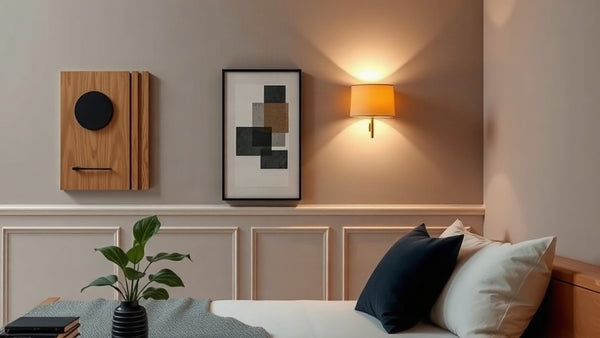
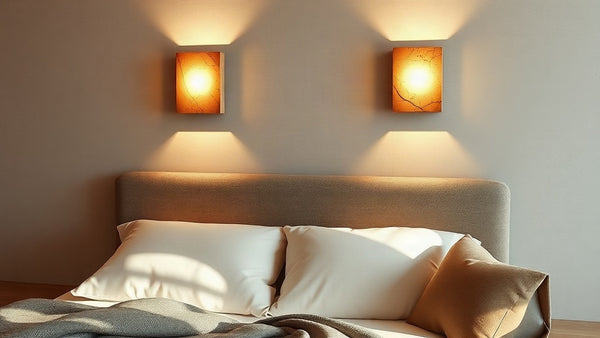
Une suspension wabi-sabi crée le point focal parfait pour une chambre sans l'agression d'un lustre imposant. Elle est introspective, apaisante et se marie naturellement avec le linge de maison et le mobilier en bois.
La salle de bain
Un plafonnier zen au-dessus d'une baignoire ou dans une salle d'eau transforme l'espace en un havre de paix digne d'un spa. L'émail imparfait ou la forme asymétrique deviennent méditatifs plutôt que décoratifs.
L'entrée
Votre entrée donne le ton de toute votre maison. Une seule suspension wabi-sabi dit : « Ici vit quelqu'un de goût, d'intention et d'appréciation pour la beauté discrète. » C'est une première impression puissante sans être criarde.
Le bureau ou le bureau à domicile
Si vous travaillez à domicile, vous entourer d'objets qui incarnent le calme et l'intention ciblée est réellement important. Une lampe suspendue japonaise crée une atmosphère propice au travail en profondeur.
Comment choisir votre suspension Wabi Sabi
Tenez compte de votre palette existante
Le wabi-sabi s'épanouit dans les tons neutres : blancs chauds, gris doux, noirs chauds, tons de bois naturels. Cela dit, une terre cuite sourde ou un vert sauge peuvent fonctionner magnifiquement. La clé est la retenue. Si vos murs sont déjà à motifs ou colorés, choisissez une lumière dans un émail non teinté ou pâle. Si vos murs sont neutres, vous avez plus de liberté pour jouer avec des couleurs subtiles.
Pensez à l'échelle
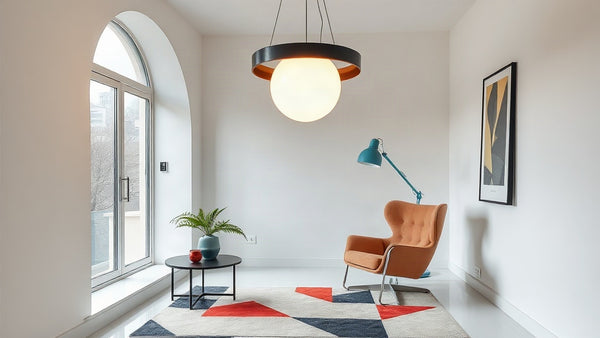
Une suspension wabi-sabi doit être proportionnée à votre espace, mais légèrement sous-dimensionnée plutôt que surdimensionnée. C'est là qu'intervient l'esthétique zen – il y a quelque chose d'apaisant dans un luminaire qui ne domine pas.
Le matériau est important
Céramique brute, laiton vieilli, lin naturel, bois non traité – tels sont les matériaux du wabi-sabi. Évitez tout ce qui est trop brillant, trop neuf ou trop parfait. La beauté réside dans l'honnêteté du matériau. Une pièce qui montre des signes de la main de l'artisan (empreintes de doigts dans l'argile, coutures irrégulières dans le lin) est infiniment plus intéressante que quelque chose qui semble produit en série.
Qualité de la lumière
Comment se sent la lumière une fois allumée ? Une bonne suspension wabi-sabi doit émettre une lumière chaude et diffuse – pensez à une température de couleur de 2700K. Elle ne doit pas être dure. Si vous cherchez un luminaire japonais, renseignez-vous sur la qualité de la lumière, pas seulement sur l'esthétique.
Styliser autour de votre suspension Wabi Sabi
Une fois que vous avez choisi votre pièce, la vraie joie est de créer un espace digne d'elle. Voici comment construire un intérieur qui honore la philosophie derrière la suspension wabi-sabi :
- Adoptez l'espace négatif : Ne surchargez pas la zone autour de votre lumière. Laissez-la respirer.
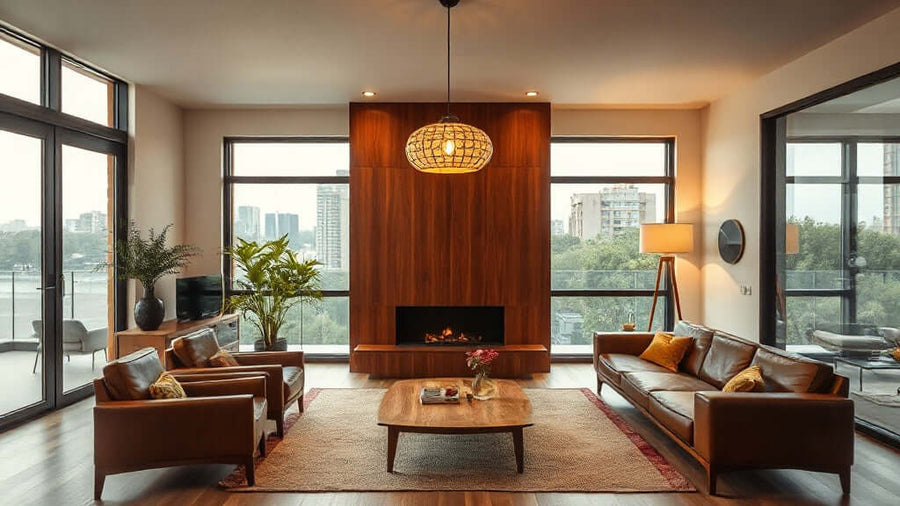
- Superposez avec des matériaux naturels : Le bois, le lin, la laine, le cuir, la pierre – tous complètent magnifiquement une suspension japonaise.
- Choisissez des meubles avec un vieillissement visible : Les pièces vintage, le bois huilé, le cuir vieilli parlent tous le même langage que le wabi-sabi.
- Éditez impitoyablement : Le wabi-sabi concerne ce que vous omettez, pas ce que vous ajoutez. Chaque objet doit mériter sa place.
- Incorporez des êtres vivants : Une seule plante, des branches dans un vase, ou des fleurs à leur plus beau moment (juste avant qu'elles ne se fanent) incarnent toutes l'impermanence.
La question de l'investissement
Une véritable suspension wabi-sabi – celle qui est soigneusement conçue et fabriquée à partir de matériaux de qualité – est rarement bon marché. Mais voici le fait : elle n'est jamais chère comme l'est une pièce forte dictée par la tendance. Vous investissez dans quelque chose qui sera aussi beau dans dix ans qu'aujourd'hui. En fait, elle pourrait être encore plus belle, à mesure que le matériau vieillit et se patine naturellement.
Si vous décorez plusieurs pièces ou gérez un projet de rénovation plus important, le programme de remises professionnelles Nauradika offre de réelles économies sur plusieurs pièces sans compromettre la qualité.
Dernières réflexions : La révolution silencieuse
L'essor de la suspension wabi-sabi en 2026 n'est pas seulement une tendance de design – c'est une philosophie qui prend racine. Nous sommes collectivement fatigués de l'excès, de la perfection, des objets conçus pour impressionner. Nous voulons des objets qui nous procurent un sentiment plus calme et plus profond. Une suspension japonaise suspendue dans votre espace n'éclaire pas seulement votre pièce ; elle exprime votre façon de vivre.
Que vous rénoviez une seule pièce ou toute votre maison, une lampe de plafond zen ou une suspension wabi-sabi soigneusement choisie peut devenir l'ancre philosophique de votre intérieur. C'est un investissement dans une beauté qui dure, un artisanat qui compte et une façon de vivre plus lente et plus intentionnelle.
La lumière parfaite vous attend. Et contrairement aux tendances qui s'estomperont d'ici l'automne, elle ne fera que s'embellir avec le temps.
Nauradika Trade