La résurgence des matériaux tactiles et naturels en architecture d'intérieur a dépassé le stade de la simple tendance pour devenir une norme de pratique. Le travertin – cette pierre sédimentaire poreuse aux tons chauds – connaît une nouvelle dynamique de spécification, notamment pour les applications d'éclairage mural. Pour les architectes et les designers travaillant sur des projets résidentiels ou commerciaux, comprendre comment spécifier une applique murale en travertin va au-delà des préférences esthétiques : il s'agit de l'authenticité du matériau, des propriétés de diffusion de la lumière et de l'intégration technique.
Une analyse récente des prévisionnistes de l'éclairage de Mirodemi a mis en évidence les luminaires muraux à texture de pierre comme une direction déterminante pour 2026, en particulier dans les conversions hôtelières et les espaces de bien-être résidentiels. Cela s'aligne avec la dynamique architecturale plus large en faveur des intérieurs biophiliques et loin du modernisme anonyme. La catégorie des appliques murales en travertin – distincte des solutions d'éclairage mural en marbre – offre des avantages spécifiques que nous allons détailler ici.
Spécification du matériau : pourquoi le travertin plutôt que le marbre
Le travertin et le marbre sont souvent confondus, mais pour la conception d'éclairage, ils se comportent très différemment. La surface cellulaire et poreuse du travertin crée une diffusion de la lumière supérieure à celle du marbre, dont la composition est plus dense et plus réfléchissante. Pour les boîtiers d'appliques murales, cela a son importance : vous obtenez un éclairage plus doux et plus ambiant, avec moins de points chauds spéculaires. La porosité naturelle du matériau signifie également qu'il se photographie de manière cohérente dans différentes conditions d'éclairage, ce qui est crucial s'il s'agit d'un projet hôtelier ou de vente au détail avec des exigences d'image de marque.
Sur le plan thermique, le travertin se situe entre le marbre et le calcaire. Il ne dissipera pas la chaleur des sources LED aussi agressivement que le marbre, mais il reste frais au toucher compte tenu des niveaux de puissance typiques des appliques murales (généralement 8-15 W dans les configurations LED modernes). La palette chaude et crémeuse de la pierre – allant du blond-beurre aux tons champagne plus profonds selon son origine – s'harmonise bien avec les couleurs murales neutres et saturées, ce qui en fait un choix techniquement sûr pour diverses palettes.
Approvisionnement et cohérence
Si vous spécifiez des appliques murales en travertin pour un projet multi-unités, la cohérence devient un problème de spécification. La variation de la pierre naturelle est inhérente, mais les fournisseurs réputés maintiennent des normes de sélection. Demandez des échantillons de couleur et de veinage tôt ; recoupez-les avec vos planches de matériaux. Les meilleurs luminaires muraux de cette catégorie sont accompagnés d'une documentation détaillée sur les matériaux et d'informations sur les lots, ce qui vous permet de confirmer l'harmonie visuelle entre les installations.
Spécifications techniques pour les architectes
Intégration des LED et flux lumineux
Une applique murale en travertin n'est pas simplement une pierre façonnée comme un luminaire, c'est un problème d'ingénierie résolu avec élégance. Les spécifications modernes se situent généralement entre 8 et 20 W LED, produisant 600 à 1200 lumens selon la configuration. Pour les applications ambiantes de chambre ou de couloir, visez une puissance plus faible. Pour les murs caractéristiques dans les espaces commerciaux ou l'éclairage d'accentuation dans les espaces de vie, vous pouvez spécifier la gamme de puissance supérieure.
La température de couleur est essentielle : la chaleur du travertin convient parfaitement au 2700K (blanc chaud), bien que le 3000K fonctionne si votre palette générale est plus contemporaine. Évitez les spécifications de 4000K et plus, car elles entrent en conflit avec la chaleur inhérente du matériau et créent une tension visuelle inconfortable.
Montage et installation
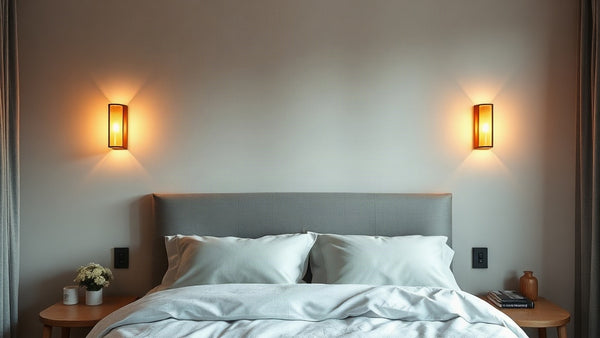
Les appliques murales en pierre utilisent généralement un câblage encastré à l'arrière, avec des boîtes électriques montées en surface. Vérifiez la profondeur de la boîte d'encastrement par rapport à la construction de votre mur dès le début, en particulier si vous travaillez avec des murs extérieurs isolés ou des propriétés historiques où la profondeur des cavités varie. Une applique murale en travertin nécessite généralement une boîte d'encastrement standard simple d'origine européenne ou britannique, ce qui rend l'intégration simple dans les constructions neuves et les rénovations.
Le poids compte : attendez-vous à 2,5-4 kg par luminaire, selon l'épaisseur de la pierre. Assurez-vous que votre spécification mentionne un ancrage mural adéquat, approprié au type de substrat. Les montants de cloison sèche nécessitent des fixations de cavité appropriées ; la maçonnerie solide nécessite des combinaisons de chevilles et de vis appropriées. Il ne s'agit pas d'une documentation facultative, c'est une protection contre la responsabilité.
Variateur et contrôle
Spécifiez des drivers LED dimmables chaque fois que cela est possible. Les qualités matérielles d'une applique murale en travertin améliorent en fait l'expérience de gradation : à mesure que la puissance lumineuse diminue, la texture de la pierre devient de plus en plus proéminente, créant un effet superposé sophistiqué. Si le projet est résidentiel, la gradation 1-10V ou DALI est standard. Les installations commerciales peuvent nécessiter une intégration avec les systèmes de gestion du bâtiment ; tenez-en compte dans la spécification si nécessaire.
Intégration du design : considérations sur la luminosité estivale
La stratégie d'éclairage estival diffère de la spécification hivernale. Une applique murale en marbre ou une applique murale en travertin conçue pour l'ambiance hivernale en Europe du Nord ou au Royaume-Uni peut sembler superflue pendant les longues heures de jour. Pratique de l'architecte ici : regroupez vos luminaires muraux en pierre avec un objectif. Spécifiez-les dans les couloirs, les salles de bains, les vestiaires et les vestibules d'entrée où ils fonctionnent indépendamment de la lumière extérieure. Dans les espaces de vie orientés au sud, envisagez de limiter les spécifications aux scénarios d'utilisation en soirée ou optez pour des variantes à faible puissance.
La finition poreuse du travertin bénéficie en fait de la lumière du jour tamisée – la pierre apparaît plus riche en présence d'une lumière naturelle indirecte. C'est un avantage par rapport aux alternatives en marbre poli. Vos installations estivales conservent un poids visuel même lorsqu'elles ne sont pas éclairées.
Applications commerciales et hôtelières
Les projets hôteliers privilégient particulièrement l'éclairage mural en travertin. Le matériau véhicule l'artisanat sans paraître artisanal ; il est perçu comme conçu plutôt que décoratif. Une applique murale en travertin dans le couloir d'un hôtel ou le hall d'un appartement-boutique signale la qualité et l'intention aux utilisateurs finaux. Spécifiez-les par groupes de 2-3 plutôt qu'un espacement uniforme ; cela crée un rythme visuel et paraît plus sophistiqué qu'une répétition régimentée.
Pour les restaurants et les bars, assurez-vous que vos sélections de travertin ont été spécifiées avec des finitions scellées si une proximité avec l'humidité ou un risque de taches est présent. Demandez des rapports d'essai sur le traitement des matériaux, le cas échéant.
Approvisionnement et prix professionnels
Pour les architectes gérant des projets de grande envergure, l'accès aux prix professionnels a un impact significatif sur l'économie du projet. Nauradika propose le programme de réduction professionnelle Nauradika spécifiquement pour les professionnels du design, les architectes et les entrepreneurs qui spécifient plusieurs unités. Si vous estimez les coûts pour un développement résidentiel de plus de 20 unités, l'enregistrement pour les conditions commerciales permet généralement d'améliorer la marge de 15 à 25 % par rapport aux prix de détail standard.
Délais et disponibilité
Les luminaires en pierre naturelle ont généralement des délais de livraison plus longs que les équivalents en métal ou en céramique. Prévoyez 8 à 12 semaines entre la commande et la livraison pour les configurations d'appliques murales en travertin sur mesure. Si le calendrier de votre projet est serré, confirmez immédiatement la disponibilité par rapport à votre calendrier de spécification – ne découvrez pas les contraintes de délai pendant la phase d'appel d'offres.
Attentes en matière d'entretien et de durabilité
La nature poreuse du travertin exige un traitement doux. Spécifiez des variantes scellées là où l'accumulation de poussière ou d'empreintes digitales est une préoccupation, en particulier dans les cuisines commerciales ou les environnements industriels poussiéreux. Les applications résidentielles nécessitent rarement un scellement. Le nettoyage ne nécessite qu'un chiffon doux et sec ; ne spécifiez jamais de traitements chimiques agressifs dans les programmes d'entretien.
Une applique murale en travertin correctement spécifiée devrait durer plus longtemps que plusieurs cycles de drivers LED. La pierre elle-même est un matériau qui dure plus de 30 ans ; les composants électriques à l'intérieur garantissent généralement une durée de vie des LED de 10 ans. Intégrez les modules LED de remplacement dans la modélisation des coûts à long terme pour les grandes installations.
Précédent de spécification
Si vous présentez l'éclairage mural en travertin à des clients peu familiers avec cette catégorie, faites référence à des comparables : le langage matériel se situe entre le minimalisme du travail de la pierre de Norm Architects et la chaleur artisanale du design de salle de bain japonais. C'est un matériau honnête sans être doctrinaire, un positionnement utile pour justifier la spécification auprès de clients commerciaux recherchant une crédibilité en matière de design sans prétention perçue.
Liste de contrôle finale des spécifications
- Confirmer la couleur/le veinage du travertin par rapport aux échantillons et planches de matériaux du lot prévu
- Vérifier le flux lumineux (lumens) par rapport à l'utilisation prévue et aux conditions ambiantes
- Spécifier explicitement la température de couleur (2700K recommandé)
- Confirmer la compatibilité avec la construction murale et les exigences de profondeur de la boîte d'encastrement
- Demander des configurations de driver LED dimmables pour le résidentiel ; spécifier le protocole de contrôle pour le commercial
- Documenter le poids, le matériel de montage et les tolérances d'installation
- Demander une documentation sur les tests/l'étanchéité des matériaux si un risque d'humidité existe
- Établir immédiatement les délais par rapport au calendrier du projet
- Demander l'accès aux prix professionnels si vous spécifiez plus de 10 unités
Une applique murale en travertin, correctement spécifiée, fonctionne à la fois comme un composant technique et une déclaration matérielle. C'est le genre de détail qui distingue un design compétent d'une architecture réfléchie – exactement ce pour quoi les clients embauchent des architectes. L'élan actuel vers l'intégration des matériaux naturels offre un véritable soutien du marché pour ces spécifications, les rendant ni dépendantes des tendances ni sur-spécifiées pour la pratique contemporaine.
Nauradika Trade