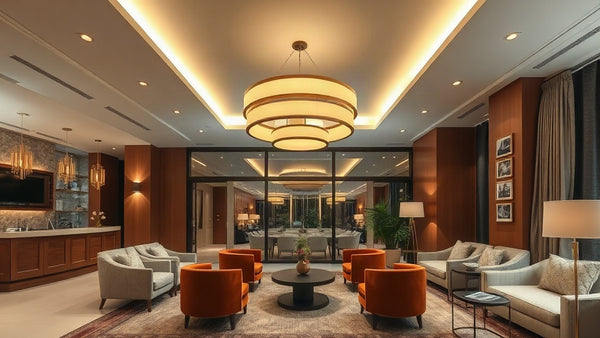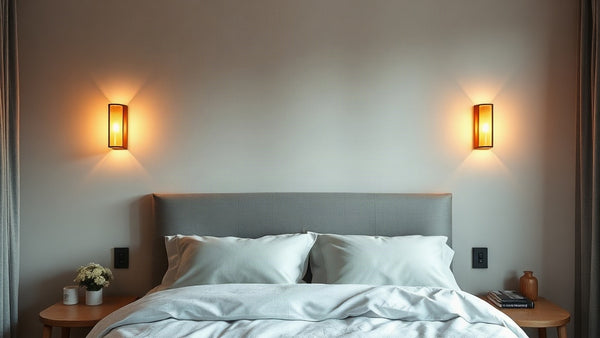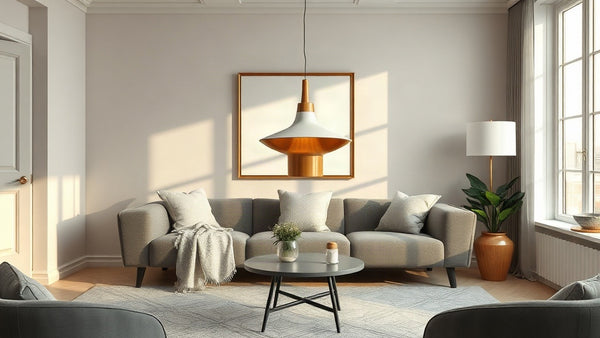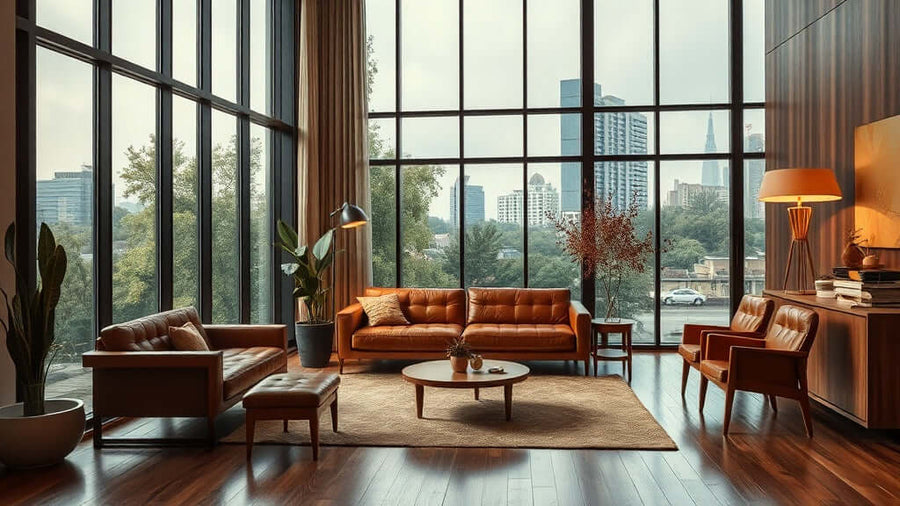
Spring renovation season is upon us, and if you're specifying lighting for a residential or commercial project, the renewed focus on Scandinavian design in 2026 interior design trends makes this the perfect moment to reconsider your approach to floor-level illumination. A well-chosen nordic floor lamp isn't just an afterthought—it's a spatial decision that affects acoustics, sightlines, material palette, and the entire sensory experience of a room.
We've worked with architects and designers across London, Copenhagen, and Stockholm who treat lighting specification with the same rigour as structural systems. Here are the seven critical factors you need to know when selecting a nordic floor lamp for your next project.
1. Colour Temperature and CRI: Non-Negotiable for Material Expression
Any designer worth their salt knows that a material's true character only emerges under the right light. Nordic design philosophy demands authenticity—whether you're showcasing oiled oak, whitewashed plywood, or powder-coated steel.
Specify a danish designer floor lamp with a colour temperature between 2700K–3000K for residential spaces and 3500K–4100K for commercial applications where task visibility matters. Crucially, demand a CRI (Colour Rendering Index) of 90 or above. This isn't aesthetic luxury; it's specification integrity. A cheap LED retrofit with 70 CRI will make your carefully sourced natural materials look anaemic and muddy.
Look for lamps offering dimmable drivers. Scandinavian lighting has always been about modulating mood and function—not flipping a switch from off to institutional brightness.
2. Beam Spread and Lux Output: Match the Function, Not the Trend
The 2026 interior design trends emphasise functional minimalism over decorative excess. That means your nordic floor lamp must deliver measurable illumination where it's needed, without spilling wastefully into adjacent zones.
- Accent/ambient use: 200–400 lux at task distance (for a reading corner, sculptural feature lighting)
- Task lighting: 500–750 lux (desk work, kitchen islands, retail displays)
- Accent + ambient blend: 300–600 lux (living spaces requiring both functionality and moodiness)
Request photometric data from your supplier. "It's bright" is not a specification. A narrow beam (20–30°) concentrates output; a wide beam (60–90°) diffuses it. Your brief determines which you need. For commercial projects, factor in reflectance values of surrounding surfaces—dark Scandinavian interiors will require higher absolute output than pale, reflective ones.
3. Material Authenticity and Finish Consistency
Scandinavian design philosophy is built on truth in materials. A nordic floor lamp should express its structure honestly: if it's timber, specify sustainable sourcing and ask for finish samples. If it's metal, understand the patina story—will brass age, will powder coat maintain its matte profile, will stainless steel show fingerprints?
For residential projects, this is about craftsmanship longevity. For commercial applications, it's about durability under 24/7 use and cleaning protocols. Specify materials that withstand your project's actual conditions, not Instagram conditions.
Our floor and table lamp collection includes verified material specifications and finish samples available on request—essential for detailing.
4. Stability and Footprint: The Physics of Space Planning
A danish designer floor lamp must be physically stable without visually dominating its corner. Tripod-based designs offer a smaller footprint than weighted bases; however, tripods can feel precarious in high-traffic commercial spaces or homes with children.
Specify:
- Base weight and dimensions (express as mm diameter, kg load rating)
- Centre of gravity relative to shade diameter
- Toe-kick or clearance for vacuum cleaning (often overlooked in commercial briefs)
- Stability under wind load if specifying for covered outdoor spaces
For a nordic designer tripod floor lamp, ensure the legs don't create visual clutter—look for angled or tapered forms that read as minimal even when detailed. A tripod should feel inevitable, not afterthought.
5. Height Flexibility and Adjustability
A fixed-height floor lamp becomes a mistake the moment your client rearranges furniture or requires different task heights. Modern nordic floor lamp designs increasingly incorporate telescoping stems or adjustable arms.
For residential: specify height adjustability of at least 150mm to accommodate different seating heights and user preferences.
For commercial: if the lamp will serve multiple functional zones (a corner that shifts from breakout to presentation space), a fully adjustable arm system becomes essential. This isn't indulgence—it's futureproofing against inevitable spatial reuse.
6. Shade Geometry and Light Distribution Character
The shade isn't decoration—it's an optical system. A drum shade diffuses uniformly; a conical form focuses downward; a slatted or articulated shade creates directional shadow play.
Ask yourself:
- Do you want soft ambient glow or defined task light?
- Will upward light spill create glare or enhance ceiling height perception?
- Does the material (linen, metal, veneer) align with your interior palette?
- Can the shade be easily removed for maintenance or bulb replacement?
In hygge lighting design—the Scandinavian approach to atmospheric comfort—shade opacity matters. A completely opaque shade feels heavy; a semi-translucent one reveals the bulb as a warm element. This psychological distinction affects how users experience the space.
7. Electrical Specification and Retrofit Compatibility
This is where many specifications fail. Ask: will this lamp integrate with your control system? Can it accept smart dimmers? Is the cable length adequate, and does its routing accommodate your floor plan?
For commercial projects, specify:
- UL or CE certification (non-negotiable)
- IP rating if used in bathrooms, kitchens, or outdoor covered areas
- Driver/transformer compatibility with 0–10V dimming systems common in commercial installs
- LED lifespan (50,000+ hours is standard; demand verification)
- Warranty terms and replacement availability (Scandinavian makers excel here; many guarantee parts availability for 10+ years)
If you're working on a refurbishment, confirm that a nordic floor lamp will accept your existing dimmer infrastructure before specifying. Retrofit costs add up fast.
Trade Specification at Scale
If you're specifying multiple units across a commercial project or multi-unit residential scheme, cost efficiency matters without compromising design integrity. Nauradika's trade discount programme allows architects and designers to specify genuine Scandinavian lighting at scaled pricing—essential when outfitting an office, hotel, or apartment portfolio.
The Spring Renovation Opportunity
Spring is when projects move from drawing to installation. The 2026 interior design trends lean heavily on function-first Scandinavian principles: honesty of materials, clarity of purpose, and spatial efficiency. A well-specified nordic floor lamp isn't a decorative gesture—it's a commitment to how users will inhabit and experience your space.
Treat floor lighting with the precision you'd apply to glazing orientation or acoustic panels. The details compound into something unmistakably right.
Nauradika Trade