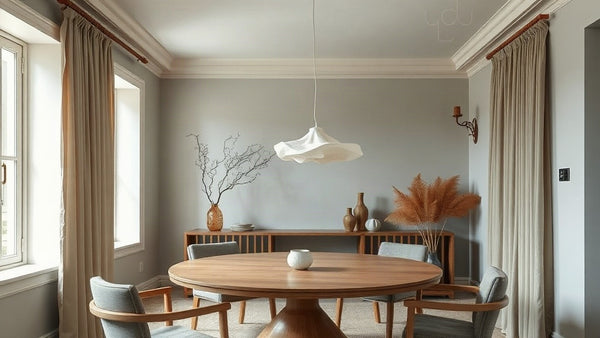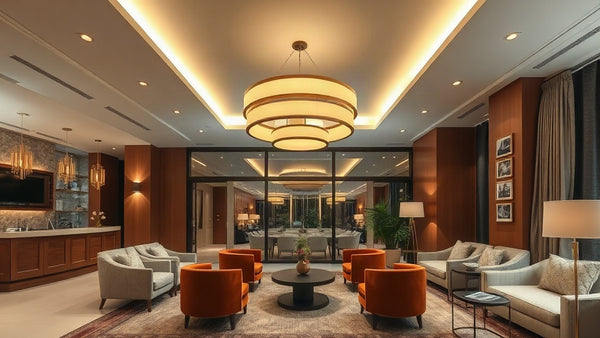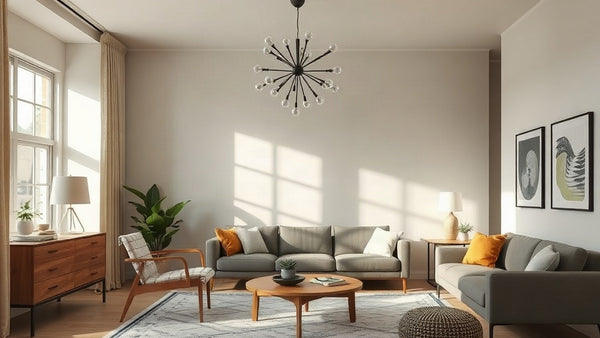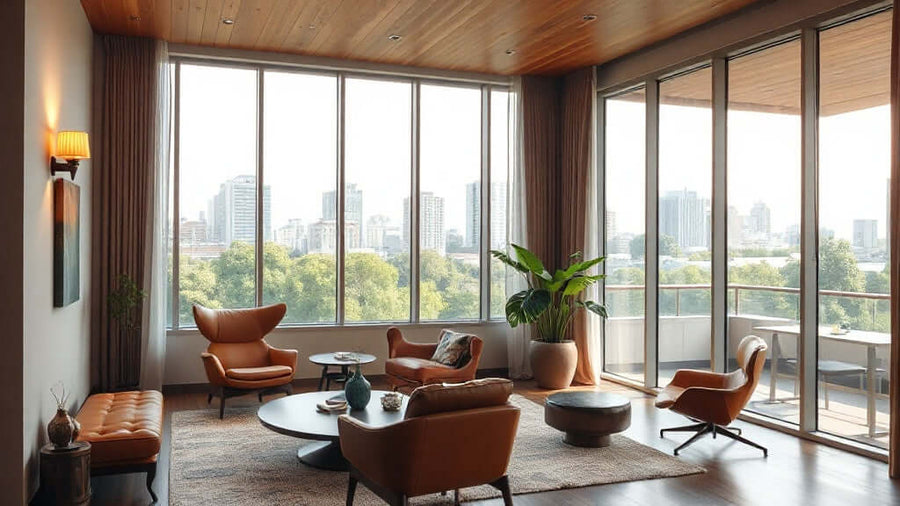
Wall sconces have moved beyond ambient filler to become genuine design statements. Whether you're specifying for a boutique hotel corridor, a corporate reception, or a high-end residential renovation, the precision required in selecting the right wall sconce has never been sharper. Recent trends documented in Best Wall Lighting Trends 2026: Modern Design Ideas confirm what we're seeing across briefs: architects are treating wall-mounted luminaires as structural and aesthetic anchors, not afterthoughts.
Here's what you need to know when specifying wall sconces for your next project—because the difference between adequate and exceptional lighting lies in the details.
1. Lumen Output Per Sconce vs. Ambient Light Strategy
Stop specifying wall sconces in isolation. Modern practice demands you understand how a single sconce contributes to overall foot-candle distribution. Mid-century modern wall sconces typically deliver 300–800 lumens depending on fixture type and bulb specification. For task-adjacent spaces (reading nooks, desk adjacencies), you're looking at the upper range. For atmospheric layering in a corridor or gallery, aim lower.
The critical move: calculate backwards from your total lux requirement. A 3-metre hallway with 150 lux ambient needs different sconce placement and output than a living room with mixed ceiling and wall sources. Specify CCT (Correlated Colour Temperature) in Kelvins as well—2700K for hospitality, 3000K for commercial circulation, 4000K only when task precision demands it.
2. Mounting Height and Visual Weight Proportions
This isn't trend advice; it's geometry. Wall sconces work best mounted at eye level (roughly 1.5–1.65m from finished floor) in residential settings. In commercial circulation, height varies by function: 1.8m in corridors, slightly lower in intimate lounge spaces. The proportion between wall sconce scale and room volume matters enormously.
A over-scaled fixture in a modest bedroom reads as clumsy. An undersized sconce in a double-height atrium disappears. Rule of thumb: the fixture width should occupy roughly 1/4 to 1/3 of the wall space above furniture or architectural features. Browse the full range of wall light fixtures to see how scale translates across room types.
3. Material Specification and Summer Light Interaction
Summer light demands particular attention to reflectance values. Scandinavian wall lamp design traditionally favours natural materials—oiled walnut, birch veneer, brushed brass—because they handle high seasonal light angles without glare or visual harshness. Glossy finishes spike reflectance; matte finishes absorb. Specify material finish in your schedules.
For summer-facing spaces, a wall sconce in matte black or dark walnut will maintain visual balance without competing with daylight. Conversely, lighter interiors benefit from softer material choices. Nordic wooden wall lights perform well in high-light conditions because wood grain diffuses rather than reflects harsh rays.
4. Beam Spread and Asymmetric Distribution Patterns
A specification sheet matters. Wall sconces aren't omni-directional. Asymmetric optics—where the beam angles downward and forward rather than splashing all directions—control light pollution, reduce glare, and create visual hierarchy in a space. Specify beam angle, not just wattage.
- Narrow beam (20–30°): Accent lighting, artwork, architectural detail
- Medium beam (45–60°): Task-adjacent, reading, desk supplement
- Wide/asymmetric (90°+): Ambient, circulation, atmospheric layering
This is where mid-century modern wall sconces excel: Danish and Scandinavian designers obsessed over beam distribution because space was precious. That legacy translates directly to contemporary efficiency mandates.
5. Integration with Building Management Systems (BMS) and Dimming Protocols
Increasingly, architects are specifying sconces within larger lighting control schemes. DALI, 0–10V dimming, and Bluetooth mesh are standard. Verify that your wall sconce choice—particularly designer pieces—supports your control protocol before specification lock. Some vintage-inspired Scandinavian designs aren't dimmer-compatible as supplied.
Specify dimming range: a quality sconce should dim to 1% without flicker. Budget for compatible drivers and ensure your specification includes compatibility clauses with your systems integrator.
6. Maintenance Access and Bulb Lifecycle Costs
Wall sconces aren't installed in easily accessible locations. Specify LED modules or specify for easy driver/bulb swapping from standard ladders. If you're specifying integrated LED (non-replaceable), ensure the rated lifespan exceeds the warranty period by a meaningful margin—50,000 hours minimum for residential, 70,000+ for commercial.
Calculate total cost of ownership including labour for replacement. A slightly more expensive sconce with accessible bulb cavity may save your client thousands over the fixture's life.
7. Certifications, Ingress Ratings, and Damp Environments
A wall sconce destined for a bathroom, kitchen, or covered exterior requires IP44 minimum (dust and water splash protection). Specify IP rating explicitly in your schedules. Fire ratings matter for certain commercial applications; ensure your specification note includes fire classification if required by building code.
For EU projects, specify CE marking and relevant EN standards. For commercial contracts, request test reports—this isn't pedantic; it's contractual protection.
Sourcing Precision Wall Sconces Without Compromise
The challenge for architects is sourcing fixtures that balance design integrity with specification rigour. Designer wall sconces at accessible price points are increasingly possible if you know where to look. Collections of designer wall sconces now routinely include detailed specifications, beam distribution diagrams, and dimming compatibility notes—not afterthoughts.
If you're working on multiple projects or larger commercial briefs, the Nauradika trade discount programme provides the pricing leverage that makes specifying bespoke mid-century modern wall sconces viable across different project scales.
The shift toward lighter interiors and seasonal awareness in 2026 means wall sconces are doing heavier conceptual work. Treat them as such in your specifications. The fixtures you select now will define ambient quality for years.
Nauradika Trade