Hotel Lighting Trends in 2026: What Architects Need to Know
As we move into autumn, the hospitality sector is increasingly embracing layered lighting design that marries aesthetic restraint with functional rigour. According to Lumenture's 2026 Lighting Trends report, hotel lighting is undergoing a decisive shift away from uniform brightness towards spatially intelligent, warmth-forward schemes that enhance guest experience without compromising operational efficiency.
For architects specifying hotel lighting, this means reconsidering how light quality, colour temperature, and fixture placement work in concert across lobbies, corridors, guest rooms and public areas.
The Shift Towards Warm, Dimmer-Friendly Schemes
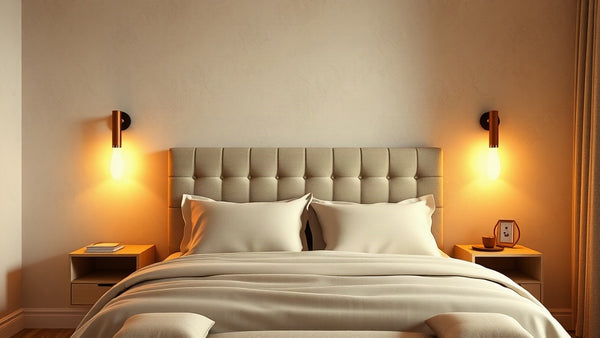
Contemporary hotel lighting now prioritises 2700K–3000K colour temperatures as standard. This departure from cooler, institutional brightness reflects both guest psychology research and the broader "hygge-influenced" aesthetic gaining traction across hospitality design. Crucially, hotel lighting specifications must now include dimmer-compatible fixtures and circuiting that allows staff to modulate ambiance throughout service hours.
- Implement 0–100% dimming capability across public zones
- Specify separately switched layers: ambient, accent, and task lighting
- Select LED fixtures rated for frequent dimming cycles
Mid-Century Modernism Meets Contemporary Hospitality
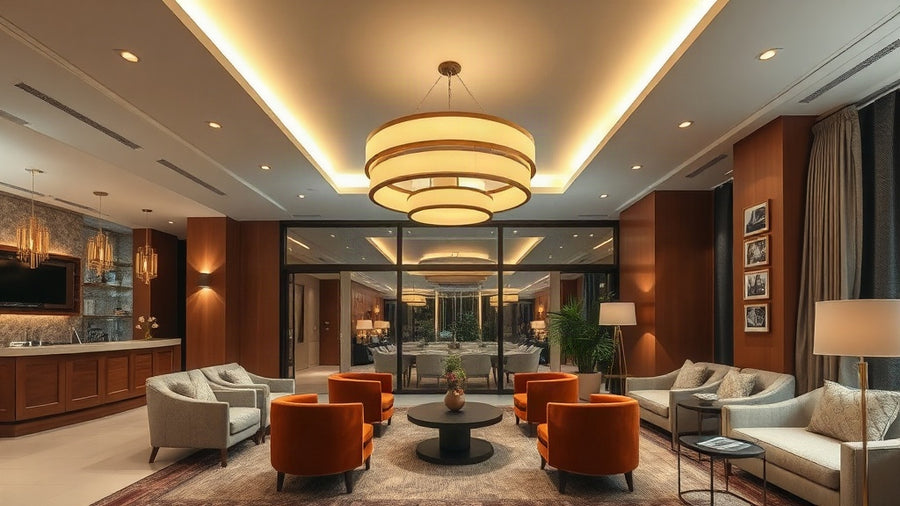
Restaurant lighting and broader hospitality lighting design increasingly draws inspiration from Scandinavian and mid-century modern principles—clean geometry, material honesty, and human-scaled proportions. Pendant fixtures with tapered silhouettes, sculptural table lamps, and linear suspended systems now feature prominently in hotel lobbies and dining spaces, signalling sophistication while maintaining approachability.
These aesthetic choices aren't merely stylistic. Fixtures designed with considered proportions and refined materiality (brass, opal glass, natural wood) reduce visual fatigue and create memorable spatial character—both critical for hospitality projects targeting design-conscious clientele.
Practical Specification Considerations
When selecting hotel lighting for your project, balance aesthetic intent with pragmatic constraints:
- Maintenance accessibility: Specify fixtures with user-replaceable components; hospitality environments demand rapid fault remediation
- Light distribution: Choose fixtures with appropriate beam angles for intended spaces—narrow for accent, wide for ambient fill
- Energy compliance: Ensure all selections meet current building regulations and CIBSE guidance for hospitality applications
- Budget certainty: Source from established suppliers offering consistent lead times and warranty terms
Seasonality and Guest Comfort
As autumn approaches and daylight diminishes, hotel lighting becomes increasingly critical to perceived comfort and service quality. Modern schemes incorporate circadian-responsive elements—subtle colour temperature shifts across the day—whilst maintaining the warm, envelope-like quality guests expect during evening hours.
For restaurant lighting specifically, layered dimming allows dining venues to transition seamlessly from lunch service brightness to intimate dinner ambiance, enhancing perceived value without multiple fixture types.
Sourcing Considered Design
UK retailers now stock an expanded range of Scandinavian and mid-century modern fixtures at price points accessible for hospitality projects. Specifying from this palette—whether restrained brass pendants or sculptural floor lamps—delivers design authenticity whilst supporting project budgets typically constrained by overall fit-out costs.
The 2026 trend is clear: hotel lighting succeeds when it balances atmospheric warmth, operational flexibility, and enduring design integrity. For architects, this means viewing lighting as integral to spatial narrative, not secondary infrastructure.
Explore the look through hotel lighting options and related pieces in our Modern Lighting collection.
Why this style works
The right light does more than illuminate a room. It sets the rhythm of the space, gives furniture a visual anchor, and helps a decorative scheme feel intentional rather than assembled. For readers arriving from search, this section connects the design idea to practical product selection.
- Creates a clear focal point
- Adds warmth and texture
- Works across contemporary and vintage-inspired rooms
How to choose the right piece
Start with scale, then material, then light temperature. A pendant or wall light should feel proportionate to the room and the furniture below it. Natural materials tend to soften modern interiors, while darker finishes can make a more graphic statement.
- Check ceiling height and furniture dimensions
- Choose a finish that repeats elsewhere in the room
- Use warm bulbs for living and dining spaces
Where to use it
This look is especially effective in dining rooms, bedrooms, hallways and boutique hospitality spaces where atmosphere matters. It can also work in renovations where a single lighting change needs to make the room feel more finished.
- Dining tables and kitchen islands
- Bedrooms and reading corners
- Hallways, restaurants and boutique hotels
Shop the Look
For the most relevant products, start with the article's featured piece and the matching collection. Product price, availability and images should be pulled live from Shopify when the template renders.
View the featured hotel lighting or browse the full related collection.
Featured in this guide
View collectionWhy this style works
Frequently asked questions
Nauradika Trade