Specifying Wall Sconces for Contemporary Projects: A Professional Guide
Wall sconces remain one of the most underspecified elements in residential and commercial interiors. Architects often default to generic solutions when a properly considered sconce selection can transform a space's functional and aesthetic performance. This guide addresses the practical considerations for specifying wall sconces that deliver on both brief and budget, with particular focus on mid-century modern and Scandinavian design languages that continue to anchor contemporary interiors.
Understanding Wall Sconce Performance Requirements
Before aesthetic selection, establish your lighting performance criteria. Wall sconces serve distinct functions: task lighting for reading or grooming, ambient supplementary lighting, accent lighting for architectural features, or purely sculptural presence. A sconce specified for bedside reading requires 300–500 lumens with directional output; the same fixture used as a hallway ambient light may need only 150–250 lumens with diffuse distribution.
Colour temperature shifts perception significantly. Summer projects benefit from cooler 4000K–5000K tones that complement natural daylight and lighter interiors. Warmer 2700K sconces anchor evening schemes but can compete with noon light. Specify correlated colour temperature (CCT) explicitly in tender documents rather than defaulting to supplier assumptions.
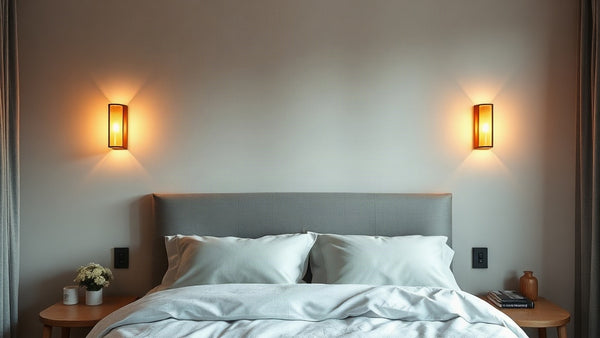
Mounting height is critical and often overlooked. For reading sconces, 48–60 inches above finished floor places the light at seated eye level; for ambient hallway fixtures, 60–66 inches suits standing figures. Commercial corridors may warrant 72–78 inches to avoid accidental head contact. Always detail these dimensions on section drawings rather than leaving them to site interpretation.
Material and Finish Durability in Specification
Mid-century modern wall sconces typically employ brass, teak, walnut, or steel. Brass develops patina; specify lacquered finishes if you require colour consistency over five years. Untreated brass will age expressively—acceptable in loft conversions and galleries, problematic in corporate corridors where uniformity matters. Scandinavian wall lamp designs frequently feature oak or ash timber; confirm kiln-dried European stock in specifications rather than accepting vague "natural wood" descriptions. Timber movement in heated commercial spaces can crack finishes; budget for seasonal adjustment in damp-prone locations.
Steel finishes warrant particular attention. Matte black powder coat differs substantially from satin or polished stainless. Specify RAL or NCS numbers rather than descriptive terms. For coastal or high-humidity projects, 316 stainless outperforms 304, albeit at cost premium.
Electrical and Building Code Considerations
Wall sconces must comply with BS 7671 (Building Regulations Part P in England/Wales, equivalent standards in Scotland). Most designer sconces operate on standard 230V circuits, but confirm voltage drop calculations for long runs or high-load circuits. LED-integrated sconces require compatible dimming infrastructure; trailing-edge dimmers suit most retrofit LEDs, but wall light fixtures with proprietary drivers demand leading-edge or 0–10V dimming control. Specify dimming protocol in technical schedules to avoid site incompatibility.
Fire rating becomes significant in multi-unit residential and all commercial applications. Sconces with thermoplastic diffusers may require Class 0 certification; metal-only fixtures present negligible risk. Confirm building control requirements at design stage rather than discovering limitations during tender.
Aesthetic Specification: Mid-Century Modern and Scandinavian Approaches
Mid-Century Modern Sconce Language
Mid-century modern wall sconces typically employ clean geometric forms, often combining metal and glass or resin diffusers. Characteristic elements include brass arms with articulation, drum or cylindrical shades, and minimal ornamentation. The aesthetic emerged from 1945–1969 and remains contextually appropriate for commercial fit-outs, residential renovations, and hospitality settings requiring design authenticity rather than pastiche.
Specify sconces with brass or gunmetal finishes for warm interiors; polished or brushed aluminium for cooler schemes. Glass shades—whether opal, smoked, or clear—require surface material specification. Smoked glass diffuses light softly but darkens interiors; clear glass emphasises sculptural form but creates visible filament in non-integrated fixtures. Opal diffusers deliver optimal light diffusion with visual cleanliness.
Scandinavian Wall Lamp Design Principles
Scandinavian wall lamp design emphasises material authenticity, functional simplicity, and environmental responsibility. Timber remains the signature material—teak, oak, and walnut appearing in both structural and aesthetic roles. Unlike mid-century modern's sculptural approach, Scandinavian design favours understated geometry and honest material expression.
The collection of modern Nordic wooden wall lights available through specialist retailers offers practical specification advantages: FSC certification confirming sustainable sourcing, integrated LED technology reducing fixture depth, and neutral aesthetic longevity. Specify timber type explicitly—oak develops distinctive grain patterns; walnut presents richer, more uniform appearance. Both suit contemporary and traditional contexts.
2026 Lighting Trends: Pastel Colorful Lighting
Current design discourse emphasizes pastel-coloured lighting as counterpoint to white and warm amber defaults. Rather than conventional white LEDs, designers increasingly specify fixtures with subtle colour rendering—soft blush pinks, pale greens, and warm greys—either through coloured diffuser materials or integrated RGB capability for adaptive lighting schemes.
For residential projects, this trend manifests as opal or tinted glass diffusers that warm skin tones subtly. Commercial applications employ it more cautiously—boutique hospitality and wellness-focused commercial interiors benefit; corporate offices generally do not. If specifying coloured diffusers, confirm colour stability over fixture lifecycle; some materials discolour under UV exposure. Pastel diffusers work particularly well in summer projects where lighter interiors benefit from softer light quality that complements natural daylight rather than competing with it.
Practical Application: Pastel Sconces in Contemporary Schemes
Wall sconces with soft grey or blush-tinted diffusers suit minimalist residential interiors and creative workspace design. Pair with 3000K–4000K LEDs rather than 2700K to prevent muddiness. In bathrooms and bedrooms, pastel-diffused sconces create psychologically calming environments. Specify lux levels explicitly to ensure adequate task lighting despite diffuser colour reduction—typically 10–15% light loss versus clear equivalents.
Specification Best Practice for Architects and Project Managers
Documentation Standards
Include wall sconces in reflected ceiling plans with mounting heights, circuit identification, and dimming requirements clearly marked. Create a lighting schedule detailing:
- Fixture type and manufacturer reference
- Quantity and location
- Mounting height (finished floor to centre of fixture)
- Lamp type and wattage (or integrated LED specifications)
- Dimming capability and control method
- Finish and material specifications
- Compliance certifications (CE, UKCA, fire rating where applicable)
Avoid vague descriptions like "as architect's selection" in main specifications—this invites cost-cutting substitutions. Instead, specify performance criteria and aesthetic language, permitting equivalent products while maintaining design intent.
Budget and Timeline Considerations
Designer mid-century modern and Scandinavian wall sconces typically cost £120–400 per unit for residential applications, £180–600 for commercial-grade equivalents. Lead times vary: stock items ship within 5–10 days; bespoke timber sconces require 6–8 weeks. Summer projects (typically June–August specification) should account for July shutdown periods at European manufacturers.
Architects specifying multiple sconces across projects benefit from Nauradika trade discount programme, which offers volume advantages for practice-wide standardisation or repeated client work.
Sample Specification Language
"Wall sconces shall be mid-century modern or contemporary Scandinavian design, constructed from solid brass or kiln-dried European hardwood as specified. Integrated LED technology (non-replaceable) operating at 3000K colour temperature, dimmable via 0–10V control. All fixtures shall meet BS EN 60598-1 and carry CE certification. Mounting height 54 inches above finished floor unless noted otherwise on drawings. Three substitutes of equivalent aesthetic and performance shall be submitted for approval prior to ordering."
Common Specification Errors and How to Avoid Them
Specifying sconces without confirming existing electrical infrastructure remains the primary error. Ambient lighting sconces added to circuits already serving desk lamps or kitchen downlights frequently trip breakers. Request electrical load calculations from MEP engineers before finalising selections.
Undersizing fixtures for commercial corridors and stairwells creates inadequate illumination despite adequate lux calculations—designer sconces often concentrate light in specific directions rather than diffusing uniformly. Request photometric data sheets and compare beam angles explicitly.
Material substitutions without approval destroy design coherence. Specify "teak veneer" rather than "wooden," and "solid brass" rather than "brass-finished steel." Suppliers naturally substitute within cost tolerance; explicit material requirements prevent costly site remediation.
Conclusion: Sconce Selection as Design Decision
Wall sconces warrant specification attention equal to pendant fixtures or downlights. The mid-century modern and Scandinavian design languages offer proven aesthetic longevity, practical durability, and accessible pricing across quality ranges. Proper specification—dimensional, electrical, and material—ensures site execution matches design intent and client satisfaction.
When specifying wall sconces for summer projects, consider how lighter interiors interact with cool colour temperatures and softer diffusion qualities. Pastel-tinted diffusers increasingly serve contemporary aesthetic demands without compromising task performance. Establish clear performance criteria, material requirements, and mounting specifications, and your sconce selections will anchor interiors functionally and aesthetically for years beyond project completion.
Nauradika Trade