Suspensions japonaises : l'essentiel pour un design contemporain raffiné
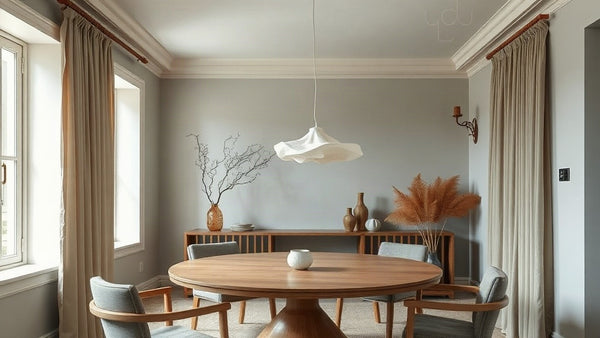
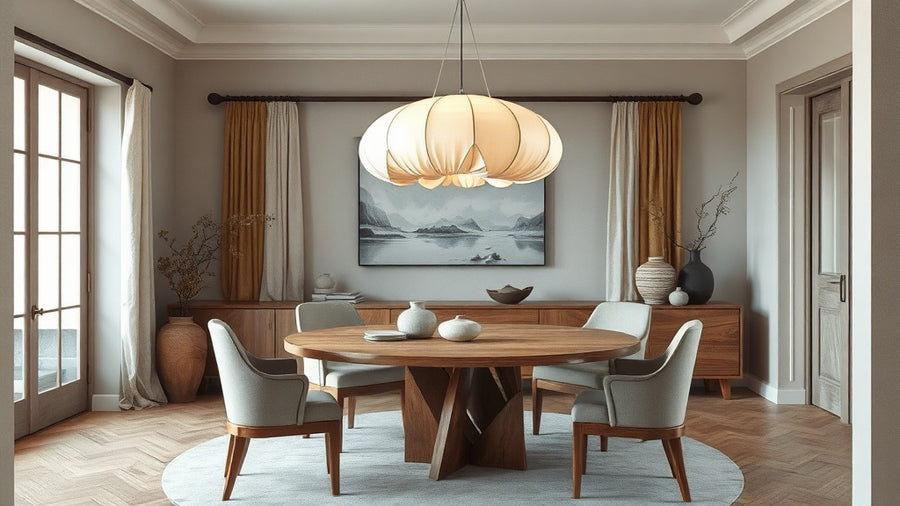
La résurgence des principes du design japonais dans les projets commerciaux et résidentiels reflète une tendance plus large vers des intérieurs intentionnels et minimalistes. La suspension japonaise – caractérisée par une géométrie discrète, des matériaux naturels et un éclairage diffus – répond aux exigences esthétiques et fonctionnelles que les architectes recherchent de plus en plus.
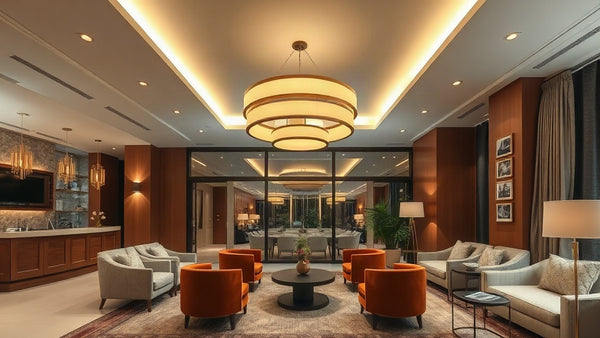
Alors que nous abordons le paysage du design de 2026, l'esthétique wabi sabi a dépassé le statut de tendance pour devenir un langage de design fondamental. Ces luminaires fonctionnent particulièrement bien dans les espaces ouverts où des stratégies d'éclairage en couches sont essentielles, et dans les projets de vente au détail ou d'hôtellerie nécessitant une douceur visuelle sans compromettre les performances d'éclairage.
Pourquoi les suspensions japonaises répondent aux exigences contemporaines
- Intégrité des matériaux : Le papier de riz, la céramique et les finitions en bois non traité réagissent authentiquement à la lumière, créant de la profondeur plutôt qu'une simple illumination.
- Fluidité spatiale : Le poids visuel minimal permet aux suspensions en grappes de délimiter des zones sans encombrement visuel – essentiel dans les aménagements résidentiels et commerciaux ouverts.
- Compatibilité des spécifications : Compatibilité LED standard ; rendu des couleurs généralement 90+ IRC ; la fonction de gradation préserve la qualité méditative.
- Efficacité thermique : La diffusion naturelle des matériaux réduit la dépendance à un rendement trop lumineux, diminuant ainsi la consommation énergétique globale.
La différence de la suspension Wabi Sabi
Là où les suspensions conventionnelles privilégient l'uniformité, la suspension wabi sabi embrasse la subtile imperfection. Ce n'est pas une indulgence esthétique, mais une retenue fonctionnelle. Une lampe en papier de riz filtre naturellement la lumière ambiante agressive, réduisant l'éblouissement dans les environnements de travail tout en maintenant l'intérêt visuel grâce à la texture des matériaux et au jeu d'ombres.
Pour les architectes qui spécifient l'éclairage dans des projets résidentiels, cette approche résout la tension persistante entre la tâche et l'ambiance. L'esthétique de la lampe de plafond zen – forme minimaliste, diffusion naturelle, couleur sobre – fonctionne aussi bien dans les chambres principales contemporaines que dans les cuisines minimalistes.
Considérations relatives aux spécifications
Lors de la sélection d'une suspension japonaise pour votre projet, tenez compte de :
- La hauteur de suspension par rapport à l'échelle de l'espace – le design japonais privilégie la proportion plutôt que l'impact.
- La capacité de gradation et l'intégration du contrôle avec des stratégies d'éclairage intelligent plus larges.
- La durabilité des matériaux dans les environnements spécifiés ; le papier de riz nécessite une attention particulière dans les zones très humides.
- L'alignement de la température de couleur (2700K s'aligne généralement avec l'intention du design ; les tons plus chauds améliorent la visibilité des matériaux naturels).
- La vérification du flux lumineux par rapport aux exigences de la tâche – les sources diffuses nécessitent souvent une puissance plus élevée que les luminaires directs.
Contexte de l'été 2026 : Intérieurs plus lumineux
Le design contemporain tend vers une composition spatiale plus légère. La présence discrète de la suspension japonaise soutient cela grâce à une géométrie raffinée et une palette naturelle. Pendant les mois d'été, lorsque la lumière du jour domine, ces luminaires passent gracieusement d'un rôle d'ambiance à un accent décoratif – essentiel pour les clients résidentiels recherchant des intérieurs flexibles et adaptés aux saisons.
Que ce soit pour l'hôtellerie commerciale, les nouvelles constructions résidentielles ou la rénovation, la suspension japonaise offre une authenticité matérielle et une sophistication fonctionnelle qui justifie sa spécification dans les projets soucieux de la qualité.
Découvrez notre sélection de luminaires wabi sabi et d'inspiration zen chez Nauradika, où le design japonais du milieu du siècle et contemporain rencontre le commerce de détail britannique accessible.
Explorez le look à travers les options de suspension japonaise et les pièces connexes de notre collection de luminaires japonais.
Pourquoi ce style fonctionne
La bonne lumière fait plus qu'éclairer une pièce. Elle donne le rythme à l'espace, ancre visuellement le mobilier et donne à un schéma décoratif un aspect intentionnel plutôt qu'assemblé. Pour les lecteurs arrivant d'une recherche, cette section relie l'idée de design à la sélection pratique de produits.
- Crée un point focal clair
- Ajoute de la chaleur et de la texture
- Fonctionne dans les pièces contemporaines et d'inspiration vintage
Comment choisir la bonne pièce
Commencez par l'échelle, puis le matériau, puis la température de la lumière. Une suspension ou une applique murale doit être proportionnée à la pièce et au mobilier en dessous. Les matériaux naturels ont tendance à adoucir les intérieurs modernes, tandis que les finitions plus foncées peuvent faire une déclaration plus graphique.
- Vérifiez la hauteur du plafond et les dimensions des meubles
- Choisissez une finition qui se répète ailleurs dans la pièce
- Utilisez des ampoules chaudes pour les espaces de vie et de salle à manger
Où l'utiliser
Ce look est particulièrement efficace dans les salles à manger, les chambres, les couloirs et les espaces d'accueil de boutique où l'atmosphère compte. Il peut également fonctionner dans les rénovations où un simple changement d'éclairage doit donner à la pièce un aspect plus fini.
- Tables de salle à manger et îlots de cuisine
- Chambres et coins lecture
- Couloirs, restaurants et hôtels-boutiques
Achetez le look
Pour les produits les plus pertinents, commencez par la pièce vedette de l'article et la collection correspondante. Le prix, la disponibilité et les images des produits doivent être extraits en direct de Shopify lors du rendu du modèle.
Découvrez la suspension japonaise présentée ou parcourez la collection complète.
Présenté dans ce guide
Voir la collectionWhy this style works
Frequently asked questions
Nauradika Trade