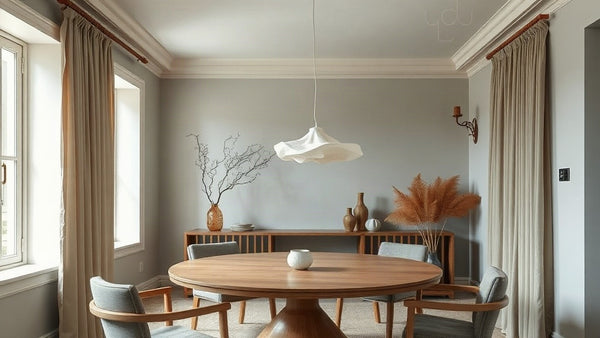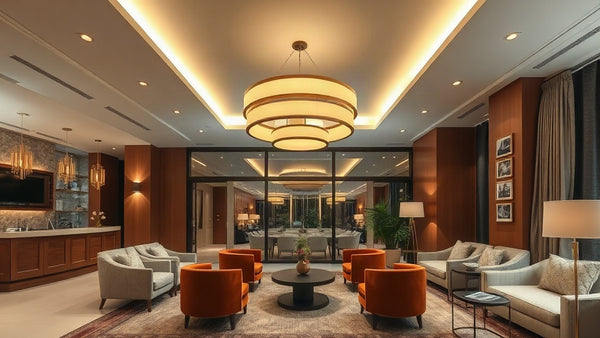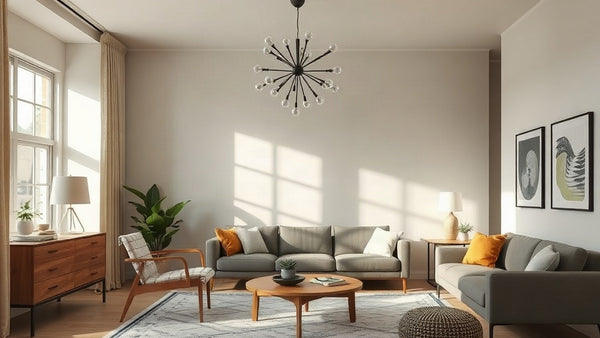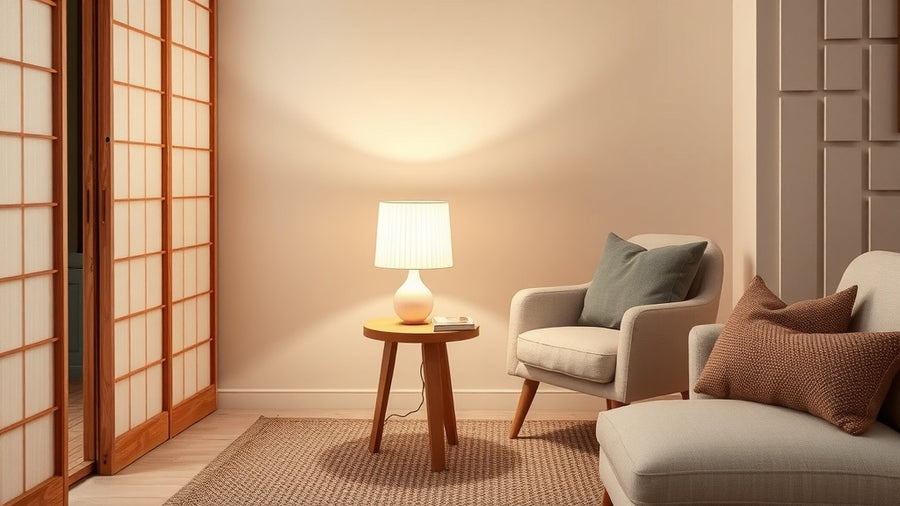
Les plafonniers en papier de riz sont devenus essentiels dans la pratique architecturale contemporaine, en particulier pour les concepteurs cherchant à équilibrer un éclairage diffus avec un contrôle esthétique raffiné. La catégorie des lampes japonaises en papier de riz offre aux architectes une solution techniquement précise pour les espaces nécessitant une distribution de lumière douce et sans ombre, sans compromettre l'authenticité des matériaux ou l'intégrité du design.
Spécifications des matériaux et performances lumineuses
Le papier de riz japonais (washi) offre une diffusion lumineuse supérieure à celle des matériaux translucides standard. Sa structure fibreuse crée une luminosité uniforme sur plus de 180 degrés, éliminant les points chauds – un aspect crucial pour les environnements commerciaux à aire ouverte et les zones résidentielles où l'éclairage de travail et d'ambiance convergent. Lorsqu'il est associé à des sources LED appropriées (généralement 2700K–3000K pour le résidentiel, 4000K pour les applications commerciales), le papier de riz maintient des indices de rendu des couleurs supérieurs à 90, essentiels pour les espaces où la couleur est critique.
Avantages de l'installation au plafond
- La compatibilité encastrée réduit l'encombrement visuel dans les projets commerciaux à plafond bas
- La distribution indirecte de la lumière minimise l'éblouissement, améliorant les métriques de productivité au travail
- La respirabilité du matériau empêche l'accumulation de chaleur autour du luminaire
- Les configurations modulaires s'adaptent aux géométries de plafond irrégulières ou architecturales
Intégration du design pour les architectes
La lampe japonaise en papier de riz s'intègre au minimalisme scandinave, à la restauration moderne du milieu du siècle et aux projets commerciaux contemporains. Contrairement aux options de suspension décoratives, les luminaires en papier de riz montés au plafond fonctionnent comme des éléments architecturaux plutôt que comme des accessoires. Cette distinction est importante : ils s'intègrent aux plafonds plutôt que de les interrompre, ce qui les rend idéaux pour les rénovations de bâtiments historiques où la visibilité des luminaires doit rester minimale.
Pour les projets résidentiels, les lampes de table et les lampadaires en papier de riz offrent des couches supplémentaires, bien que les installations au plafond établissent la stratégie d'ambiance principale. Les spécifications commerciales bénéficient de dimensions standardisées – généralement 300 mm à 600 mm de diamètre – permettant des calculs d'espacement cohérents pour les aménagements à aire ouverte.
Considérations techniques
Entretien et durabilité
Le papier de riz jaunit progressivement sous l'exposition aux UV ; spécifiez des LED filtrées aux UV ou placez les luminaires loin des fenêtres orientées plein sud dans les applications britanniques. L'accumulation de poussière nécessite des intervalles de nettoyage de 12 à 18 mois dans des environnements standards. Pour les cuisines ou les zones très humides, envisagez des constructions hybrides papier-acrylique qui maintiennent l'esthétique tout en améliorant la lavabilité.
Spécifications électriques
- Alimentation standard 230V ; confirmez la compatibilité avec le variateur au stade de l'approvisionnement
- Dissipation thermique adéquate pour les sources LED ; les halogènes/incandescents ne sont pas recommandés
- Consommation typique : 8–15W par luminaire (équivalents LED à 40–60W incandescents)
- Intégration d'éclairage de secours possible avec des modules de batterie de secours
Analyse coût-performance
Les lampes japonaises en papier de riz se situent dans la gamme de spécifications moyenne. Le coût initial se situe entre les diffuseurs acryliques de base et les luminaires artisanaux de designer, la qualité de la lumière supérieure justifiant la prime par rapport aux alternatives grand public. La longévité – généralement 7 à 10 ans avant dégradation visible – les positionne favorablement pour les cycles de location commerciale.
Pour les architectes spécifiant plusieurs unités, des prix de gros s'appliquent généralement. Un projet commercial installant plus de 20 luminaires de plafond bénéficie d'une réduction d'environ 15 à 20 % par rapport aux prix de détail.
Approvisionnement et délais
Nauradika propose des configurations standard avec une livraison au Royaume-Uni en 3 à 5 jours. Les dimensions ou spécifications de matériaux sur mesure nécessitent des délais de 4 à 6 semaines. Confirmez la compatibilité structurelle avec l'infrastructure de plafond existante avant de finaliser les spécifications avec les entrepreneurs.
Explorez le style à travers les options de lampes de table japonaises en papier de riz et les articles associés dans notre collection Lampadaires et lampes de table.
Pourquoi ce style fonctionne
Le bon éclairage fait plus qu'illuminer une pièce. Il donne le rythme à l'espace, offre un point d'ancrage visuel aux meubles et aide un aménagement décoratif à paraître intentionnel plutôt qu'assemblé. Pour les lecteurs arrivant via une recherche, cette section connecte l'idée de design à la sélection pratique de produits.
- Crée un point focal clair
- Ajoute de la chaleur et de la texture
- Fonctionne aussi bien dans les pièces contemporaines que d'inspiration vintage
Comment choisir la bonne pièce
Commencez par l'échelle, puis le matériau, puis la température de la lumière. Une suspension ou une applique murale doit être proportionnelle à la pièce et aux meubles qui se trouvent en dessous. Les matériaux naturels ont tendance à adoucir les intérieurs modernes, tandis que les finitions plus sombres peuvent créer une déclaration plus graphique.
- Vérifiez la hauteur du plafond et les dimensions des meubles
- Choisissez une finition qui se répète ailleurs dans la pièce
- Utilisez des ampoules chaudes pour les espaces de vie et de salle à manger
Où l'utiliser
Ce look est particulièrement efficace dans les salles à manger, les chambres, les couloirs et les espaces d'hospitalité de boutique où l'atmosphère compte. Il peut également fonctionner dans les rénovations où un simple changement d'éclairage doit donner à la pièce une impression plus achevée.
- Tables de salle à manger et îlots de cuisine
- Chambres et coins lecture
- Couloirs, restaurants et hôtels-boutiques
Acheter le look
Pour les produits les plus pertinents, commencez par la pièce vedette de l'article et la collection correspondante. Le prix du produit, sa disponibilité et ses images doivent être tirés en direct de Shopify lors du rendu du modèle.
Voir la lampe de table japonaise en papier de riz présentée ou parcourir la collection complète associée.
Présenté dans ce guide
Voir la collectionWhy this style works
Frequently asked questions
Nauradika Trade