Appliques murales en travertin : pourquoi les architectes spécifient l'éclairage en pierre en 2026
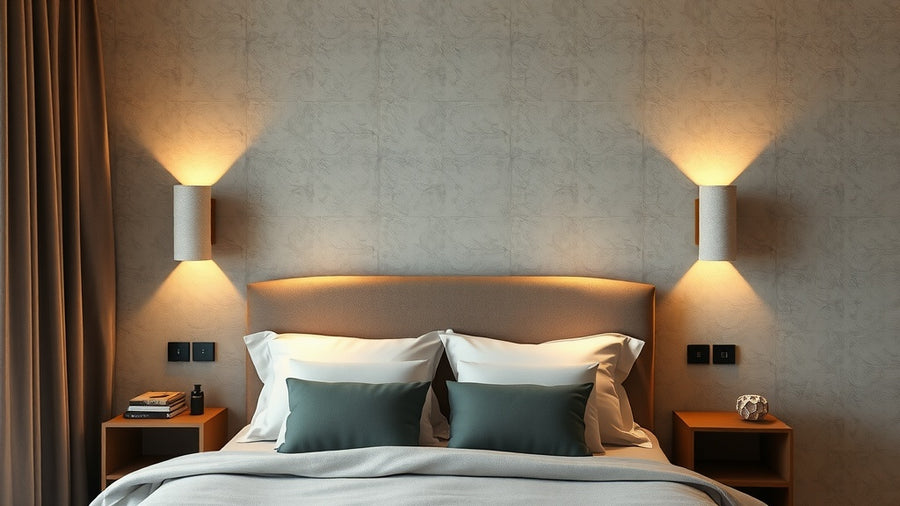
Le travertin est apparu comme le matériau de choix pour la conception d'éclairage architectural contemporain. Contrairement aux tendances éphémères, l'applique murale en travertin représente une confluence d'authenticité matérielle, de propriétés de régulation thermique et de sobriété esthétique qui résonne avec la philosophie de conception actuelle. Pour les architectes qui recherchent un équilibre entre durabilité et légèreté visuelle, l'éclairage mural en pierre offre une alternative crédible aux luminaires purement industriels ou minimalistes.
Spécification des matériaux : travertin vs. options de pierre comparables
Lors de la sélection d'une applique murale en travertin pour des projets résidentiels ou commerciaux, les spécifications exigent de la clarté sur l'approvisionnement et la finition du matériau. La porosité naturelle du travertin — généralement un rapport de vides de 15 à 20 % — exige une attention particulière à l'exposition à l'humidité, en particulier dans les applications de salle de bain ou de cuisine. Cela diffère substantiellement des alternatives d'appliques murales en marbre, qui offrent une porosité plus faible mais des implications de coût plus importantes.
Points clés de spécification :
- Options de finition : Adouci (mat, antidérapant) vs poli (réfléchissant, plus exigeant en entretien)
- Épaisseur : 15-20 mm standard pour l'intégrité structurelle dans les applications murales
- Compatibilité des sources lumineuses : L'intégration de LED réduit la charge thermique ; essentiel pour les matériaux en pierre
- Méthode d'installation : Confirmer la capacité portante — les luminaires en travertin pèsent généralement 2,5 à 4 kg par unité
- Exigences d'étanchéité : Spécifier un scellant pénétrant pour les applications hors cuisine ; protocole d'entretien essentiel
Intégration du design pour les intérieurs d'été
Les projets résidentiels et commerciaux contemporains utilisent de plus en plus des appliques murales en travertin pour maximiser la diffusion lumineuse dans les schémas d'intérieur plus clairs. Les nuances naturelles de crème et de beige de la pierre complètent le minimalisme scandinave et les palettes modernes du milieu du siècle sans concurrencer l'attention visuelle. Pour les projets axés sur l'été, les propriétés thermiques du matériau procurent une chaleur subtile dans les espaces majoritairement blancs ou pâles.
Contextes d'application :
- Couloirs résidentiels et murs d'accent — positionnement des appliques murales en travertin à une hauteur de 1400-1600 mm
- Zones de réception commerciales nécessitant une cohérence esthétique basée sur les matériaux
- Projets hôteliers où les finitions en pierre transmettent durabilité et luxe
Critères de performance et normes de spécification
Une applique murale en travertin doit être conforme aux normes de sécurité électrique BS EN 60598 et atteindre un indice de protection IP44 minimum pour les applications en salle de bain. Le rendement lumineux varie généralement de 200 à 500 lumens selon la conception du réflecteur interne ; spécifier en conséquence par rapport aux directives CIBSE pour l'éclairage de tâche ou d'ambiance. Le matériau en pierre lui-même nécessite une évaluation structurelle — le travertin présente une résistance à la compression plus faible (8-13 MPa) que le granit, nécessitant des plaques de support renforcées pour les conceptions en porte-à-faux.
Coût et considérations d'approvisionnement
L'allocation budgétaire pour l'éclairage mural en travertin varie de 180 £ à 480 £ par luminaire pour une spécification de qualité architecte, reflétant la rareté du matériau et la fabrication de précision. Les délais de livraison s'étendent de 6 à 8 semaines pour les finitions sur mesure. L'approvisionnement en appliques murales en pierre authentiques auprès de fabricants européens et scandinaves établis assure la cohérence avec l'esthétique du projet et les garanties de performance.
Conclusion
L'applique murale en travertin occupe une position distincte dans la spécification contemporaine — faisant le pont entre l'authenticité matérielle et la livraison fonctionnelle de l'éclairage. Pour les projets de 2026 exigeant des solutions tactiles et durables, l'éclairage mural en pierre mérite une sérieuse considération dans les stratégies de conception intégrées.
Explorez le style grâce aux options d' appliques murales en travertin et aux pièces connexes dans notre collection d'Appliques murales.
Pourquoi ce style fonctionne
Le bon éclairage ne fait pas qu'illuminer une pièce. Il définit le rythme de l'espace, donne un ancrage visuel aux meubles et aide un schéma décoratif à paraître intentionnel plutôt qu'assemblé. Pour les lecteurs arrivant via une recherche, cette section relie l'idée de conception à la sélection pratique du produit.
- Crée un point focal clair
- Ajoute chaleur et texture
- Fonctionne dans les pièces contemporaines et d'inspiration vintage
Comment choisir la bonne pièce
Commencez par l'échelle, puis le matériau, puis la température de la lumière. Une suspension ou une applique murale doit être proportionnée à la pièce et aux meubles qui se trouvent en dessous. Les matériaux naturels ont tendance à adoucir les intérieurs modernes, tandis que les finitions plus sombres peuvent faire une déclaration plus graphique.
- Vérifiez la hauteur du plafond et les dimensions des meubles
- Choisissez une finition qui se répète ailleurs dans la pièce
- Utilisez des ampoules chaudes pour les espaces de vie et de salle à manger
Où l'utiliser
Ce style est particulièrement efficace dans les salles à manger, les chambres, les couloirs et les espaces d'accueil de charme où l'ambiance compte. Il peut également fonctionner dans les rénovations où un seul changement d'éclairage doit donner à la pièce une impression plus achevée.
- Tables de salle à manger et îlots de cuisine
- Chambres et coins lecture
- Couloirs, restaurants et hôtels de charme
Acheter le look
Pour les produits les plus pertinents, commencez par la pièce vedette de l'article et la collection correspondante. Le prix, la disponibilité et les images des produits doivent être extraits en direct de Shopify lors du rendu du modèle.
Voir l'applique murale en travertin en vedette ou parcourir la collection complète associée.
Présenté dans ce guide
Voir la collectionWhy this style works
Frequently asked questions
Nauradika Trade