L'évolution Wabi Sabi : Pourquoi les Architectes Choisissent un Éclairage Imparfait
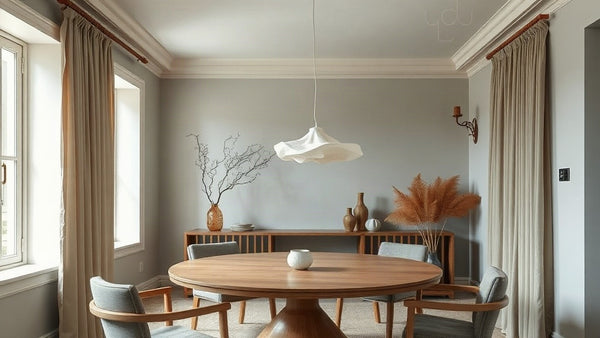
Le paysage du design d'éclairage de 2026 marque un net départ de la précision maximaliste. Les architectes, tant dans les secteurs résidentiels que commerciaux, sont de plus en plus attirés par la philosophie wabi sabi, l'esthétique japonaise qui célèbre l'impermanence, l'imperfection et l'incomplétude. Cette tendance, validée par de récents rapports de l'industrie provenant des centres de design de Zhongshan, positionne la suspension wabi sabi comme une spécification fondamentale pour des intérieurs réfléchis et humanistes.
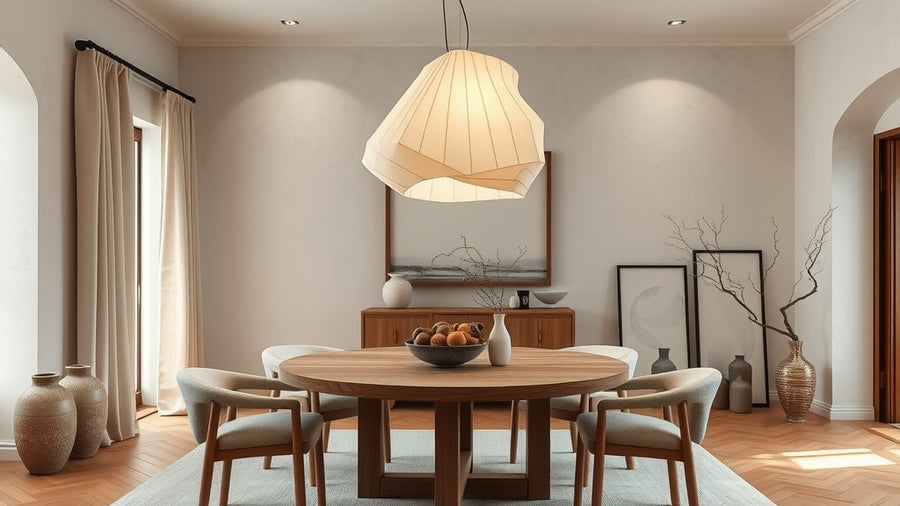
Contrairement au modernisme clinique, le design wabi sabi embrasse l'usure visible, l'asymétrie et la matérialité organique. Pour l'éclairage suspendu, cela se traduit par des formes céramiques ondulantes, des éléments en bois brut et des surfaces qui vieillissent visiblement, créant des ambiances authentiques plutôt qu'artificielles.
Authenticité des Matériaux et Rigueur des Spécifications
Lors de la spécification d'une suspension wabi sabi, le choix des matériaux exige de la précision. Spécifiez des céramiques non émaillées ou partiellement émaillées avec une variation de surface intentionnelle. Vérifiez que les finitions permettent une patine naturelle sans compromettre l'intégrité structurelle. Les surfaces texturées en travertin, notées dans les prévisions de Zhongshan 2026, offrent une authenticité tactile ainsi que des propriétés de diffusion de la lumière adaptées aux contextes hôteliers et résidentiels.
- Corps en céramique : Finitions tournées à la main ou semi-artisanales ; assurez la conformité aux normes de sécurité électrique malgré l'irrégularité esthétique
- Quincaillerie métallique : Laiton oxydé, acier noirci ou cuivre non traité ; spécifiez pour des caractéristiques de vieillissement réalistes
- Flux lumineux : Confirmez un éclairage adéquat malgré la diffusion à travers les matériaux organiques, essentiel pour les applications commerciales à éclairage de tâche
- Accréditations de durabilité : Vérifiez la provenance des matériaux et les méthodes de production ; l'esthétique wabi sabi doit s'aligner sur un approvisionnement éthique
Philosophie de la Suspension Japonaise dans la Pratique Contemporaine
La catégorie des suspensions japonaises s'étend au-delà du wabi sabi, englobant les principes de la lampe de plafond zen d'harmonie spatiale et de légèreté visuelle minimale. Cependant, le sous-ensemble wabi sabi met délibérément en avant la matérialité et l'impermanence, le différenciant des interprétations scandinaves plus épurées.
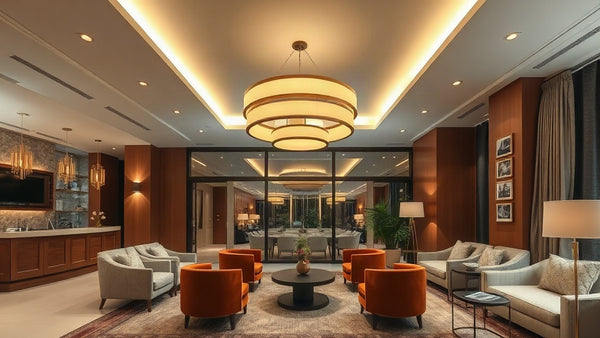
Pour les aménagements résidentiels, les suspensions wabi sabi créent des points focaux intimes ; leur irrégularité rompt la stérilité corporative tandis que leurs qualités artisanales suggèrent une narration et une création de lieu. Les applications commerciales, en particulier l'hôtellerie, les installations de bien-être et les bureaux soucieux du design, exploitent ces luminaires pour signaler une intentionnalité et une sophistication culturelle.
Considérations relatives aux Performances d'Éclairage
Les architectes doivent équilibrer la cohérence esthétique avec les exigences fonctionnelles. Les suspensions wabi sabi présentent souvent des formes organiques qui compliquent la distribution de la lumière ; spécifiez des unités avec une réflectivité interne adéquate pour compenser. Pour les espaces résidentiels ouverts, spécifiez une température de couleur chaude (2700K–3000K) pour compléter la lumière naturelle et prolonger la chaleur visuelle de l'été jusque dans les heures du soir.
Assurez-vous que les spécifications électriques sont compatibles avec les ampoules à filament de style vintage si l'intention esthétique exige des sources lumineuses visibles, de plus en plus privilégiées dans le design wabi sabi contemporain.
Intégration et Prochaines Étapes de Spécification
Lors de l'intégration de suspensions wabi sabi dans des projets résidentiels ou commerciaux, demandez des échantillons de matériaux détaillés et des fiches techniques photométriques. Vérifiez la compatibilité avec l'infrastructure de plafond existante et confirmez les délais de livraison, car la production artisanale dépasse généralement les calendriers de fabrication en série.
La trajectoire 2026 indique une dynamique soutenue pour cette catégorie. La spécification de suspensions wabi sabi communique une littératie en design et répond à la demande des clients pour des intérieurs authentiques et imparfaits, un virage directionnel validé dans la pratique résidentielle et commerciale.
Explorez le style à travers les options de suspension wabi sabi et les pièces connexes de notre collection Luminaires Japonais.
Pourquoi ce style fonctionne
Le bon éclairage fait plus qu'illuminer une pièce. Il donne le rythme de l'espace, ancre visuellement les meubles et aide un aménagement décoratif à paraître intentionnel plutôt qu'assemblé. Pour les lecteurs arrivant d'une recherche, cette section relie l'idée de design à la sélection pratique des produits.
- Crée un point focal clair
- Ajoute de la chaleur et de la texture
- S'adapte aux pièces contemporaines et d'inspiration vintage
Comment choisir la bonne pièce
Commencez par l'échelle, puis le matériau, puis la température de la lumière. Une suspension ou une applique murale doit être proportionnée à la pièce et aux meubles qui se trouvent en dessous. Les matériaux naturels ont tendance à adoucir les intérieurs modernes, tandis que les finitions plus foncées peuvent faire une déclaration plus graphique.
- Vérifiez la hauteur du plafond et les dimensions des meubles
- Choisissez une finition qui se répète ailleurs dans la pièce
- Utilisez des ampoules chaudes pour les espaces de vie et de salle à manger
Où l'utiliser
Ce style est particulièrement efficace dans les salles à manger, les chambres, les couloirs et les espaces d'hospitalité de boutique où l'atmosphère est primordiale. Il peut également fonctionner dans les rénovations où un seul changement d'éclairage doit rendre la pièce plus aboutie.
- Tables de salle à manger et îlots de cuisine
- Chambres et coins lecture
- Couloirs, restaurants et hôtels-boutiques
Achetez le look
Pour les produits les plus pertinents, commencez par la pièce vedette de l'article et la collection correspondante. Le prix du produit, la disponibilité et les images doivent être extraits en direct de Shopify lors du rendu du modèle.
Voir la suspension wabi sabi présentée ou parcourir la collection complète associée.
Présenté dans ce guide
Voir la collectionWhy this style works
Frequently asked questions
Nauradika Trade