Spécification de l'éclairage hôtelier : Un cadre professionnel
Lors de la spécification de l'éclairage hôtelier pour une nouvelle construction ou une rénovation, vous ne choisissez pas simplement des luminaires – vous concevez une expérience sensorielle complète qui favorise la satisfaction des clients, l'efficacité opérationnelle et la cohérence de la marque. La conversation actuelle autour des meilleures idées d'éclairage hôtelier pour 2026 reflète une maturation du secteur : les designers et les architectes dépassent la simple nouveauté pour se tourner vers des systèmes qui fonctionnent réellement selon de multiples paramètres : capacité de gradation, cohérence de la température de couleur, conformité énergétique et intégration esthétique.
Ce guide aborde les décisions techniques et créatives qui façonnent les spécifications d'éclairage hôtelier, que vous travailliez sur un hôtel-boutique, la conception de l'éclairage d'un restaurant au sein d'une propriété plus grande ou un environnement d'accueil corporatif.
Comprendre les couches d'éclairage hôtelier
L'éclairage hôtelier doit fonctionner selon quatre modes opérationnels distincts : l'arrivée et la circulation, l'ambiance des chambres, l'éclairage fonctionnel de travail et les zones d'accentuation/de mise en valeur. Contrairement aux projets résidentiels, l'éclairage hôtelier ne peut pas dépendre des préférences de l'utilisateur – il doit fonctionner de manière cohérente en fonction des diverses attentes des clients et des conditions architecturales.
Superposition ambiante dans les espaces publics
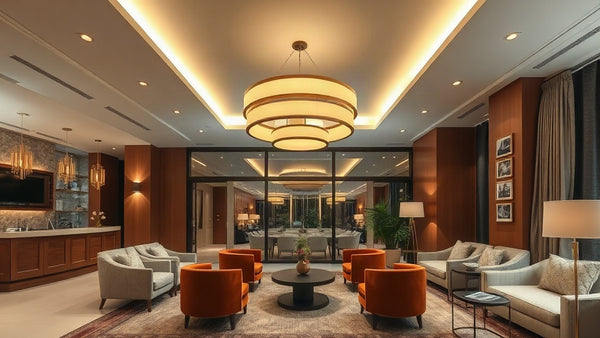
Le hall, les couloirs et les espaces communs nécessitent des systèmes d'éclairage ambiant qui semblent généreusement éclairés sans être cliniquement agressifs. C'est là que la plupart des décisions d'éclairage hôtelier échouent : les installateurs choisissent des environnements de plus de 300 lux qui donnent l'impression d'être institutionnels plutôt qu'accueillants. La pratique contemporaine de l'éclairage hôtelier vise 150 à 200 lux dans les zones de circulation, obtenue grâce à des solutions d'éclairage modernes superposées plutôt qu'à des sources lumineuses uniques au plafond.
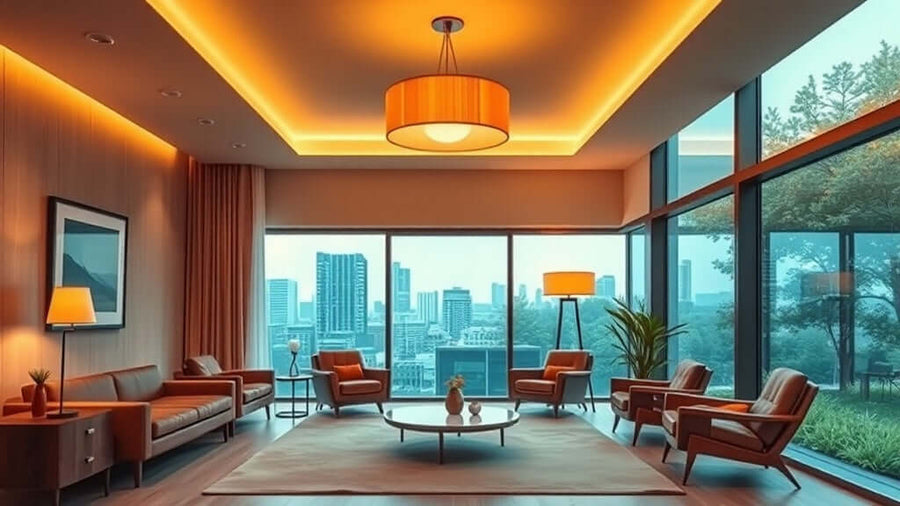
Envisagez d'installer plusieurs plans d'éclairage : ambiant indirect (souvent monté au plafond ou dissimulé dans des détails architecturaux), suspensions décoratives ou luminaires sculpturaux aux points focaux, et éclairage de travail pour les groupes de sièges. Cette approche permet aux opérateurs d'ajuster la luminosité globale via la gradation sans sacrifier l'intérêt visuel.
Zones de travail et d'accentuation
Les comptoirs de réception, les zones d'éclairage des restaurants et les zones de lecture exigent un éclairage plus lumineux et plus ciblé. Spécifiez 400 à 500 lux dans ces emplacements en utilisant une combinaison de systèmes de rails directionnels et de types de luminaires concentrés. Pour l'éclairage des restaurants, assurez des températures de couleur chaudes (2700K–3000K) et envisagez des drivers LED sans scintillement pour éviter les stroboscopies visibles sur les surfaces en mouvement ou lors des appels vidéo.
Stratégie de température de couleur dans l'éclairage hôtelier
Le passage à un éclairage hôtelier dynamique et réglable a été exagéré dans le marketing mais sous-estimé dans la pratique réelle. Plutôt que de mettre en œuvre des systèmes circadiens coûteux, spécifiez des luminaires avec une sortie constante de 3000K (blanc chaud) dans tous les espaces publics et les chambres. Cela crée une cohérence visuelle et simplifie l'approvisionnement et la maintenance.
Pour l'éclairage des restaurants et les espaces de restauration, maintenez une température de 2700K pour renforcer l'attrait et l'intimité. Si le cahier des charges inclut des caractéristiques axées sur le bien-être (salle de sport, spa), vous pouvez introduire des zones de 4000K, mais gardez-les spatialement distinctes pour éviter la fragmentation visuelle.
Spécifications des chambres d'hôtel
C'est là que l'éclairage de l'hôtel affecte le plus directement les revenus. Un éclairage de chevet inadéquat, un éclairage de miroir mal positionné et des systèmes ambiants mal équilibrés génèrent des plaintes de clients et des dommages aux critiques sur les plateformes.
Couches essentielles des chambres
- Éclairage de travail de chevet : 150–200 lux, monté à 60–65 cm au-dessus de la surface du matelas, utilisant des sources à gradation chaude jusqu'à un minimum de 20 % de sortie. Spécifiez des options à bras oscillant ou à suspension articulée plutôt que des appliques fixes — les clients ont besoin d'une flexibilité de positionnement.
- Ambiant : Sources au plafond ou encastrées fournissant 100–150 lux lorsqu'elles sont entièrement gradées à un blanc chaud et propice au sommeil de 2200K. Les gradateurs doivent permettre une transition douce vers un éclairage quasi nul sans scintillement ni changement de couleur.
- Tâche de salle de bain : 300–400 lux à hauteur de miroir, avec un rendu des couleurs précis (95+ CRI minimum), et positionné pour éliminer les ombres sur le visage. Utilisez des plafonniers encastrés ou semi-encastrés flanquant le miroir, et non des luminaires uniques au plafond.
- Accentuation/caractéristique : Un élément décoratif – souvent une suspension sculpturale ou une élégante lampe de table – qui communique l'identité de la marque et ajoute de la valeur perçue. C'est là que les lustres tubulaires LED dorés d'hôtel de luxe ou les luminaires modernes du milieu du siècle sont très performants, créant des points d'ancrage visuels mémorables sans maintenance excessive ni charge thermique.
Contrôlabilité et expérience client
Tous les éclairages de la chambre doivent être actionnables via un seul point de commande intuitif. La commutation intelligente avec des scènes prédéfinies (arrivée, sommeil, matin, ne pas déranger) est désormais une attente standard plutôt qu'une fonctionnalité de luxe. Spécifiez des contrôleurs de scène sans fil ou câblés qui permettent aux opérateurs d'ajuster la couleur et l'intensité sans l'intervention du client – essentiel pour maintenir la cohérence de la marque et réduire les appels de service.
Critères d'éclairage des restaurants et de l'hôtellerie
L'éclairage d'un restaurant crée l'atmosphère de la salle à manger et influence directement la qualité perçue des aliments, l'intimité de la table et le temps de séjour. C'est là que la conception de l'éclairage hôtelier devient créative plutôt que purement fonctionnelle.
Principes d'accentuation et de mise en valeur
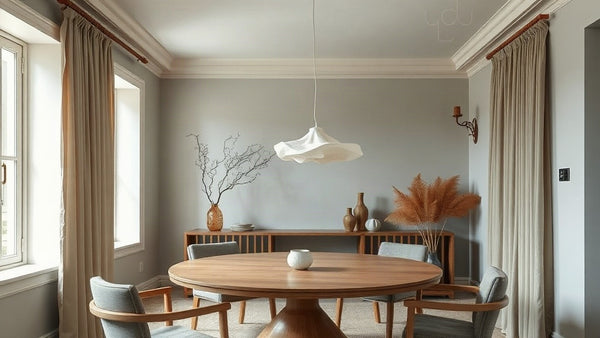
Spécifiez 30 à 50 % de l'éclairage du restaurant comme sources d'accentuation ou décoratives. Un lustre central, une série de suspensions sculpturales ou des luminaires muraux créent des points d'attention et des points focaux qui donnent à l'espace une intention plutôt qu'une généricité. Équilibrez cela avec 70 % d'éclairage ambiant/de travail pour éviter les silhouettes ou un champ visuel irrégulier.
Pour le rendu des couleurs de l'éclairage des restaurants, spécifiez exclusivement des sources à IRC élevé (95+). Un rendu des couleurs médiocre rend la nourriture peu appétissante et crée une compétition visuelle entre le repas et les finitions environnantes.
Les heures de dîner s'étendent généralement sur un minimum de 5 heures, la capacité de gradation est donc essentielle. Les luminaires à gradation chaude (3000K→2700K→2200K sur la courbe de gradation) sont naturels et luxueux par rapport aux systèmes à température de couleur fixe qui ne font que réduire la luminosité.
Intérieurs d'été et lumière : Considérations saisonnières
À l'approche de l'été 2026, des palettes intérieures plus claires et un éclairage naturel accru influenceront la stratégie d'éclairage artificiel des hôtels. Avec des heures de lumière du jour plus longues et un gain solaire plus fort, considérez comment vos luminaires spécifiés fonctionnent pendant les périodes de transition (crépuscule, aube) et si une gradation supplémentaire ou une capacité de changement de couleur est nécessaire pour éviter des transitions choquantes entre la lumière naturelle et artificielle.
Dans les intérieurs plus clairs, spécifiez des finitions mates ou satinées plutôt que des métaux très brillants ou polis – cela réduit l'éblouissement sur les murs pâles et permet à la géométrie des luminaires de paraître plus subtilement. Les diffuseurs dépolis ou opales offrent une distribution de lumière plus douce sans ombres dures.
Performance énergétique et conformité
Tout éclairage hôtelier spécifié doit respecter les réglementations de construction actuelles (probablement les révisions de la partie L d'ici la mi-2026) et les normes de certification énergétique pertinentes. Supposons 100 % de LED dans toutes les nouvelles spécifications, avec des drivers offrant un facteur de puissance de 0,9+ et un THD de <5 % pour éviter les problèmes de qualité d'alimentation dans toute l'infrastructure du bâtiment.
Les capteurs de présence dans les couloirs et les zones de service réduisent considérablement la charge opérationnelle 24h/24 et 7j/7 – calculez les économies d'énergie dans votre spécification pour justifier des coûts de luminaires légèrement plus élevés. La récupération de la lumière du jour dans les atriums ou les couloirs naturellement éclairés peut réduire les heures de fonctionnement de 15 à 25 %.
Flux de travail d'approvisionnement et de spécification
Lors de l'approvisionnement en luminaires d'hôtel, équilibrez la cohérence esthétique avec le pragmatisme de la chaîne d'approvisionnement. Spécifier cinq suspensions décoratives différentes dans toute la propriété (hall, restaurant, couloirs des chambres, salle de sport, spa) crée une cohérence visuelle tout en permettant une certaine flexibilité de conception et en réduisant la dépendance à une source unique.
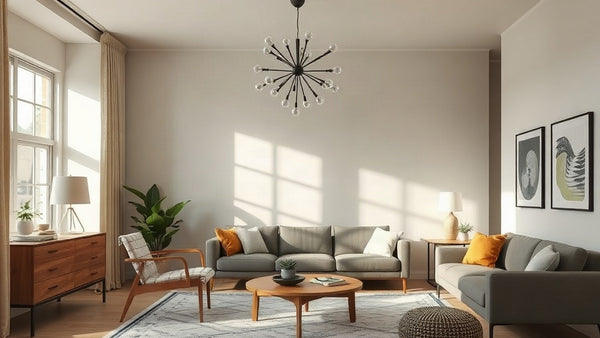
Pour les projets plus importants, l'accès au programme de remises commerciales Nauradika peut améliorer le contrôle budgétaire sans compromettre la sélection dirigée par le designer. Les luminaires modernes du milieu du siècle et scandinaves, autrefois considérés comme de niche, sont devenus des standards de l'hôtellerie car ils offrent durabilité, réparabilité et un langage visuel intemporel qui survit aux cycles de tendances.
Meilleures pratiques de spécification
- Spécifiez en fonction des performances photométriques (lux, température de couleur, IRC, angle de faisceau) avant la préférence esthétique – cela garantit que les exigences fonctionnelles guident l'esthétique, et non l'inverse.
- Incluez des spécifications dimmables/réglables universellement ; le surcoût est <5 % mais la flexibilité opérationnelle est substantielle.
- Standardisez les marques de drivers LED et les protocoles de contrôle sur l'ensemble du projet pour simplifier la maintenance et les futures mises à niveau.
- Demandez l'installation de prototypes dans des espaces représentatifs (maquette de chambre, couloir échantillon) avant le déploiement à grande échelle.
- Incluez les calendriers de maintenance et de nettoyage dans la documentation des spécifications – la poussière accumulée sur les diffuseurs réduit le rendement de 10 à 15 % en 6 mois dans les environnements hôteliers.
Normes émergentes en matière d'éclairage hôtelier pour 2026
Le discours actuel autour des meilleures idées d'éclairage hôtelier met l'accent sur l'intégration du bien-être, bien que cela reste plus une aspiration qu'une pratique courante. Les attentes des clients incluent de plus en plus la qualité de la lumière comme un agrément mesurable – les spécifications qui ignorent le rendu des couleurs, le scintillement et l'éblouissement généreront des critiques négatives malgré le respect des normes techniques.
Les principes de conception biophilique influencent désormais la sélection de l'éclairage des hôtels : les luminaires qui évoquent des formes naturelles (structures ramifiées, géométries organiques) sont plus performants dans les études de perception que les designs purement géométriques ou minimalistes. Cela ne nécessite pas de nouveauté – de nombreuses pièces de designers modernes du milieu du siècle et scandinaves incarnent déjà ces principes à travers la philosophie "la forme suit la fonction".
Résumé : Liste de contrôle des spécifications pratiques
Des spécifications d'éclairage hôtelier solides commencent par des objectifs de performance clairs : niveaux de lux, température de couleur, IRC et plage de gradation par zone. Les sélections esthétiques servent ensuite ces paramètres plutôt que de les guider. La cohérence entre toutes les zones opérationnelles (public, clients, service) crée des environnements professionnels qui nécessitent un minimum de réglages après l'occupation.
Que vous développiez l'éclairage d'un restaurant pour un hôtel-boutique, spécifiiez des systèmes d'éclairage hôteliers complets pour une propriété commerciale ou organisiez des luminaires pour un projet résidentiel avec un raffinement de type hôtelier, les principes restent constants : éclairage superposé, températures de couleur chaudes, rendu des couleurs élevé, capacité de gradation et cohérence de conception soutenue par une sélection et un placement stratégiques des luminaires.
Nauradika Trade