Tendances d'éclairage 2026 : Le retour de la lumière douce et diffuse
À mesure que l'année 2026 avance, les pratiques architecturales privilégient de plus en plus un éclairage axé sur le design centré sur l'humain et le confort visuel. La lampe de table en papier de riz est redevenue une spécification clé pour les intérieurs résidentiels et commerciaux – un changement motivé par les principes du design biophilique et le rejet de l'éclairage agressif à haute température de couleur.
Pourquoi le papier de riz est performant en spécification
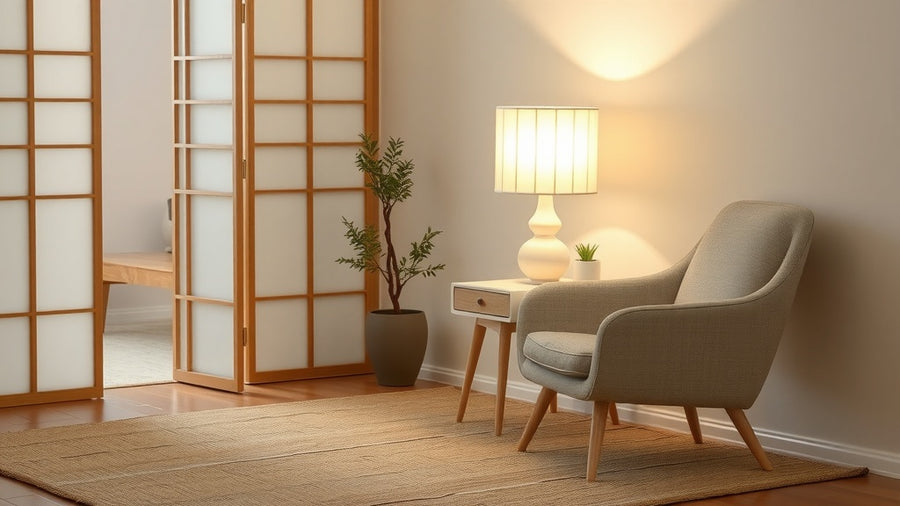
Une lampe de table en papier de riz offre trois avantages critiques aux architectes. Premièrement, les propriétés de diffusion du matériau éliminent l'éblouissement tout en maintenant un éclairage de tâche adéquat – essentiel pour les suites d'hôtel, les chambres résidentielles et les espaces de pause de bureau. Deuxièmement, la qualité lumineuse chaleureuse crée une intimité spatiale sans sacrifier la fonctionnalité. Troisièmement, la neutralité esthétique du design japonais en papier de riz s'harmonise parfaitement avec les styles scandinave, minimaliste et contemporain.
Pour les projets contractuels, cette cohérence est importante. Les prescripteurs peuvent déployer une seule famille de lampes en papier de riz dans plusieurs types de pièces, avec confiance en la cohésion visuelle et la prévisibilité des performances.
Considérations techniques pour la spécification
Matériau et durabilité
La qualité compte. Le papier de riz de haute qualité résiste au jaunissement et maintient sa translucidité pendant plus de 5 000 heures de fonctionnement. Lors de la sélection d'une lampe japonaise en papier de riz pour des applications commerciales, vérifiez les certifications des matériaux et confirmez que le diffuseur ne nécessitera pas de remplacement pendant la période de garantie du projet.
Rendement lumineux et éclairage de tâche
Une idée fausse courante : la lumière douce compromet la fonction. Une lampe de table en papier correctement spécifiée, délivrant 300 à 500 lumens (selon le type de base et le diamètre de l'abat-jour), est adéquate pour la lecture, les surfaces de service hôtelières et le travail de tâche secondaire. Pour les postes de travail principaux, complétez avec un éclairage de tâche ciblé plutôt que de vous fier uniquement à la lampe en papier de riz.
Installation et flexibilité
- Gestion des câbles : Spécifiez des lampes avec des guides de câbles intégrés pour une meilleure finition des bords de table.
- Compatibilité avec les variateurs : Confirmez la compatibilité du driver LED avec les systèmes de variateurs à coupure de fin de phase (trailing-edge) et à coupure de début de phase (leading-edge).
- Stabilité de la base : Pour les environnements hôteliers et contractuels, les bases lestées réduisent le risque de basculement dans les zones à fort trafic.
Applications contextuelles en pratique en 2026
La catégorie des lampes de table à lumière douce se subdivise désormais en trois types de projets : l'hôtellerie (où la lampe de table en papier crée le confort des clients), le résidentiel (où l'alignement biophilique motive la spécification) et le commercial (où les espaces de pause et le design axé sur le bien-être dictent des environnements lumineux plus doux).
Spécifier une lampe de table en papier de riz témoigne d'une intentionnalité concernant la hiérarchie visuelle et le bien-être des occupants – un message qui résonne avec les cahiers des charges contemporains des bâtiments et les pratiques alignées sur les critères ESG.
Liste de vérification de la spécification
- Confirmez la température de couleur (2700K reste la norme pour le résidentiel ; 3000K acceptable pour le commercial)
- Vérifiez les indices IP si une spécification pour salle de bain ou zone humide est requise
- Vérifiez la compatibilité des variateurs et l'indice de scintillement (critique pour les projets de santé et d'éducation)
- Confirmez les délais de livraison – les diffuseurs en papier nécessitent parfois des délais de livraison prolongés
Le paysage de l'éclairage en 2026 récompense la spécificité. Une lampe de table en papier de riz bien choisie n'est pas une pensée après coup décorative – c'est une décision fonctionnelle qui façonne l'expérience de l'occupant et la perception spatiale. Choisissez judicieusement.
Découvrez le style à travers les options de lampes de table en papier de riz et les articles connexes dans notre collection Lampes sur pied et de table.
Pourquoi ce style fonctionne
La bonne lumière fait plus qu'illuminer une pièce. Elle donne le rythme de l'espace, offre un point d'ancrage visuel aux meubles et aide un schéma décoratif à paraître intentionnel plutôt qu'assemblé. Pour les lecteurs venant de la recherche, cette section relie l'idée de design à la sélection pratique des produits.
- Crée un point focal clair
- Ajoute de la chaleur et de la texture
- Fonctionne dans les pièces contemporaines et d'inspiration vintage
Comment choisir la bonne pièce
Commencez par l'échelle, puis le matériau, puis la température de la lumière. Une suspension ou une applique murale doit être proportionnée à la pièce et au mobilier en dessous. Les matériaux naturels ont tendance à adoucir les intérieurs modernes, tandis que les finitions plus sombres peuvent créer une déclaration plus graphique.
- Vérifiez la hauteur sous plafond et les dimensions des meubles
- Choisissez une finition qui se répète ailleurs dans la pièce
- Utilisez des ampoules chaudes pour les espaces de vie et de salle à manger
Où l'utiliser
Ce look est particulièrement efficace dans les salles à manger, les chambres, les couloirs et les espaces d'hospitalité de charme où l'ambiance est primordiale. Il peut également fonctionner dans les rénovations où un seul changement d'éclairage doit donner à la pièce une sensation plus aboutie.
- Tables de salle à manger et îlots de cuisine
- Chambres et coins lecture
- Couloirs, restaurants et hôtels de charme
Shoppez le look
Pour les produits les plus pertinents, commencez par la pièce phare de l'article et la collection correspondante. Le prix du produit, sa disponibilité et ses images doivent être tirés en direct de Shopify lors du rendu du modèle.
Voir la lampe de table en papier de riz présentée ou parcourir la collection complète associée.
Présenté dans ce guide
Voir la collectionWhy this style works
Frequently asked questions
Nauradika Trade