Les suspensions imposantes définissent l'architecture intérieure contemporaine
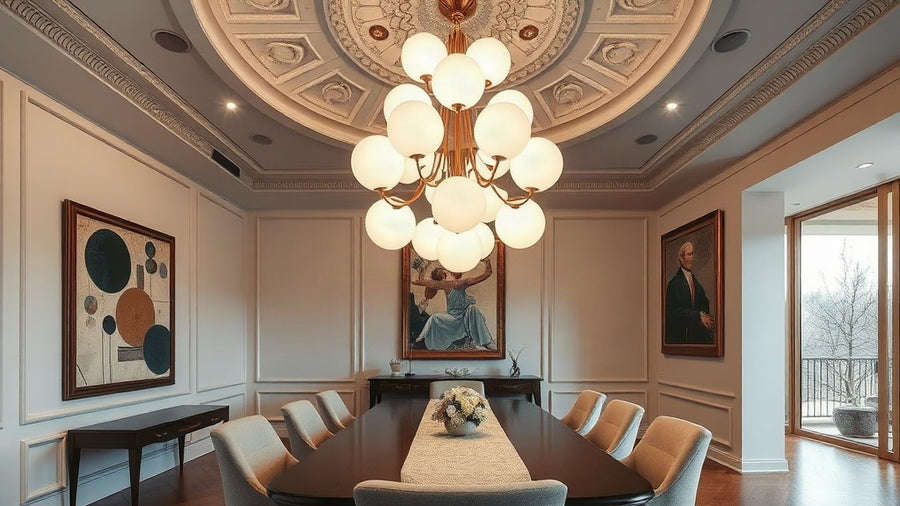
En ce début d'année 2026, les suspensions décoratives ont évolué au-delà du simple accessoire pour devenir des éléments architecturaux essentiels. Pour les architectes qui conçoivent des intérieurs résidentiels et commerciaux, les suspensions surdimensionnées agissent désormais comme des points focaux qui définissent la hiérarchie spatiale, l'expression des matériaux et la qualité de l'ambiance au sein des espaces ouverts.
Cette transition reflète une philosophie de design plus large : l'éclairage en tant que structure. Plutôt que de traiter l'éclairage comme un ajout secondaire, la pratique contemporaine intègre de plus en plus les plafonniers imposants dans le cadre conceptuel d'un projet dès sa création.
Pourquoi les architectes prescrivent-ils des suspensions imposantes ?
Cette tendance repose sur des raisons pragmatiques. Une suspension bien proportionnée remplit plusieurs fonctions simultanément :
- Définit des zones au sein des espaces ouverts sans cloison physique
- Réduit la dépendance aux spots encastrés, améliorant ainsi l'efficacité énergétique
- Introduit un langage matériel authentique — laiton, verre opale, bois — qui complète les finitions existantes
- Offre une signature stylistique qui différencie les projets résidentiels et les espaces d'accueil commerciaux
- Crée un poids visuel de manière économique, sans encombrer l'espace au sol ou aux murs
Échelle et proportion
La pratique contemporaine privilégie les luminaires suspendus surdimensionnés dans les espaces avec une hauteur sous plafond de 2,7 m ou plus. Une suspension imposante d'un diamètre de 400 à 600 mm crée un équilibre proportionnel dans les cuisines et salles à manger résidentielles, tandis que les applications commerciales — hôtels, bureaux, galeries — bénéficient de versions à plus grande échelle (800 mm et plus) qui restent lisibles dans des volumes plus vastes.
Le principe clé : la suspension doit occuper environ 1/3 à 1/2 du champ visuel lorsqu'elle est vue depuis les principaux angles de vue, sans créer d'éblouissement ni obstruer la visibilité du personnel ou des occupants.
Considérations sur les matériaux et les finitions
Les palettes de l'automne 2026 privilégient les métaux chauds et les finitions mates. Privilégiez le laiton, le cuivre bruni ou l'acier thermolaqué dans des tons gris chauds et anthracite. Les diffuseurs en verre opale et dépoli restent optimaux pour les projets résidentiels, tandis que le verre transparent offre une légèreté visuelle dans les environnements commerciaux où la transparence et la surveillance sont des priorités.
Une suspension imposante doit compléter votre palette de matériaux plutôt que d'entrer en concurrence avec elle. Réfléchissez à la manière dont le luminaire s'articule avec la menuiserie, le revêtement de sol et les habillages de fenêtres avant de finaliser votre choix.
Performance d'éclairage
Assurez-vous que vos spécifications incluent des données vérifiées sur le flux lumineux (lumens) et la température de couleur. Les suspensions résidentielles délivrent généralement entre 800 et 1500 lumens à 2700K pour une ambiance chaleureuse et structurée. Les applications commerciales exigent une efficacité supérieure ; 3000K est la norme. Demandez des fichiers photométriques et une analyse de l'éblouissement pour les hauteurs de suspension inférieures à 2,4 m.
Bonnes pratiques de prescription
Lors de la sélection d'une suspension imposante pour votre projet, documentez :
- La hauteur exacte de descente du plafond au point le plus bas
- L'emplacement de l'arrivée électrique et la capacité du circuit
- La compatibilité avec les variateurs (0–10V, DALI ou maillage Bluetooth)
- L'accès pour l'entretien, le remplacement des ampoules ou le nettoyage
- Les délais de livraison des fournisseurs — les luminaires spécialisés nécessitent souvent 8 à 12 semaines
Les suspensions imposantes restent l'une des rares décisions de design qui satisfont avec autant de rigueur les intentions esthétiques et les exigences fonctionnelles. En tant que pièce maîtresse qui attire le regard, elle mérite une précision de spécification équivalente à celle des systèmes structurels ou mécaniques.
Découvrez ce style à travers nos options de suspensions imposantes et autres pièces connexes dans notre collection de Luminaires de plafond.
Pourquoi ce style fonctionne
Le bon éclairage fait bien plus qu'illuminer une pièce. Il définit le rythme de l'espace, offre un point d'ancrage visuel au mobilier et aide à rendre un agencement décoratif intentionnel plutôt qu'assemblé par hasard. Pour les lecteurs arrivant depuis une recherche, cette section relie l'idée de design à la sélection pratique de produits.
- Crée un point focal clair
- Ajoute chaleur et texture
- S'adapte aux pièces contemporaines comme aux pièces d'inspiration vintage
Comment choisir la bonne pièce
Commencez par l'échelle, puis le matériau, et enfin la température de couleur. Une suspension ou une applique murale doit être proportionnée à la pièce et aux meubles situés en dessous. Les matériaux naturels ont tendance à adoucir les intérieurs modernes, tandis que des finitions plus sombres peuvent affirmer une signature graphique plus forte.
- Vérifiez la hauteur sous plafond et les dimensions des meubles
- Choisissez une finition qui se répète ailleurs dans la pièce
- Utilisez des ampoules à température chaude pour les espaces de vie et de salle à manger
Où l'utiliser
Ce style est particulièrement efficace dans les salles à manger, les chambres, les couloirs et les espaces d'accueil de boutique où l'atmosphère est primordiale. Il peut également fonctionner dans le cadre de rénovations où un simple changement d'éclairage doit donner à la pièce un aspect plus abouti.
- Tables de salle à manger et îlots de cuisine
- Chambres à coucher et coins lecture
- Couloirs, restaurants et boutiques-hôtels
Découvrez le style
Pour les produits les plus pertinents, commencez par la pièce phare de cet article et la collection correspondante. Le prix, la disponibilité et les images des produits sont extraits en temps réel de Shopify lors du rendu du modèle.
Voir la suspension imposante en vedette ou parcourez la collection complète associée.
Nauradika Trade