Rice Paper Table Lamps in Contemporary Practice
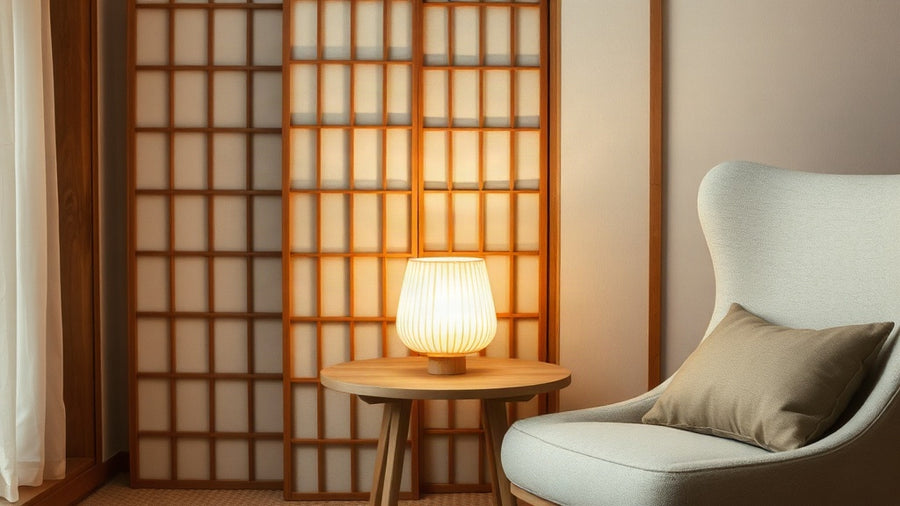
As we refine interior schemes for autumn 2026, the rice paper table lamp remains an essential specification for residential and commercial projects demanding refined ambient lighting. These fixtures—rooted in Japanese design philosophy—deliver measurable performance benefits alongside aesthetic cohesion with Scandinavian and mid-century modern palettes.
Material Performance & Diffusion Properties
Rice paper construction offers precise light diffusion characteristics. The fibrous structure scatters illumination uniformly across 180–220 degrees, minimising harsh shadows and reducing glare to approximately 15–20 lux at seated eye level when paired with standard 40–60W equivalent LED sources. This makes the rice paper table lamp particularly effective in open-plan residential spaces and low-stimulation commercial environments—hospitality lounges, wellness centres, design studios.
Unlike fabric drum shades, rice paper maintains structural integrity over extended use cycles. The material resists dust accumulation and yellowing, critical for long-term maintenance specifications on permanent installations.
Specification Considerations
- Colour temperature: Pair with 2700K–3000K LED sources for cosy autumn schemes; 4000K for task-adjacent applications
- Lumens output: 400–600 lumens suits accent lighting; 800–1200 lumens for functional table-adjacent work
- Cord management: Confirm length and placement relative to power points; wireless charging-integrated bases now available
- Dimmer compatibility: Specify TRIAC-compatible LED bulbs if control systems required
Japanese Rice Paper Lamp: Aesthetic Integration
A japanese rice paper lamp bridges the gap between sculptural form and functional lighting. The translucent quality creates visual lightness—essential in dense spatial configurations—while the warm diffused glow supports biophilic design principles now standard in commercial wellness briefs.
Dimensionally, a paper table lamp typically occupies 150–300mm height (excluding cord), with shade diameters between 200–350mm. These proportions scale effectively with standard desk heights (720mm) and console tables, maintaining visual balance without occlusion issues.
Material Longevity & Sustainability
Specify paper table lamps constructed from mulberry or washi-certified fibres. These materials meet BS 5446 flammability standards and maintain light transmission (typically 60–75%) after 10,000+ operational hours. Recyclability at end-of-life aligns with current LEED and BREEAM certification pathways.
Seasonal Application: Autumn & Winter Schemes
The soft light table lamp category naturally complements autumn colour palettes—ochre, charcoal, sage greens. Rice paper construction diffuses these reflected tones evenly, preventing colour distortion common with opaque shades. For residential projects with 3–4m ceiling heights, cluster two or three smaller rice paper lamps rather than single statement fixtures to achieve layered, non-institutional lighting.
Practical Specification Workflow
Request photometric data sheets from manufacturers. Confirm: lumens output across dimmer ranges, CRI (90+ recommended), and IP rating if specifying near water features or humid zones. Sample finishes in-situ before final approval—natural light exposure influences perceived warmth of diffused illumination significantly.
A rice paper table lamp remains a technically sound, aesthetically resolved choice for projects prioritising ambient quality and material authenticity. Specification is straightforward once performance parameters align with project brief requirements.
Explore the look through rice paper table lamp options and related pieces in our Floor And Table Lamps collection.
Why this style works
The right light does more than illuminate a room. It sets the rhythm of the space, gives furniture a visual anchor, and helps a decorative scheme feel intentional rather than assembled. For readers arriving from search, this section connects the design idea to practical product selection.
- Creates a clear focal point
- Adds warmth and texture
- Works across contemporary and vintage-inspired rooms
How to choose the right piece
Start with scale, then material, then light temperature. A pendant or wall light should feel proportionate to the room and the furniture below it. Natural materials tend to soften modern interiors, while darker finishes can make a more graphic statement.
- Check ceiling height and furniture dimensions
- Choose a finish that repeats elsewhere in the room
- Use warm bulbs for living and dining spaces
Where to use it
This look is especially effective in dining rooms, bedrooms, hallways and boutique hospitality spaces where atmosphere matters. It can also work in renovations where a single lighting change needs to make the room feel more finished.
- Dining tables and kitchen islands
- Bedrooms and reading corners
- Hallways, restaurants and boutique hotels
Shop the Look
For the most relevant products, start with the article's featured piece and the matching collection. Product price, availability and images should be pulled live from Shopify when the template renders.
View the featured rice paper table lamp or browse the full related collection.
Présenté dans ce guide
Voir la collectionWhy this style works
Frequently asked questions
Nauradika Trade