
What Would Life Be Without the Fridge, TV, or a Colander? A Look Inside the Early 1960s Home
|
|
Tid att läsa 1 min

Upptäcka nyanlända i modern belysning, heminredningoch Skandinavisk design—uppdaterad varje vecka med det...
|
|
Tid att läsa 1 min
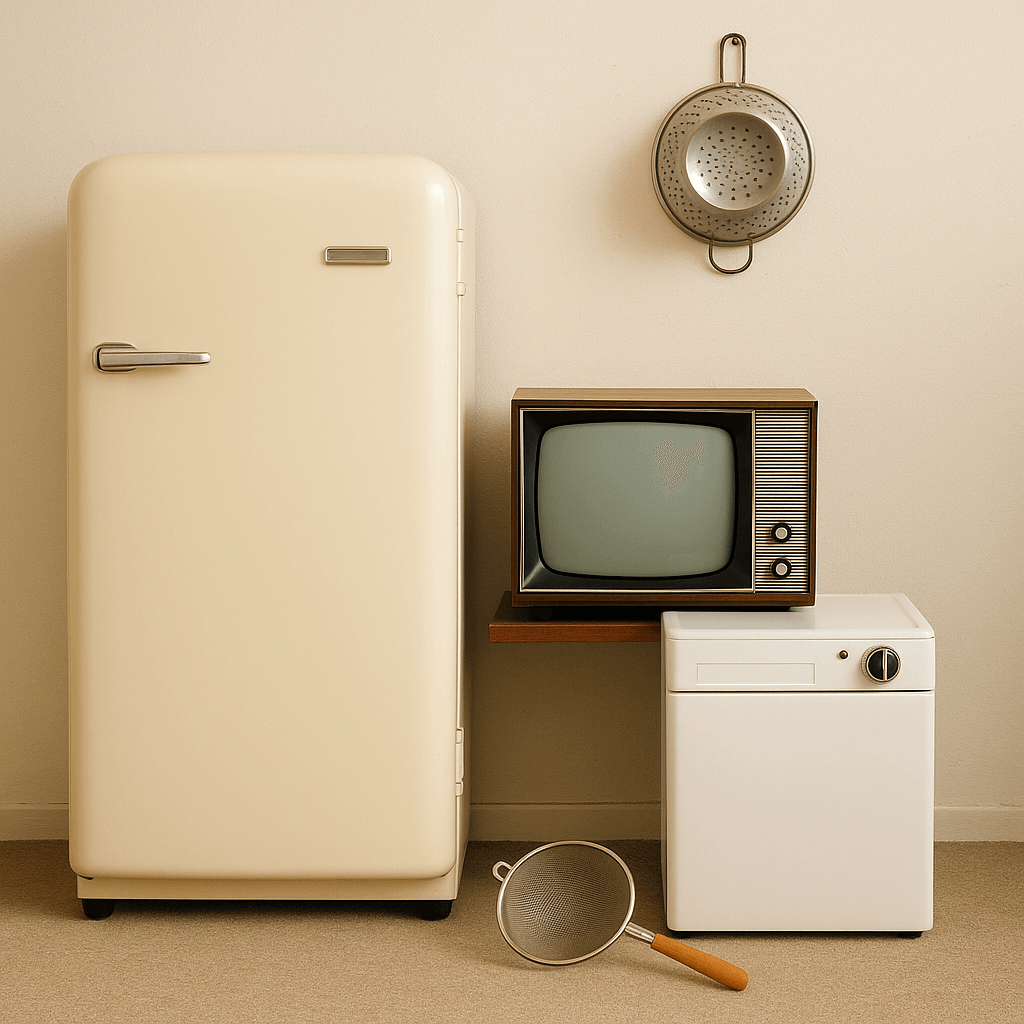
Imagine your kitchen without a fridge, your living room without a TV, or cooking dinner without a simple colander. Feels almost primitive, doesn’t it? But in early 1960s France, these items were just starting to become part of the everyday home. That decade didn’t just bring new appliances—it redefined domestic life. And yes, even a colander had its moment.
In 1959, only 20.7% of French households had a fridge. By 1963, that number jumped to 43.8%, more than doubling in just four years (CREDOC). This cold box wasn't just a status symbol—it was a total game changer.
It altered food storage and cooking routines, allowing families to buy in bulk, waste less, and stop relying on pickling or cool cellars. Meal planning became less stressful and more modern.
TV ownership soared from 33.2% in 1959 to 61.9% in 1968 (Persée). In under a decade, it became the new family altar—where everyone gathered, laughed, and got a glimpse of the outside world.
Evenings began to revolve around broadcast schedules, and the way people communicated, learned, and entertained themselves changed dramatically.
In 1960, just 25.5% of homes had a washing machine. By 1963, that rose to 41.3% (CREDOC). These numbers signal more than convenience—they reflect shifting gender roles and social dynamics.
Women, who were mostly responsible for household chores, gained back hours each week. It was a quiet revolution, freeing time and, bit by bit, expectations.
We don’t talk enough about the unsung heroes of domestic life—like the colander. These kitchen tools made cooking simpler and quicker, supporting a generation striving for speed and efficiency. They didn’t shout; they simply worked.
Between 1958 and 1968 in France:
Refrigerator ownership increased nearly 6-fold
Washing machines quadrupled
TV sets? Up 9 times (Persée)
These aren't just stats—they're signs of how quickly homes modernized during the post-war boom, especially thanks to the economic lift of the "Trente Glorieuses."
These machines weren’t just gadgets. They restructured daily life, reshaped family interactions, and empowered more autonomy—especially for women. The early 1960s didn’t just bring new appliances into our kitchens and living rooms. They introduced new ways of living.
So next time you strain your pasta, binge-watch a series, or open the fridge for a midnight snack—remember, it all started with a revolution in domesticity.


